






Home / Sunday-mid-day / / Article /
'The Mughal city was built to be inclusive'
Updated On: 04 June, 2023 01:25 PM IST | Mumbai | Aastha Atray Banan
Using detailed maps, Swapna Liddle recreates Delhi’s ancestral avatar, Shahjahanabad, to paint a picture of a city that boasted smart town planning, inclusiveness and beauty

Listen to this article :
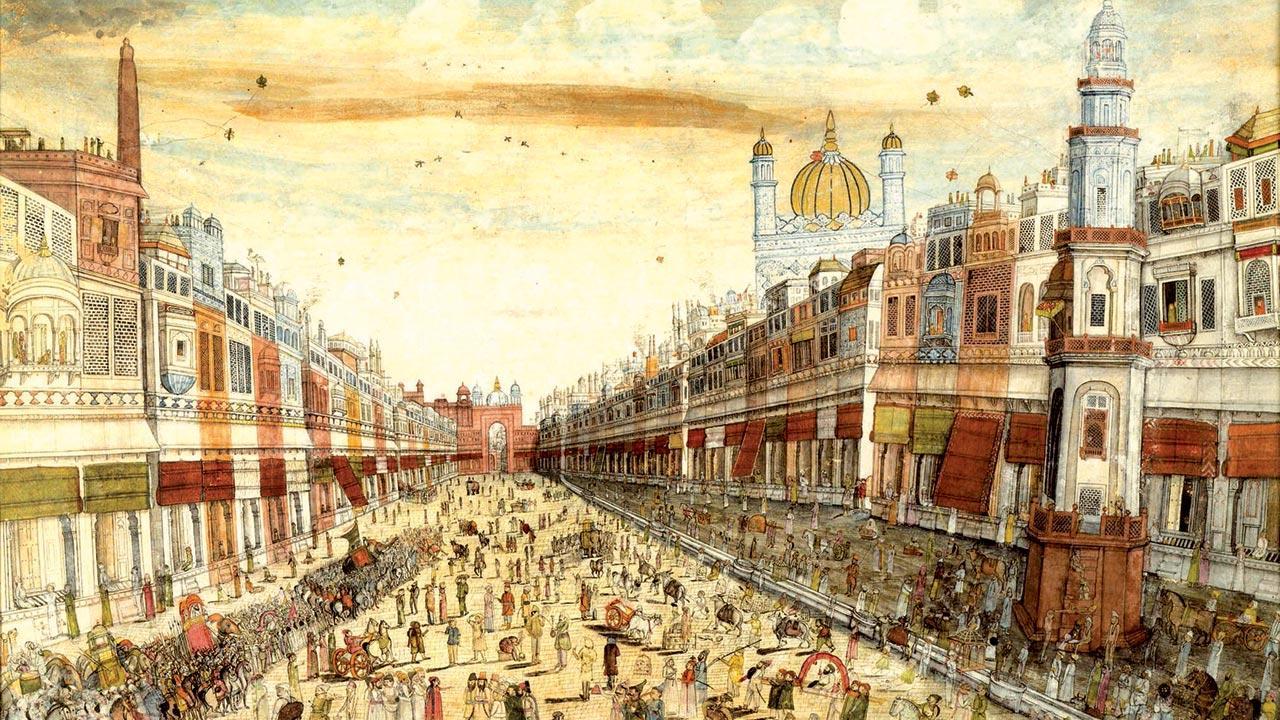
Faiz Bazaar, now known as Drayganj, by a Rajasthani artist, c 1840. Pics/Shahjahanabad: Mapping a Mughal City
Say what you want about Delhi, notorious as it is for lack of safety, politics and general pandemonium, what you can’t doubt is its beauty. Broad roads lined with expansive trees, rolling gardens, its street food, and the magnificent architecture—once home to the royals—make it fairy tale-like. And so this writer, an OG Delhiite, who has been living and falling in love with Mumbai for 17 years, couldn’t help but feel excited about a new book dedicated to the magical lanes of Shahjahanabad, colloquially called Old Delhi. It was founded as a walled city in 1648, when Shah Jahan decided to shift the Mughal capital here from Agra. Swapna Liddle, author and historian with a specialisation in the history of the city, is behind the title Shahjahanabad: Mapping a Mughal City, published by Roli Books. Using maps to examine the city, neighbourhood by neighbourhood, it explores the diverse communities and important landmarks. We spoke to Liddle to ask if what the maps reveal matches our imagination.
Excerpts from an interview.
Read Next Story
Trending Stories
Latest Photos
Latest Videos
Latest Web Stories
ADVERTISEMENT
Mid-Day Fast
ADVERTISEMENT

ADVERTISEMENT