






Home / Sunday-mid-day / / Article /
How Josef Wirsching played a pioneering role in films by Bombay Talkies
Updated On: 07 May, 2023 09:46 AM IST | Mumbai | Team SMD
A new book unearths the work of a German cinematographer whose Expressionist sensibilities redefined how India experienced cinema and the mega stars on Bombay Talkies’ payroll

Listen to this article :
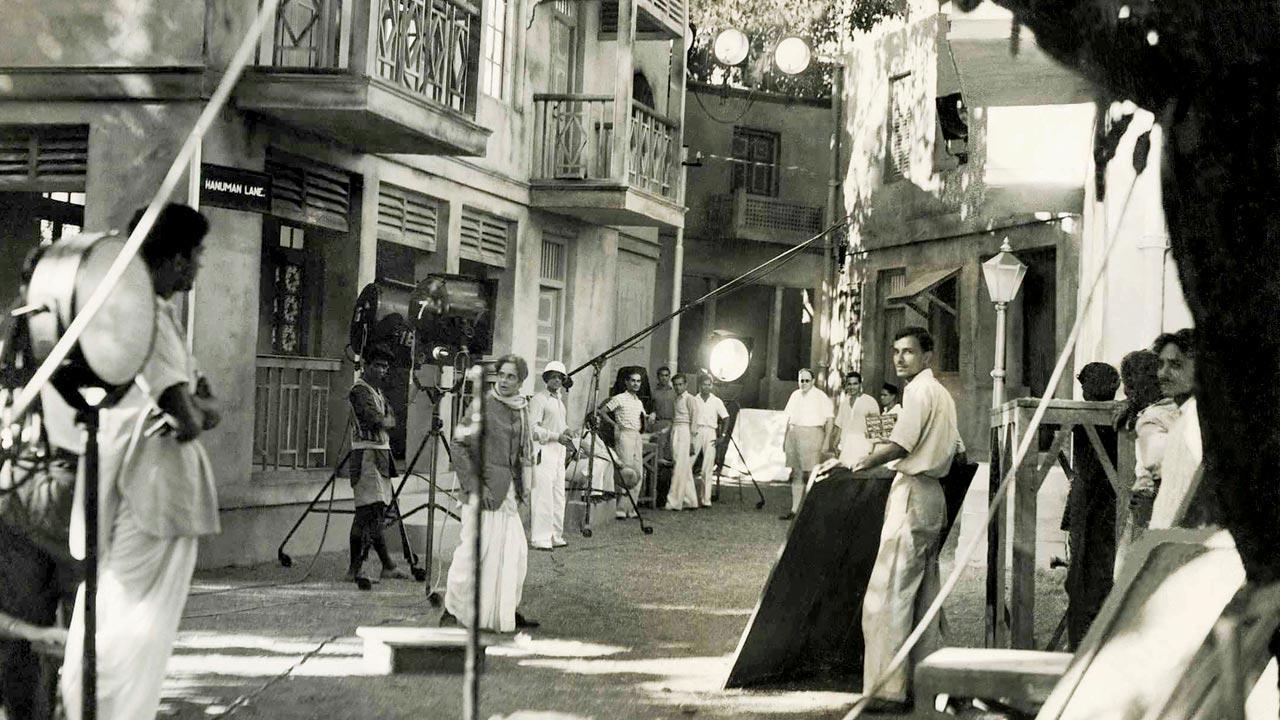
An elaborate lighting set-up for an outdoor scene shot on a built set for Bhabhi (d. Franz Osten, p. Bombay Talkies, 1938). Bombay Talkies’ popular comedian, VH Desai, can be seen rehearsing a scene in which he mistakenly flees from the good-natured protagonist, P Jairaj. Courtesy/Bombay Talkies: An Unseen History of Indian Cinema, edited by Debashree Mukherjee
The story of Josef Wirsching is intimately tied with the story of Bombay Talkies, a film studio that has an undisputed place in the history of Indian cinema. While films like Achhut Kanya (1936) and Kismet (1943) are considered important milestones in the career of sound cinema from Bombay (now Mumbai), many of the studio’s stars and technicians actively shaped commercial filmmaking in twentieth-century India. From Ashok Kumar, who started as a rookie laboratory assistant at the studio, to Dev Anand, who made his acting debut with Ziddi (1948), several of India’s best-loved stars began their film careers at Bombay Talkies. Interestingly, a review of Ziddi in the Times of India noted that the film was “distinguished by some of the finest photography we have seen in years on the Indian screen—the camera in fact steals the picture,” and therefore, according to the reviewer, the real star of the film was not a debutant Dev Anand but Josef Wirsching’s cinematography.
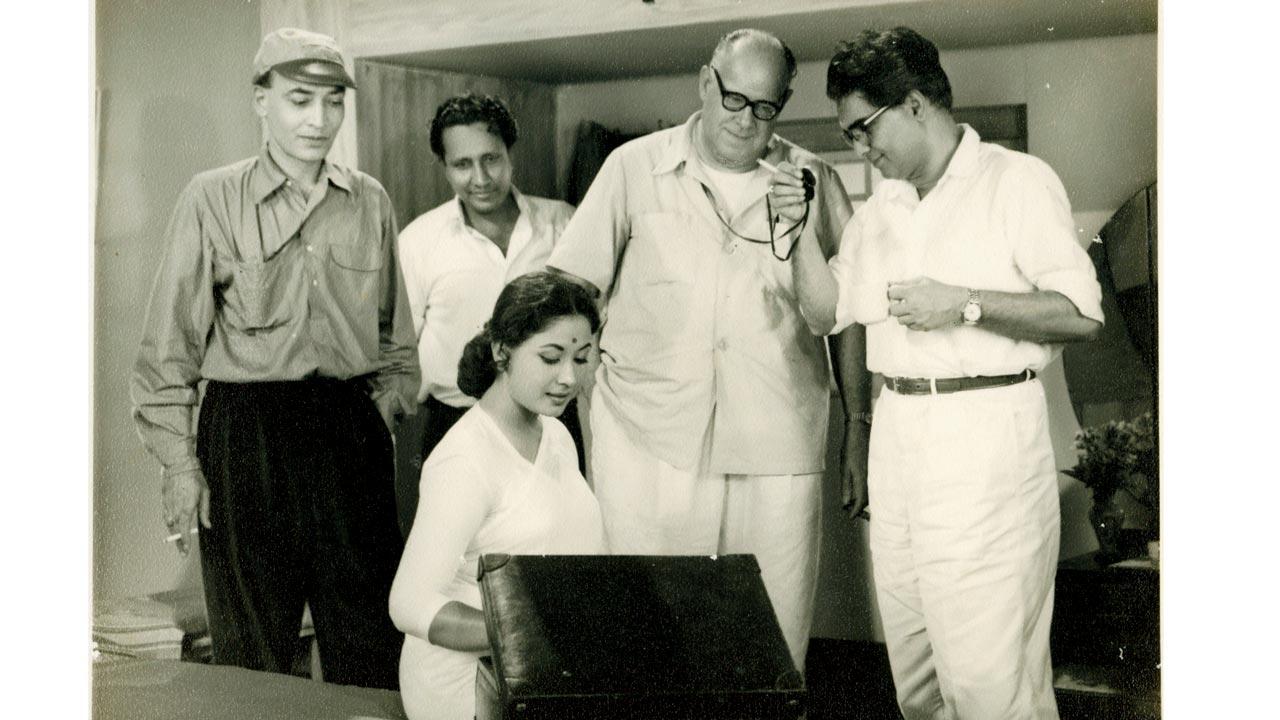 Kishore Sahu, Josef Wirsching and Kamal Amrohi gather around Meena Kumari during the shooting of Dil Apna Aur Preet Parai (d. Kishore Sahu, p. Kamal Pitures, 1960)
Trending Stories
Latest Photos
Latest Videos
Latest Web Stories
ADVERTISEMENT
Mid-Day Fast
ADVERTISEMENT

ADVERTISEMENT