






Home / Sunday-mid-day / / Article /
How Velas village's efforts to protect Olive Ridley turtles helps study them
Updated On: 07 May, 2023 11:47 AM IST | Velas, Mandangad | Ranjeet Jadhav
The seeds of change sown by Ratnagiri’s tiny coastal village to protect its turtles has led to a first-of-its-kind satellite-tagging effort along the entire western coast that’ll shine light on the migratory patterns of the Olive Ridley

Listen to this article :
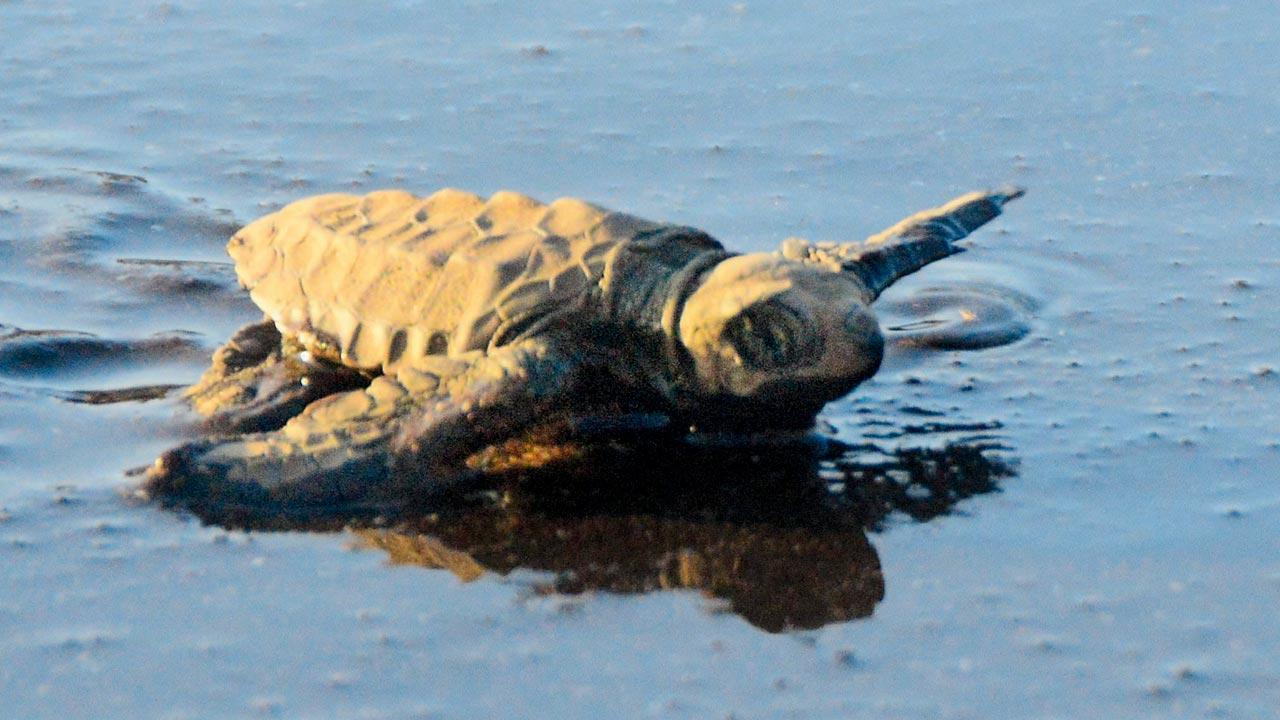
Tiny Olive Ridley hatchlings make their way towards the sea, early in the morning at Velas beach in the Mandangad taluka of Ratnagiri. The babies are often attacked by crabs or large fish in the sea. Pics/Satej Shinde
Nestled between a secluded beach on one side and picturesque mountains on the other, the coastal village of Velas in Mandangad Taluka of Ratnagiri district, wakes up before dawn. At 5 am on a sluggish March weekend, a group of visitors throng the beach for a rare spectacle. As the salty sea breeze blows, tiny turtle hatchlings emerge from beneath layers of sand. With the sea glistening in the early morning sun, the hatchlings follow the light. They crawl towards the waters, amidst cheers from an expectant crowd.
There was a time when turtle eggs were a meal-time delicacy for the villagers. Today, the 225 families that live here are the frontrunners of turtle conservation efforts in Maharashtra, and the force behind the annual Velas Turtle Festival. Every March, when the turtles come to the beach to prepare for hatching, the festival draws in tourists who are hosted at homestays and guided by the villagers, who share stories with them about the importance of protecting the Olive Ridley turtles, a species found in the tropical waters of the Pacific, Atlantic and Indian oceans, and gets its name thanks to the colour of the heart-shaped shell. It has given them a steady source of income. Ownership of the species they cohabit the village with means that the villagers don’t allow sand activity or water sports at Velas beach. Tourist must walk close to 10 minutes to get to the shore to witness the conservation effort at the artificial pits.
Trending Stories
Latest Photos
Latest Videos
Latest Web Stories
ADVERTISEMENT
Mid-Day Fast
ADVERTISEMENT

ADVERTISEMENT