






Home / Sunday-mid-day / / Article /
Fitness experts highlight importance of body's recovery from fitness activities
Updated On: 04 February, 2024 06:50 AM IST | Mumbai | Christalle Fernandes
Cryotherapy, muscle compression, fitness bands, and ice-baths—recovery after exercise is a science on its own, and a great way to stay fit

Listen to this article :
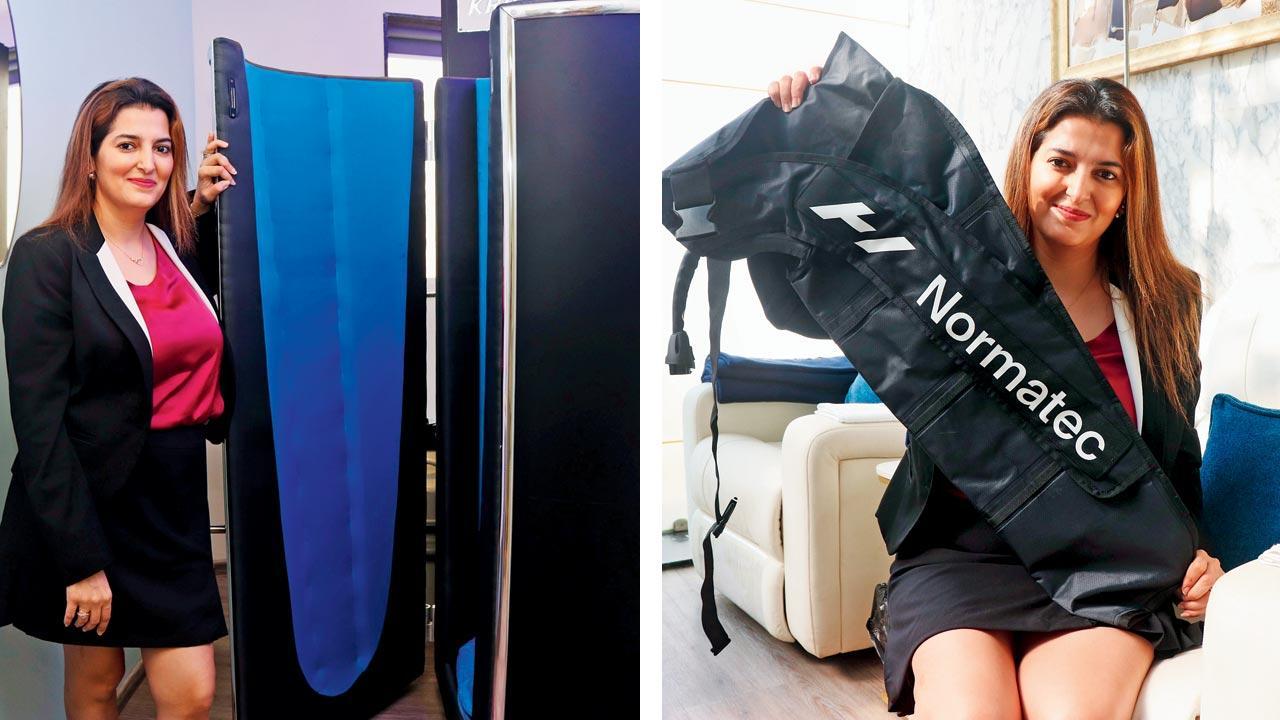
Tanya Khubchandani Vatsa, the founder of Elixir Wellness, standing outside the cryotherapy machine that the centre uses to treat muscle inflammation. The machine is cooled to -190C for the three-minute session; (right) Normatec compression involves a sleeve-like pouch for the legs and arms. It uses pressurised air pockets to massage the limbs. Pics/Anurag Ahire
Ice baths may seem like just another social media challenge, but fitness freaks have been doing it before it was cool. Last week, Rohan Bopanna, who made history as the world’s oldest Grand Slam winner at 43, talked about using ice baths to recover from on-field sessions. Dunking your entire body in freezing water apparently gets the muscles back in working shape by reducing inflammation, swelling, and soreness. But this technique is one of the basic ones in exercise recovery, the practice of helping the body recuperate after intense activity.
Maulika Sharma, a certified recovery specialist, says that many people are fit but don’t know how to recover from fitness activities. Sharma, who’s been training since she was in college, says that she started recovery therapy when she didn’t feel as fit as she looked. “Recovery is not about taking rest, but more so about flexibility, mobility and understanding how to reduce inflammation and oxidative load,” she says. “I noticed that many fit-looking people in the gym are actually injured—they suffer from lower back pain, shoulder problems, and knee issues.” Sharma, who is also a nutritionist and strength and conditioning coach, personally loves ice-baths and needling therapy, to reduce inflammation and trigger point release.
Trending Stories
Latest Photos
Latest Videos
Latest Web Stories
ADVERTISEMENT
Mid-Day Fast
ADVERTISEMENT

ADVERTISEMENT