






Home / Sunday-mid-day / / Article /
Love silk sarees? This book takes you through the fabric's history
Updated On: 08 October, 2023 07:26 AM IST | Mumbai | Sucheta Chakraborty
A writer’s fond memories of her mother’s silk sarees culminates into a new book on the history of silk, and India’s rightful place in it

Listen to this article :
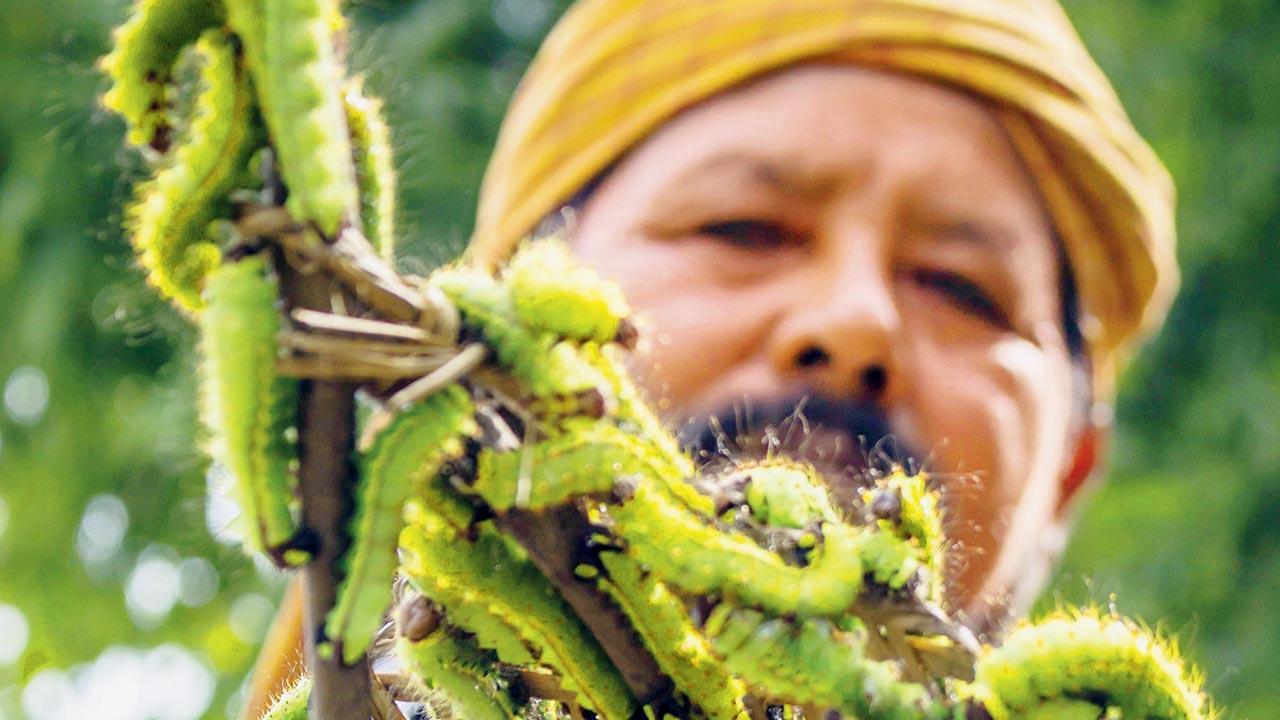
From cocoons in London’s museums to unnamed women lost in time, Aarathi Prasad traces the strands of silk through the ages. Seen here is a farmer preparing Muga silkworms to be released on Som trees, which yields Assam’s unique golden yellow silk. Pic/Getty Images
I found it remarkable that such an ancient traditional material could have such a surprising, technological future,” Aarathi Prasad tells mid-day. The London-based writer, broadcaster and researcher says that she understood that the history of silk was a more global, and nuanced story than most realise. “And that the domesticated silk moth was by no means the only animal whose silk people wove into fabrics.” Prasad’s new book, Silk: A History in Three Metamorphoses (HarperCollins India) is a cultural and biological account spanning continents and millenia, combining global and natural histories of silk production with more human records of scientists and explorers, as well as a study that goes beyond the Chinese silkworm Bombyx mori to trace stories of ‘other’ silks from other moths such as muga and tasar from India as well as sea silk from mollusks and spider silk. As she explains in her Introduction, “…there is not just one silk, there is not just one story of silk.”
 Placing silkworms in the spinning trays and removing the cocoons; Drying cocoons in the sun; Unwinding the cocoons; Testing, sorting and packing silk
Trending Stories
Latest Photos
Latest Videos
Latest Web Stories
ADVERTISEMENT
Mid-Day Fast
ADVERTISEMENT

ADVERTISEMENT