






Home / Sunday-mid-day / / Article /
‘They take care of me because they want the land’
Updated On: 21 May, 2023 09:31 AM IST | Mumbai | Team SMD
How does a family with a hijra sibling living within the household negotiate embarrassment and acceptance?

Listen to this article :
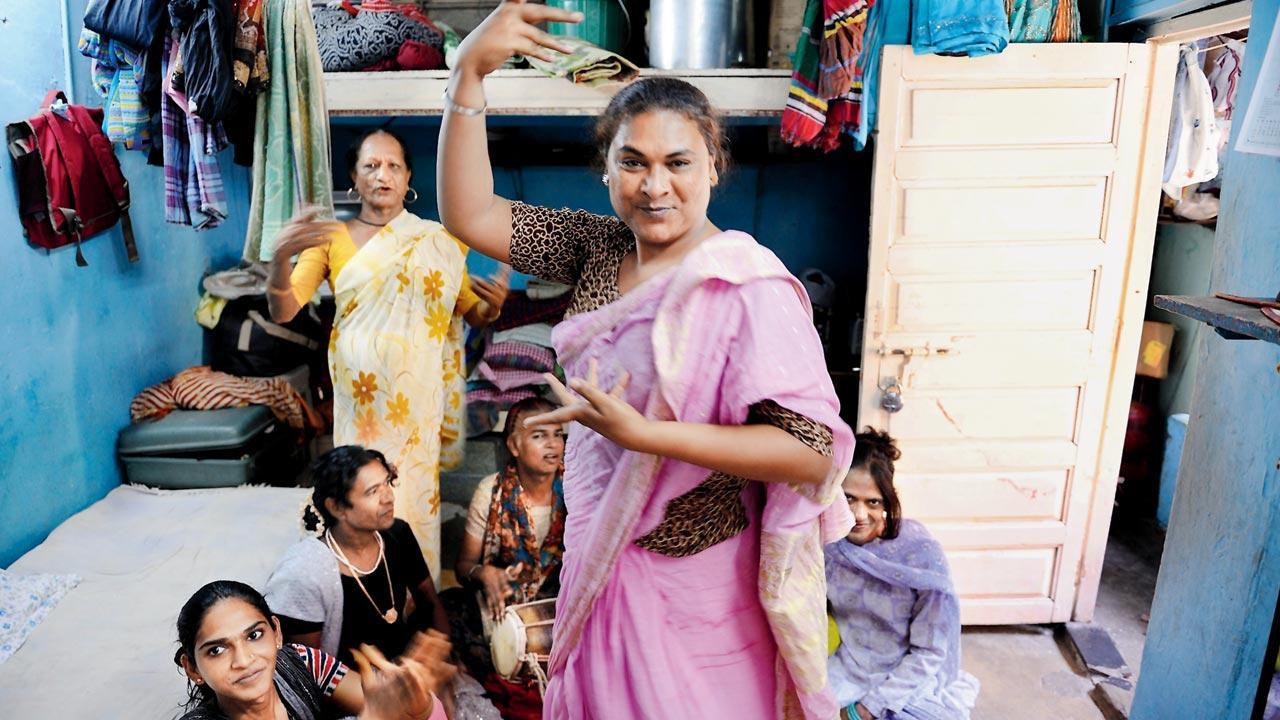
A file photograph of members of the hijra community living in Andheri. Pic/Getty Images
Jaina had been working since she was ten years old. Her former jobs included milking cows for a Marwari cow trader, employment in two biscuit factories in the neighbouring district of Baripada, and labouring in construction. She was also a cook in a small roadside eatery, where she made meals for migrant workers. After working for 50-odd years and helping her mother raise her two brothers and two sisters, she returned to Bhadrak in 2006 to a room from which she sold small quantities of spices. She also ran a small flower shop, where she made garlands for nearby mosques and mazars. Although her flower shop was to be demolished to make room for bigger shops, Jaina was unfazed because she could no longer afford the flowers, which came from Calcutta, to make garlands anyway; floods had destroyed a lot of flowers in the last Ramzaan (August 2010), the month in which Jaina would have earned the most.
Because she had a place to stay and took her meals with her brother, she was only mildly disappointed by these turns of events, which might have worried other shopkeepers far more. I asked her why she still peddled spices and flowers when both jobs were obviously not going well. She replied, “I can’t ask my brothers for money every day. They might give me money some days, but they will start complaining afterward. I can’t ask money for every little thing I need, plus the money I give to Muneeza”—referring to her brother’s third child, four years old, who would come every hour repeatedly pleading with Jaina to give money for small snacks. This sense of awareness Jaina had about the limits and possibilities of kinship with her brothers made me prick up my ears because, right at the beginning of my fieldwork in 2008, she had claimed that her brothers loved her, as did everyone in the family. “You eat here every day,” she stated. “You tell me—can’t you see how much they love me? They never insult me, and when I am ill they buy me medicines.” This attestation had led me—mistakenly—to frame the relationship between hijras and their families in terms of either acceptance or ostracism—triumphs of either filial love or family honour.
Read Next Story
Trending Stories
Latest Photos
Latest Videos
Latest Web Stories
ADVERTISEMENT
Mid-Day Fast
ADVERTISEMENT

ADVERTISEMENT