






Home / Sunday-mid-day / / Article /
The Moral Contagion dives into the history of plagues and how they shape society
Updated On: 14 January, 2024 06:54 AM IST | Mumbai | Aastha Atray Banan
In their new collaboration, Julia Hauser and Sarnath Banerjee take you to colonial times where as the plague raged, morality was shaped. He wants you to come along for the ride; she wants you to never forget

Listen to this article :
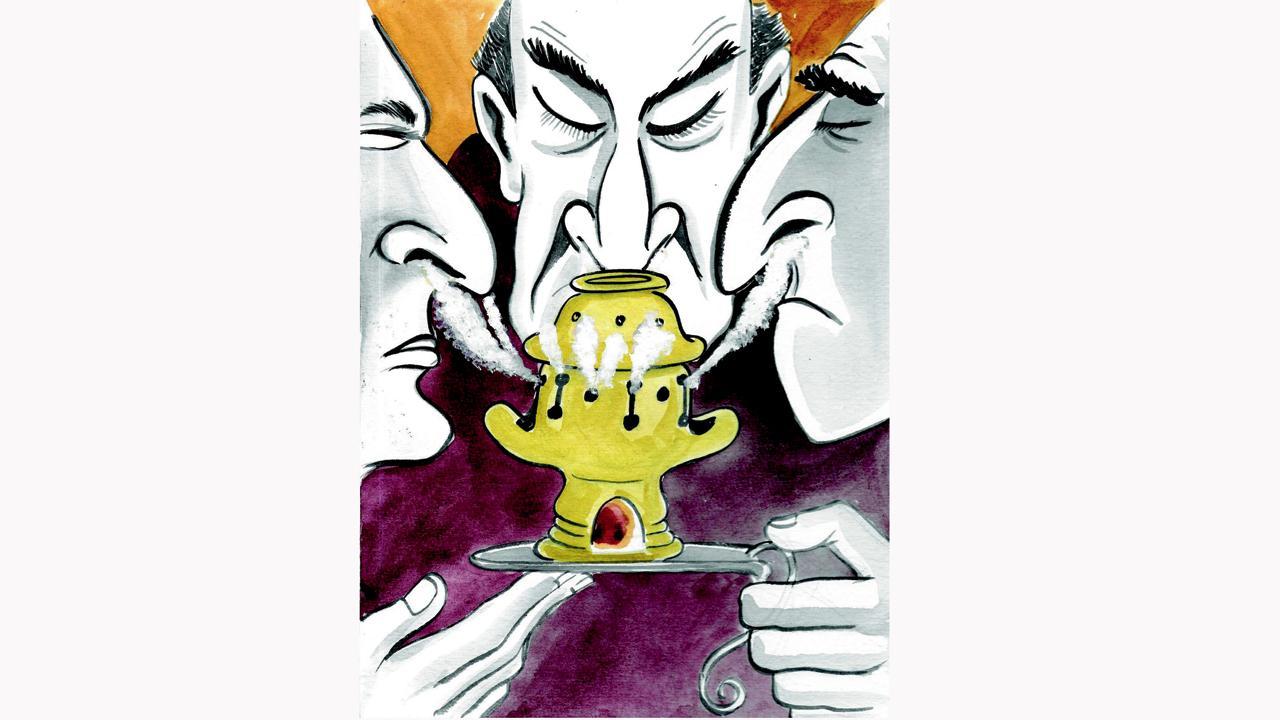
Like steam inhalation became commonplace during the Coronavirus pandemic, the book says that when the plague was raging in Europe, people were advised by writers like John of Burgundy to “burn juniper in their fireplaces or inhale fragrant powder heated over a fire of coals”.
Like there was COVID, there was once the bubonic plague. And not just any plague, but one that lasted from the 1300s to the 1900s, a wave arriving every few years, and leaving behind a trail of deaths. The first big European outbreak was in the 14th century, and then in 1665, a new wave hit St Giles outside London. It was in 2020, as we grappled with a new normal when the first wave of the Coronavirus pandemic swept India and the world, that lecturer Julia Hauser, who teaches modern history at the University of Kassel in Germany, wondered about the similarities between the plague and the modern pandemic. “All the libraries were shut, so I started reading information online, and dug up Internet archives. I then reached out to people who may know more,” says Hauser over a phone call from Germany.
Three years later, this curiosity has given shape to The Moral Contagion (HarperCollins), where Hauser combines intensive research with imaginative storytelling and Sarnath Banerjee helps her create a graphic narrative.
Trending Stories
Latest Photos
Latest Videos
Latest Web Stories
ADVERTISEMENT
Mid-Day Fast
ADVERTISEMENT

ADVERTISEMENT