






Home / Sunday-mid-day / / Article /
The Mumbaikar who secured human rights for womankind
Updated On: 11 August, 2024 07:40 AM IST | Mumbai | Team SMD
From enshrining women’s rights in the Constitution of India, to tweaking the UN’s Universal Declaration of Human Rights so it didn’t exclude women, this extract from a new book lays out how Mumbai freedom fighter Hansa Mehta fought to empower all women

Listen to this article :
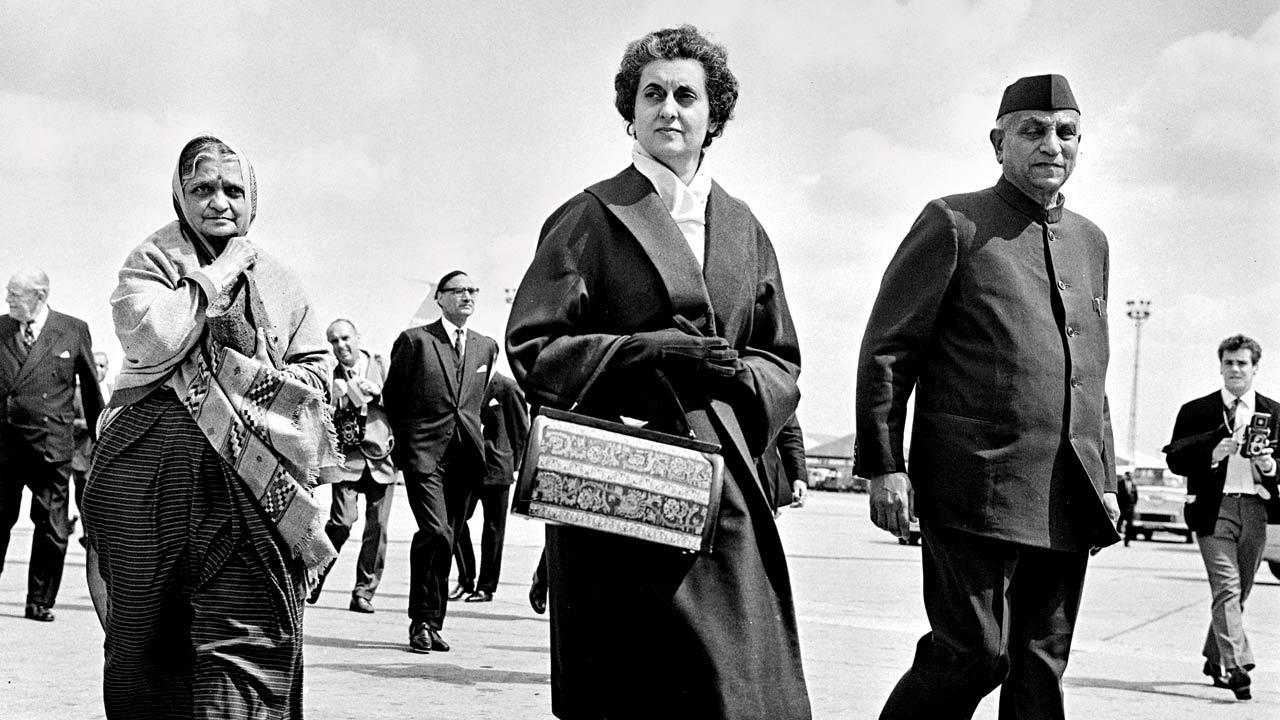
Indira Gandhi, then the minister of information and broadcasting, flanked by Hansa Mehta on the left and Mehta’s husband Jivraj Narayan Mehta—then the Indian high commissioner to the UK—on the right, in London in July 1964. The Mehtas lived in Mumbai, participated in the freedom struggle here and were even arrested in the city by the British. Pic/Getty images
In 1947, the United Nations Commission on Human Rights (UNCHR) set about drafting the Universal Declaration of Human Rights (UDHR) in the aftermath of World War II. Eleanor Roosevelt, the former first lady of the USA, was the chairperson of the commission. The Draft Article 1 of the UDHR said, “all men are born free and equal”. Hansa Mehta, reformist and activist, who was also the Indian delegate to the commission, stood strongly against the exclusionary language. Her years of feminist activism had imbibed in her the importance of equality in all spheres and forms. She argued that the words “all men” could be used to restrict the rights of women. She prevailed upon her colleagues to choose a gender-neutral international human rights framework that proclaims, “all human beings are born free and equal”.
• • •
Read Next Story
Trending Stories
Latest Photos
Latest Videos
Latest Web Stories
ADVERTISEMENT
Mid-Day Fast
ADVERTISEMENT

ADVERTISEMENT