






Home / Sunday-mid-day / / Article /
Historian delves upon the perils of being a travelling ayah during British era
Updated On: 03 July, 2023 02:59 PM IST | Mumbai | Jane Borges
A historian-author has spent the last decade stitching together stories of the travelling ayahs who served colonial families on sea, only to be abandoned on foreign land. Her latest book looks at what made them critical to the resilience of the British imperial rule

Listen to this article :
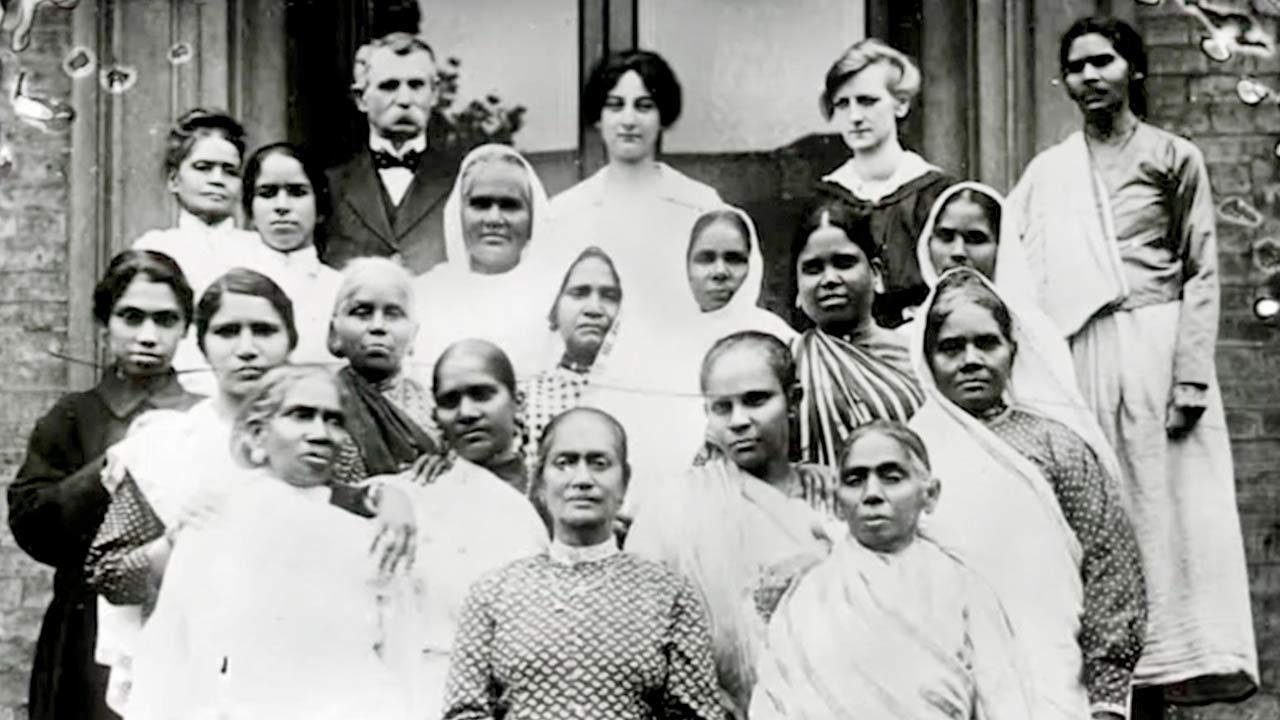
Travelling Ayahs at Ayah’s Home. Pic Courtesy/London City Mission
One of the most rewarding aspects of being a historian, says Dr Arunima Datta, is going into long-neglected archives and disappearing into historical rabbit holes. “They often lead to new and exciting research paths.” For the author and professor of Asian and British Empire history, the discovery happened in 2012, while she was undertaking archival research in Arkib Negara, Kuala Lumpur for a dissertation on Indian coolie women in British Malaya. It’s here that she stumbled on a Labour Department file, which discussed how an elderly coolie woman could easily be employed as an ayah (nanny) for a planter’s children.
“The image of an old coolie woman, who could no longer accurately tap rubber trees; whose hands were probably rough from carrying pails of latex and handling knives for weeding and tapping, suddenly becoming an eligible recruit as a caregiver for the delicate body of a planter’s child—the future of the British Empire—lodged itself in my mind,” she tells mid-day in an email interview. “Later, the same year, researching the records of the India Office in the British Library in London, I came across a file that documented the story of an Indian ayah, who was brought to Malaya by a planter family and taken to Britain during their summer vacation. Subsequently, the ayah was abandoned in London and her case came to the attention of the India Office.” The correspondence, says Datta, suggested that this desertion of travelling ayahs by their employers had become alarmingly common in Britain during the 19th and early 20th centuries.”
Trending Stories
Latest Photos
Latest Videos
Latest Web Stories
ADVERTISEMENT
Mid-Day Fast
ADVERTISEMENT

ADVERTISEMENT