






Home / Sunday-mid-day / / Article /
How domestic workers in Maharashtra are ignored and refused basic rights
Updated On: 08 October, 2023 07:00 AM IST | Mumbai | Gautam S Mengle
Housemaids are a workforce that we take for granted in day-to-day life. So much so that we don’t even know how many of them exist in the state

Listen to this article :
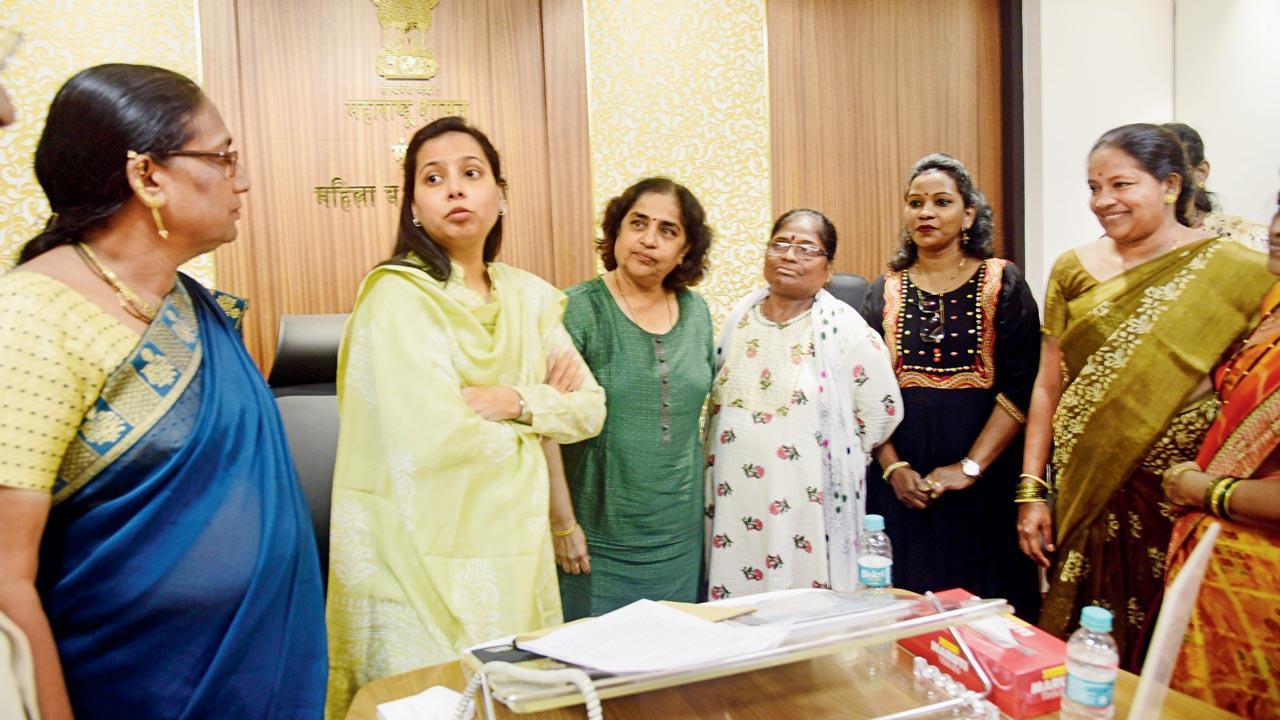
A delegation comprising domestic workers and activists who work for their welfare met Women and Child Development Minister Aditi Tatkare on Thursday. Despite being a significant workforce in the state, women who work as househelp currently have next to no provisions for their basic rights. Pics/Atul Kamble
Ragini More has been doing domestic jobs since the monthly salary for maids was R100 per month. The years, and inflation, have not been kind—her back is bent and her gait wobbles as she walks. With no education, housework has been her only source of income for as long as she can remember.
“I can’t say how many years I’ve been doing this, for the same reason, I don’t know how old I am. I am not very good at counting,” she tells mid-day. We estimate she must be in her 50s. “What I do remember is that my son was five years old when I started leaving him and his two younger sisters alone in the house while going to work. I would lock the door from outside and my little boy would be in charge of his toddler sisters. Every time they got hungry, they would call out to our neighbours and receive food through the window.”
Read Next Story
Trending Stories
Latest Photos
Latest Videos
Latest Web Stories
ADVERTISEMENT
Mid-Day Fast
ADVERTISEMENT

ADVERTISEMENT