






Home / Sunday-mid-day / / Article /
This new Bandra restaurant celebrates food made along the Jhelum river
Updated On: 21 May, 2023 07:43 AM IST | Mumbai | Jane Borges
A third-generation restaurateur reconnects with the land of his Partition-refugee grandfather, with an intimate fine-dining space inspired by undivided Punjab’s famous river

Listen to this article :
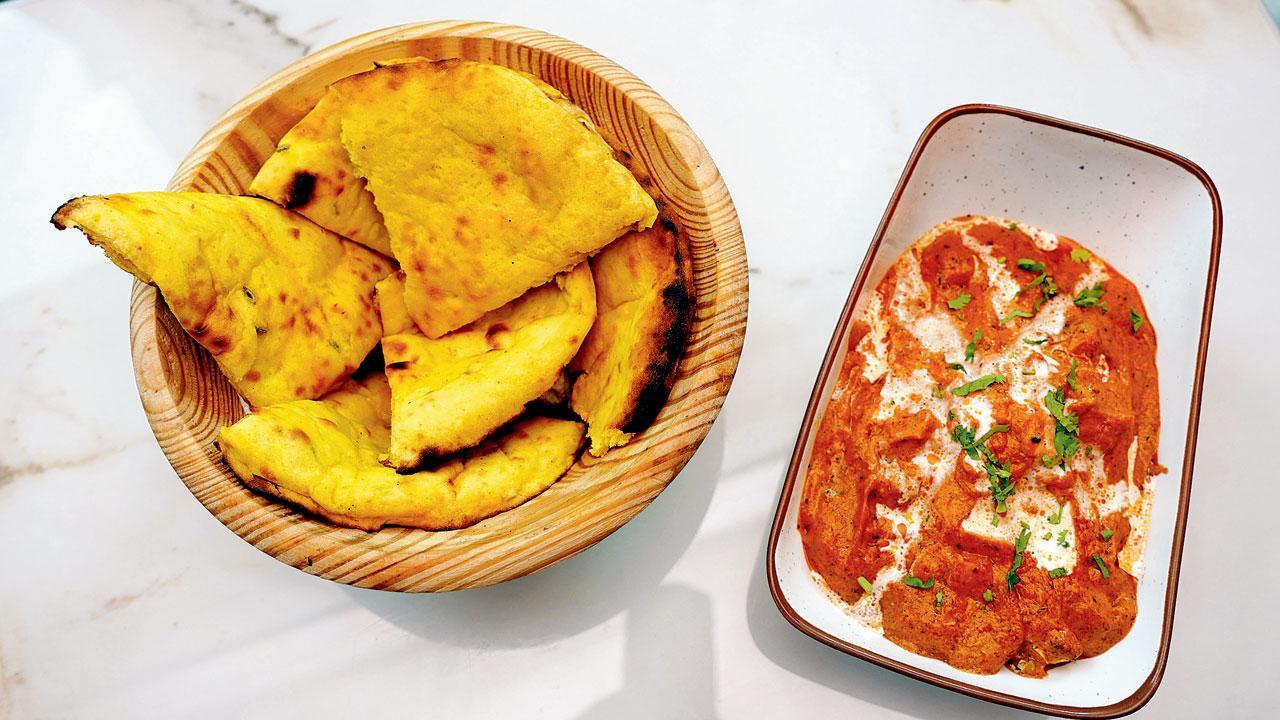
Taftan, which is a lot like the Indian naan, but slightly sweeter and is kneaded with saffron water, is best enjoyed with murgh makhani or Kashmiri rogan gosht
On the map, the Jhelum is a blue line that meanders and flows in a trajectory splintered by the Partition. Rising from a deep spring at Vernag, in the western Jammu and Kashmir union territory in India-administered Kashmir, it races through the Kashmir valley to Wular Lake in Srinagar, where it calms and stills, before bending southwards into the Pakistani province of Punjab. Before 1947, Jhelum resided in one land, now it departs into another.
The Chhabras, like the river, were oblivious of their future—they were affluent landlords, living in Gujranwala in undivided Punjab, through which the Jhelum flows. A recklessly drawn border forced the family out of their hometown. Joining the sea of refugees, Raj Kumar Chhabra arrived in Bombay with his parents and two siblings on a train, moving into a camp in Chembur.
Trending Stories
Latest Photos
Latest Videos
Latest Web Stories
ADVERTISEMENT
Mid-Day Fast
ADVERTISEMENT

ADVERTISEMENT