






Home / Sunday-mid-day / / Article /
How this new book dives into the perfume traditions of India
Updated On: 24 September, 2023 08:56 AM IST | Mumbai | Sucheta Chakraborty
Author of a new book on the perfume traditions of India makes a pitch for quality standardisation and giving the attar-making artisanal labour its rightful due

Listen to this article :
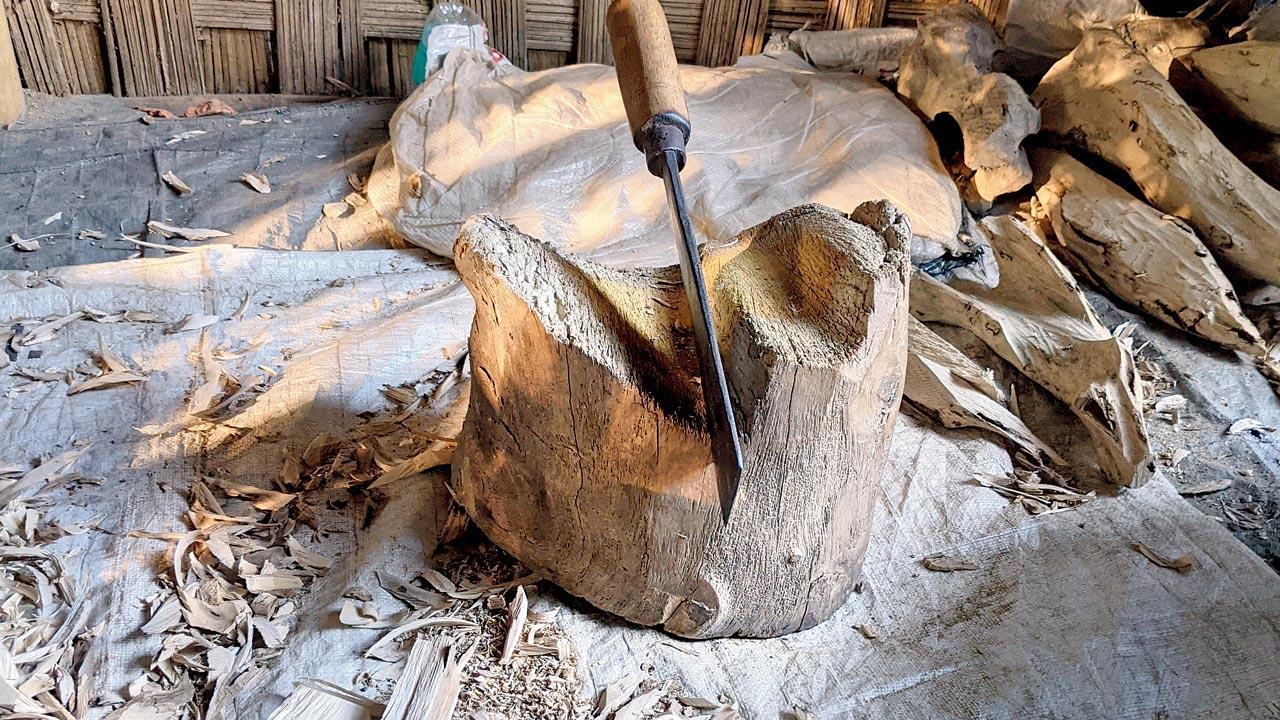
Agarwood in Titabar, Assam. Dhingra writes that what makes evergreen agarwood trees, found mainly in the northeast of India, valuable is the resin that they may contain which is a result of the tree’s natural reaction to an infection. If a tree is infected with a parasitic mould, it protects itself by producing a resin high in volatile oils, which can be scraped or cut away while the wood of that particular tree is distilled. The higher the quality of the resin, the better the oil in the wood which is known as oud
Bombay [contains] the most number of smells per square yard that you’ll find anywhere in the world if you just pay a little bit of attention,” journalist and author Divrina Dhingra, who has just published The Perfume Project: Journeys Through Indian Fragrance (Westland Books; R599) tells us when we ask about the characteristic smells that she associates with the city. In the Introduction to her book, which blends science, history, commerce and travel, she writes about carrying around a ‘scent library’ in her head and of olfactory references picked up from places, where for instance, “the acrid smell of burning leaves, the mysterious perfume of tiny harshringar flowers which bloom in the evening and wither by sunrise,” and “the mingling impressions of hot dust, sweet tea, desert coolers and strong incense” are the smells of Delhi. “You walk around Bombay… and you are going to smell so many things, pleasant and unpleasant. It’s very rich like that,” the New Delhi-resident says of the city where she has spent two years.
Dhingra’s earliest memories of fragrances, as with most people, are of her mother’s preferred perfume, Yves Saint Laurent’s (YSL) iconic Paris, which she describes in the book as “a neon burst of roses, violets and sweet vanilla… an unabashedly glamorous perfume”. “She always smelt of that, all her sarees and cupboards smelt of it. But I can’t say that that made me want to wear the perfume,” says the author who didn’t own her first fragrance—Penhaligon’s Artemisia—until her twenties. It was rather during her stay in New York studying for a Master’s degree that she got curious about perfumes. “When I think back, it was just a way to distract myself because I was having a really rough time and this was a pleasurable distraction.”
Trending Stories
Latest Photos
Latest Videos
Latest Web Stories
ADVERTISEMENT
Mid-Day Fast
ADVERTISEMENT

ADVERTISEMENT