






Home / Sunday-mid-day / / Article /
Sohini Chattopadhyay’s book speaks of Indian history through its women athletes
Updated On: 22 October, 2023 08:13 AM IST | Mumbai | Jane Borges
A journalist’s desire to reclaim public spaces for women, sets her on a quest to follow female athletes and their tryst with a young nation

Listen to this article :
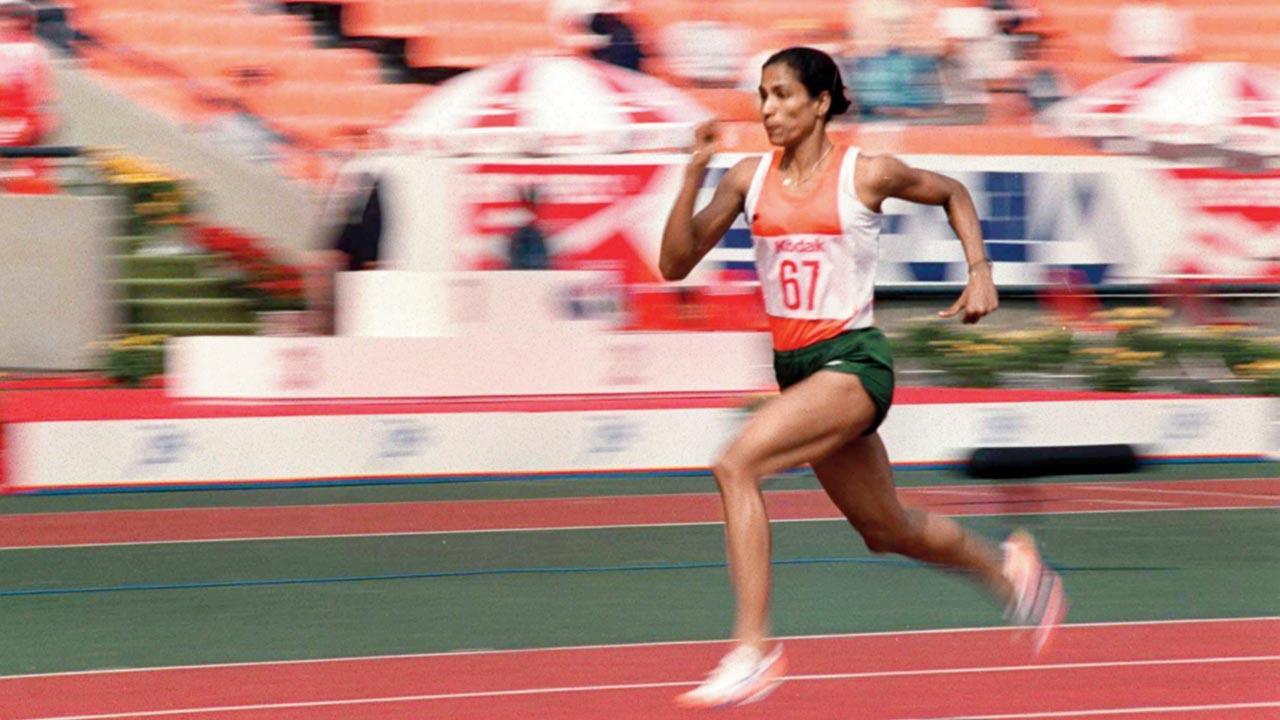
Sohini Chattopadhyay says that by the 1980s, a lot of female sportspersons began emerging out of Kerala due to the government scheme to promote sports among young women. PT Usha, seen here in a photo from 1986, streaking her way to pass in the women’s 200-m heats with a new Asian Games record time of 23.68 secs, was a product of this scheme. Pic/Getty Images
The seeds for Sohini Chattopadhyay’s debut book, The Day I Became A Runner (HarperCollins India), were planted in the aftermath of the gangrape and death of the 23-year-old paramedical student in Delhi, in December 2012. Protests had followed. “And while there was a lot of condemnation of the viciousness of the attack,” Chattopadhyay says over a video call from Kolkata, “Within that, there were those three inevitable questions—what was she doing, where was she doing and what was she wearing. It was almost like a chorus, ‘doing what, going where, wearing what’.” Then came the “staggering remark” by Abhijit Mukherjee, the son of then President of India Pranab Mukherjee and a Congress MP from Jangipur in West Bengal, who claimed that “dented and painted women were part of these protests”.
Chattopadhyay, a National Award-winning film critic, had by then been a journalist for eight years, and was on a year’s break to pursue a Master’s degree in sociology in Edinburgh. She remembers feeling angry about everything that was happening around her. “My response was purely physical. I felt like I had to put myself out there on the streets… I had to claim public space, inhabit it, and legitimately.” The one way she could do that, she remembers thinking to herself, was through running.
Trending Stories
Latest Photos
Latest Videos
Latest Web Stories
ADVERTISEMENT
Mid-Day Fast
ADVERTISEMENT

ADVERTISEMENT