






Home / Sunday-mid-day / / Article /
Of red ant chutneys and dhuska ghugnis
Updated On: 30 June, 2024 08:30 AM IST | Mumbai | Nasrin Modak Siddiqi
Jharkhandi cuisine is a rich tapestry of outside cultural influences and indigenous foods. Sunday mid-day explores this unique amalgamation through the perspectives of those who call the state home

Listen to this article :
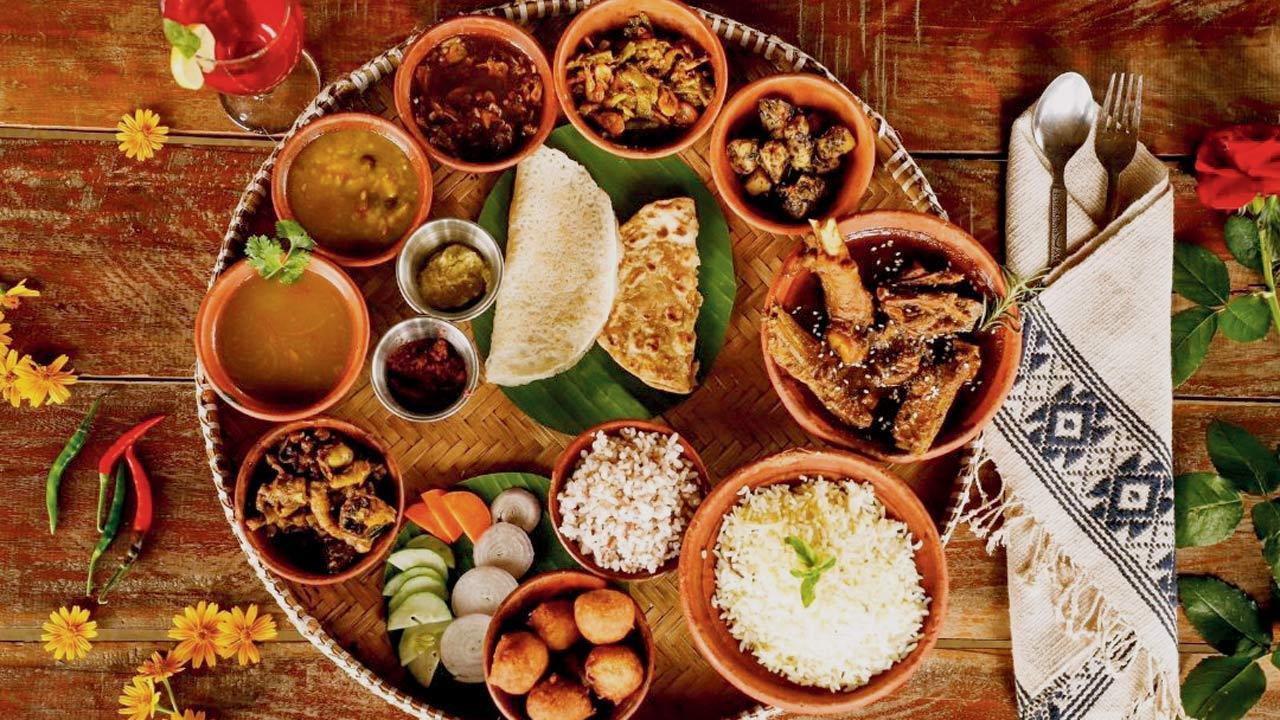
This traditional Jharkhandi thali at The Open Fields, Ghasibari, has madwa roti, chilka roti (center). Starting from the salad, clockwise, katnausi (chana and mutton innards), phutkal maadh jhol (starch of brown rice cooked with dehydrated herbs), aloo chana sabzi, sunai manchurian, chingri machli sabzi, (river shrimp with seasonal veggies), aloo kanda saag, desi mutton curry, sonachur rice, goda chawal, and gulgula (brown balls). There is kathal (jackfruit) ki chutney and kudrum (gongura) chutney.
Growing up in a typical Goan family in Mumbai, Michelle Fernandes’ mother ensured her children stayed connected to their roots, especially through food. This instilled in Fernandes a love for cooking, where she made some of the best fish curries and tea cakes that everyone raved about. Little did she know that her marriage to a Dhanbad-based entrepreneur would have her move to the coal capital of India and set her on a roller coaster of changes—in culture, food, place, and language. Going from xith kodi (fish curry) to dal, bhat, bhujia (vegetable sautéed in mustard oil) took some getting used to, but her love for cooking kept her curious enough to explore a cuisine that has a strong influence from the bordering states of Bihar, UP, Chattisgarh, Odisha, and West Bengal. Think posto (poppy seeds), mangrela (onion seeds) and leela sarson (mustard flavour, not for the faint-hearted).

This thali includes desi chicken curry, demta pickle (Pickled red ant chutney), kinda (sweet potato mash), phutkal (new leaves of ficus tree) and goda chawal (local brown rice).
Read Next Story
Trending Stories
Latest Photos
Latest Videos
Latest Web Stories
ADVERTISEMENT
Mid-Day Fast
ADVERTISEMENT

ADVERTISEMENT