






Home / Sunday-mid-day / / Article /
Mughals brought effort to India’s wild mango culture
Updated On: 07 July, 2024 08:05 AM IST | Mumbai | Sucheta Chakraborty
From the mango flower in Kamadeva’s arsenal and Gandhi’s predilection for the fruit to the theory that the desire for fleshy fruits is what drove primate evolution, a new book promises to take readers beyond aam debates

Listen to this article :
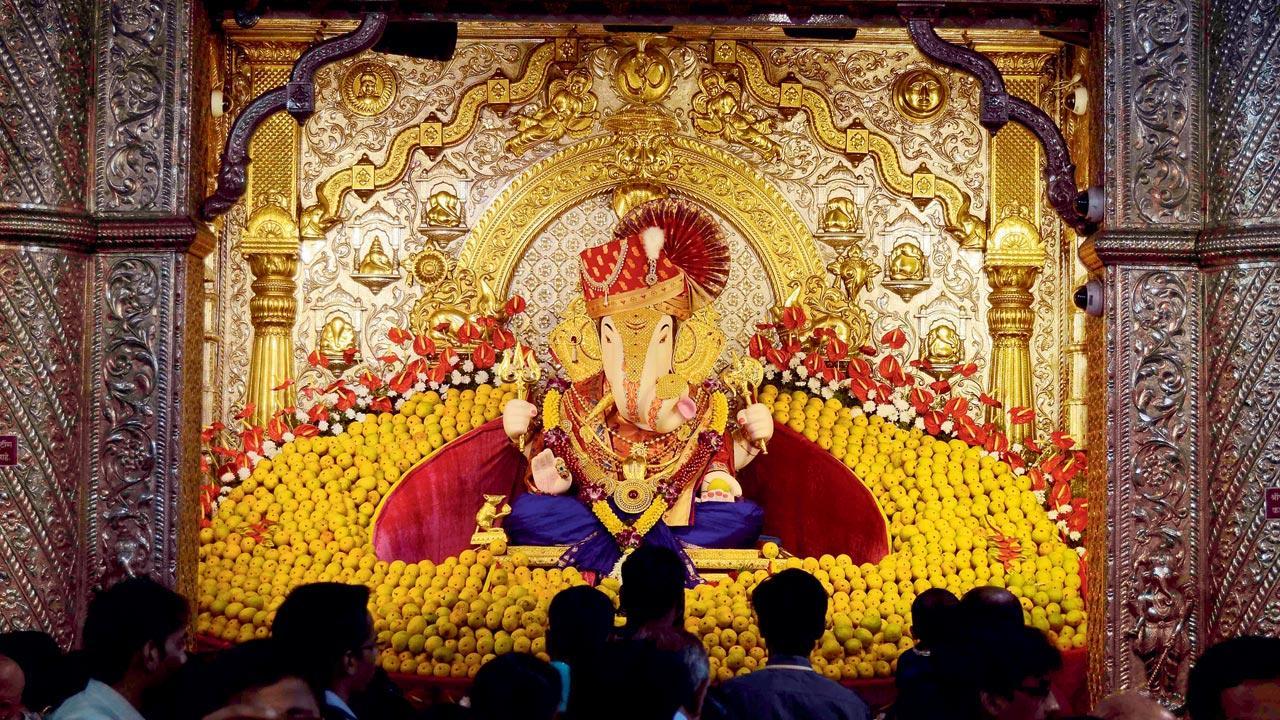
Eleven thousand Alphonso mangoes are offered to lord Ganesha at the Dagadusheth Halwai Ganesh temple in Pune on the occasion of Akshay Tritiya. For the book, Joshi met Mandar Desai of Desai Bandhu Ambewale, which has extensive orchards in Ratnagiri, and a thriving retail and wholesale business in Pune, and is the firm responsible for decorating this iconic Pune mandir with 11,000 mangoes each year. Pic/Getty Images
The mango is the only fruit used to run down other regions and its people. You cannot insult anybody else’s culture by insulting their grapes or oranges or bananas,” Delhi-based journalist and author Sopan Joshi tells us, pointing to both the fruit’s dominance in the popular imagination and the worn-out conversations around the fruit that he hoped to go beyond.
His new book, Mangifera Indica: A Biography of the Mango, a product of ‘slow journalism’ which Joshi espouses, is an ambitious project that shows how multiple disciplines—history, science, ecology, economics, and culture—bear on an understanding of the fruit. Joshi has lived with the story of the mango for close to a decade for this book. Among the more surprising discoveries he made during the course of his research was that for one, there are two distinct cultures of the mango in India. One, of the ordinary people who grew seed-grown mangoes on common land. In all Indian traditions, the forest is central. So, this was the wild mango. Second, there were the vatikas or panchavatis which were the pleasure gardens of the rich. “The mango’s horticulture changed significantly with the coming of Babur, founder of the Mughal dynasty. He came from a completely different ecological landscape—Central Asia is right in the middle of Iran and China, both ancient gardening powerhouses. That approach to horticulture prized controlled improvement. It was very different from traditional sub-tropical ideas of horticulture in India, rooted in an embrace of wilderness and uncertainty. This resulted in the addition of a new layer in India’s culture of the mango, with a sharper focus on the fruit,” Joshi tells mid-day.
Trending Stories
Latest Photos
Latest Videos
Latest Web Stories
ADVERTISEMENT
Mid-Day Fast
ADVERTISEMENT

ADVERTISEMENT