






Home / Sunday-mid-day / / Article /
Maha’s own horn
Updated On: 03 March, 2024 08:10 AM IST | Mumbai | Arpika Bhosale
A clarion call, an aubade, a blessing, a goodbye—a touch of the divine is essential to play the tutari

Listen to this article :
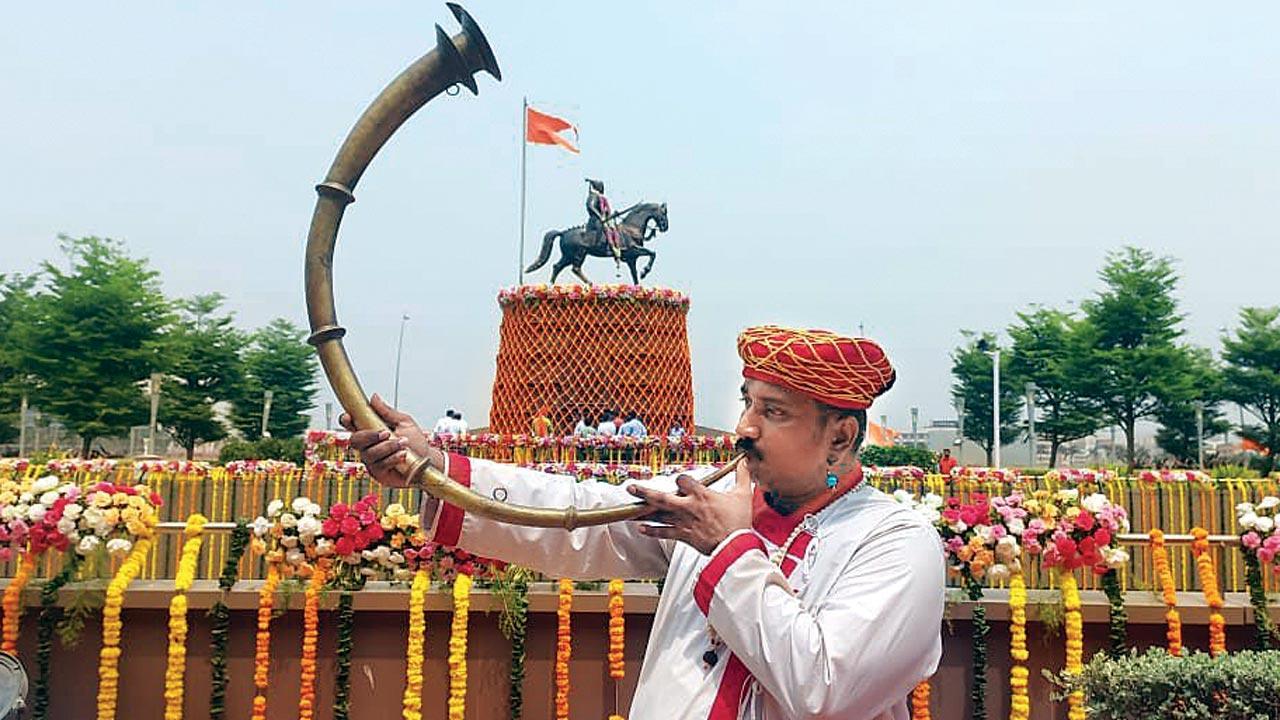
Manish Gurav plays a tutari at a political event. The instrument is still played at major cultural and life events such as weddings and death rites
The mass sentiment that the big C-shaped wind instrument just takes some blowing for those sweet notes to follow is nowhere close to what it demanded of Manish Gurav’s ancestors. “It is said that only one person in each generation is blessed with the gift of being able to play the tutari,” says Gurav, who is a part of the Shivkalin Tutari Lok-Kala Mandal in Jogeshwari. The Gurav community is known for their expertise with the instrument and come from cities such as Sangli, Satara, and Sangola in western Maharashtra. The tutari struck a high note after the Election Commission of India approved a man playing the instrument as the symbol for Sharad Pawar’s Nationalist Congress Party.
Legend has it that the tutari was discovered serendipitously: A farmer lost two beloved buffaloes and cut off their horns before cremation to keep as mementoes. As he mourned them clutching the horns, he noticed a small-hole at the end and blew into it curiously. A sonorous series of notes flowed that he learned to manipulate, and passed on to the next generation.
Read Next Story
Trending Stories
Latest Photos
Latest Videos
Latest Web Stories
ADVERTISEMENT
Mid-Day Fast
ADVERTISEMENT

ADVERTISEMENT