






Home / Sunday-mid-day / / Article /
A premature harvest
Updated On: 10 December, 2023 04:13 AM IST | Mumbai | Neerja Deodhar
In painting a portrait of a Maharashtra village, Atharva Pandit’s debut novel Hurda lays bare the consequences of India’s grim misogyny

Listen to this article :
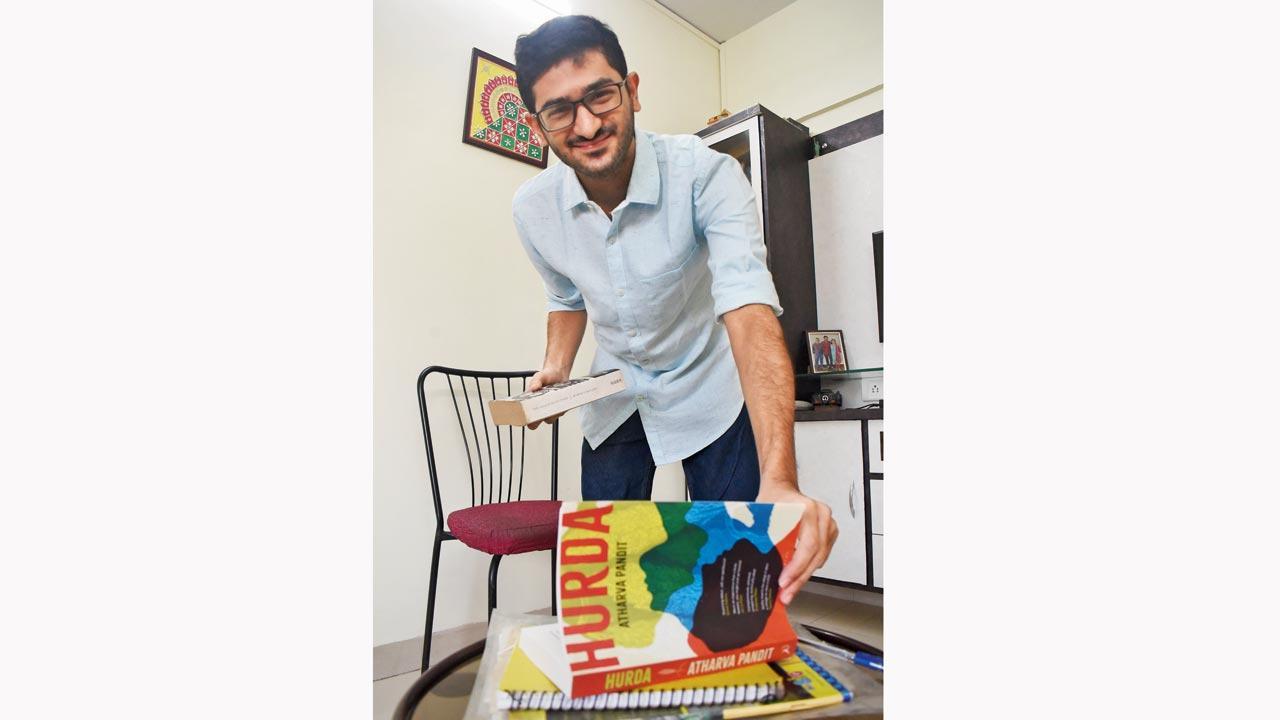
I’ve always been fascinated by novels that experiment with form and teem with characters, says Pandit. Pic/Sameer Markande
Hurda, or tender green sorghum, is cherished in Maharashtra in the winter months when it is harvested and eaten freshly roasted. Hurda parties—where the sweet millet is savoured alongside banter and barbeque fires—are cherished too, especially by city residents seeking an ‘organic’ rural experience.
In journalist Atharva Pandit’s hands, the hurda party is a plot point that perplexes the characters of his debut novel named after the millet (Bloomsbury Publishing/ Bloomsbury India), set in the fictional village of Murwani. Here, the authorities’ urge to solve a crime, and the fellow villagers’ empathy towards the family affected by it, is no match to the years of grief it spawns.
Read Next Story
Trending Stories
Latest Photos
Latest Videos
Latest Web Stories
ADVERTISEMENT
Mid-Day Fast
ADVERTISEMENT

ADVERTISEMENT