






Honouring the legacy of indigenous communities like no other!
Updated On: 19 August, 2023 11:30 AM IST | Sydney | Srijanee Majumdar
A groundbreaking moment occurred at this World Cup as all nine host cities were recognised by both their English and Indigenous names within the FIFA event materials for the very first time

Listen to this article :
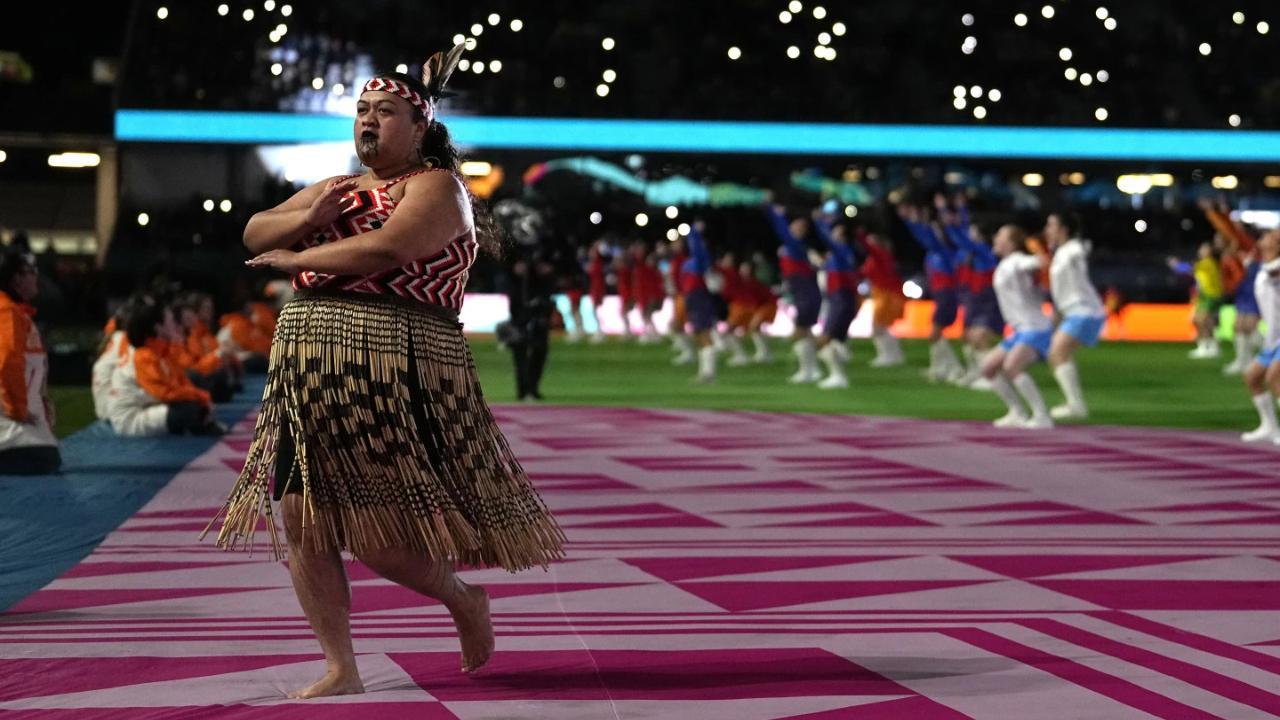
This was the first time that all of the nine host cities were referred to in both English and Indigenous terms in the FIFA materials surrounding the World Cup (Pic: AP)
In the modern era, the World Cup has always been an opportunity for nations to make grand statements about identity and culture. The tournament is a venue, not just for sporting prowess, but for symbolic representations of the way the host nation or nations would like to be seen (or, at least, the way their governments would like them to be seen) by the rest of the world, and such identity statements have become ever more elaborate and spectacular with the passing of time.
If one purpose of the World Cup is to display the host nation’s culture and identity to the world, the FIFA women’s tournament did a better job than most others, leaning into the inclusion and reflection of the Indigenous cultures of both nations (Australia and New Zealand). Such inclusion could play a positive role in making the world more conscious of the cultures intertwined within. However, sadly enough, there is little to no commitment to a more lasting legacy for a few Indigenous communities.
Buy now to read the full story.
For any queries please contact us: E-mail: support@mid-day.com
Trending Stories
Latest Photos
Latest Videos
Latest Web Stories
ADVERTISEMENT
Mid-Day Fast
ADVERTISEMENT

ADVERTISEMENT