






Euro referees praised for letting the game flow
Updated On: 03 July, 2021 07:23 AM IST | Prague | AFP
The number of fouls given reached an average 22.4 per game in the group phase, down from 25.3 at Euro 2016, while the number of bookings fell to 2.7 from 3.6 per match. The time that players actually played football rose to almost 59 minutes per game from 56-and-a-half minutes in 2016.

Listen to this article :
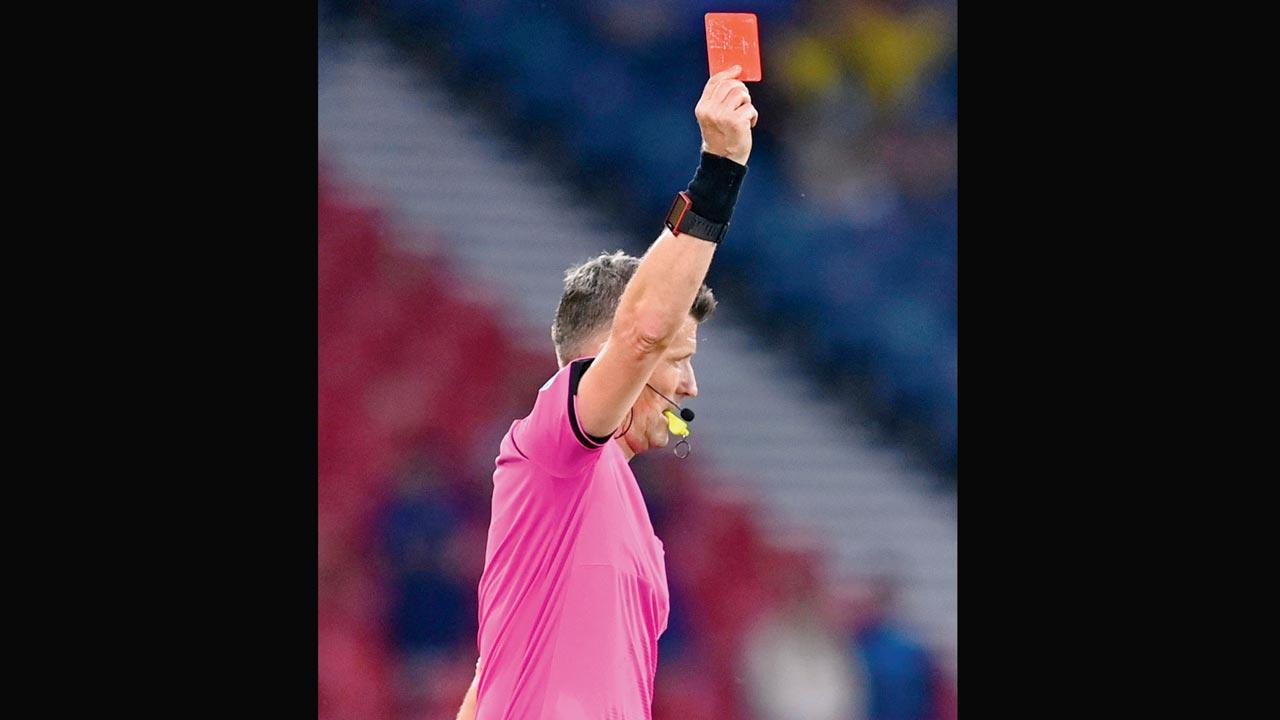
Italian referee Daniele Orsato shows a red card recently. Pic/AFP
Referees at Euro 2020 have for once largely stayed out of the limelight, with fewer controversial decisions than normal, as they pursue the popular trend of letting the game flow. There have been fewer fouls and bookings and the players spent more time with the ball in play during the group stage, official data has shown. Players, coaches and pundits alike have mostly agreed the officiating has been beneficial for the game. “I am absolutely elated, this is how we would like to see football,” said former Manchester United winger Karel Poborsky.
‘Same approach’
“The criteria for fouls have moved but nobody abuses that. And then, all referees have the same approach, no matter who they are, and that’s great and it helps football a lot.” UEFA Referees’ Committee chairman Roberto Rosetti said: “Our role is to take the correct decisions. We are very happy to see that there are fewer fouls at the moment.”
Trending Stories
Latest Photos
Latest Videos
Latest Web Stories
ADVERTISEMENT
Mid-Day Fast
ADVERTISEMENT

ADVERTISEMENT