






MR Singh: Too much of frivolous appealing can go against the bowler
Updated On: 30 March, 2022 11:46 AM IST | Mumbai | Team mid-day
MR Singh answers players, aspiring umpires

Listen to this article :
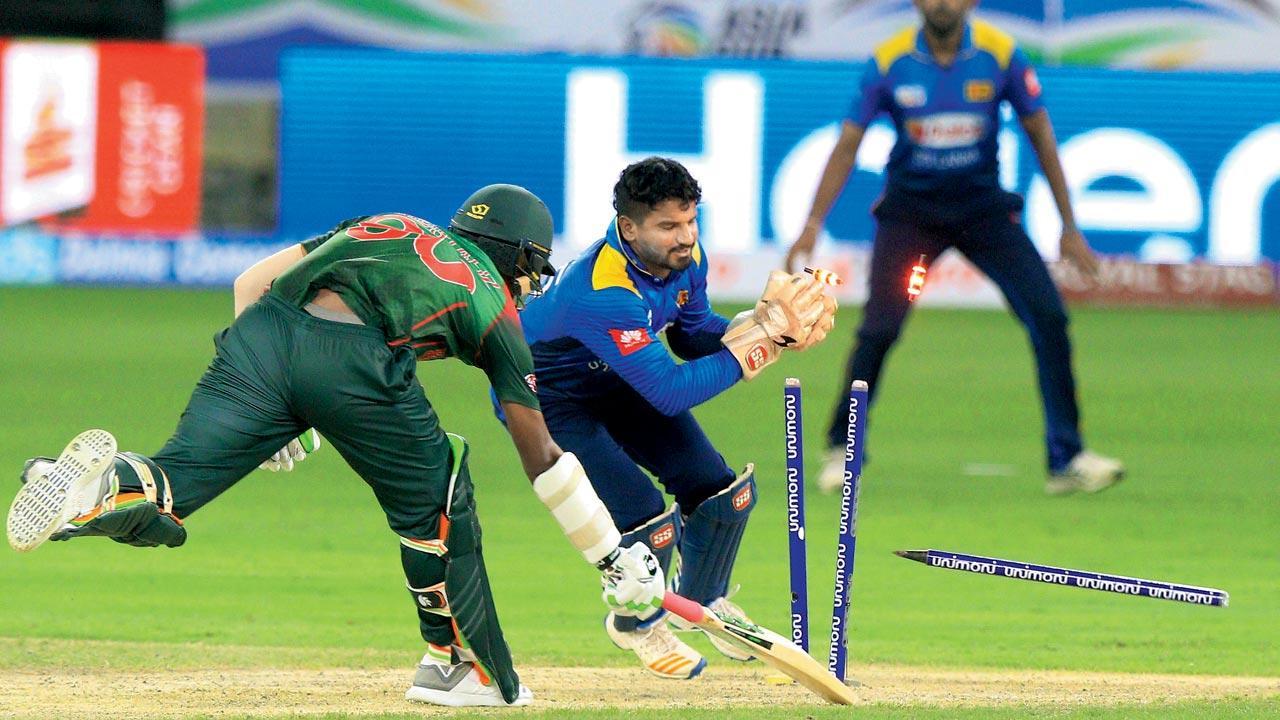
A wicketkeeper whips off the bails to dismiss a batsman
Ankush Jaiswal (Mumbai cricketer)
Do frequent appeals tend to go against the bowler?
If it is a rebellious appeal, it always goes against the bowler. Genuine appeals won’t affect an umpire’s decision. But many players appeal frivolously and think that it’s going to win them a decision. It doesn’t and sometimes it can go against the bowler. This happened in a Ranji Trophy match once. I won’t mention who was involved, but it was this team’s policy to shout for everything, even if the ball missed the bat by four inches. Suddenly, a low catch was taken in the slips. I was at the bowler’s end. I looked at my colleague at square leg and he said ‘not out’. At dinner that night, one of the players came up to me and said that he had taken that catch cleanly. I told him that the credibility of his team was zero because of their unnecessary appealing, sometimes even for bump-ball catches.
Rajeev Yogi (BCCI Level 1 umpire)
Can you tell us about the latest changes in the laws that come into effect from October 2022?
There are three or four significant changes. One is if the ball has been hit for a catch, the batsmen cannot crossover if the catch has been completed. So, the non-striker will have to return to his end while the new batsman will take strike. They can crossover if the catch is dropped. Then, we have found recently that with the advent of T20 cricket, the batsman tends to go anywhere to take strike. In 2011, while [Pakistan pacer] Shoaib Akhtar was bowling a free-hit delivery, the batsman had no need to protect his stumps, so he went around five feet behind the stumps to play the ball and hit a boundary. Now, suppose the wicketkeeper was standing up, there would have been a serious clash between the two. The new law says that a batsman’s area of play is restricted to the pitch only. If he plays a stroke with his body out of the pitch area, it will be called a dead ball.
Amogh Sahastrabuddhe (Aspiring umpire)
Can a wicketkeeper dislodge the bails with any part of his arm?
If you have the ball in your hand, you can use your whole arm, right up to the shoulder, to break the stumps. It is not just restricted to the wrist. A lot of people and even players don’t know this. During an India v South Africa ODI at Kochi in 2000, I was at square leg and when the batsman, Sunil Joshi, missed the ball, the wicketkeeper got it and accidentally hit the wicket with his elbow. He then again dislodged the stumps. Now, my impression was that when he first hit the wicket, Sunil was outside the crease, but when he hit the wicket again, Sunil was in. I referred it to the third umpire and it was given out. While leaving, Sunil said to me: ‘Sir, he hit the wicket with his elbow’. I told him if you were outside the crease at that time, that’s out. The next batsman, Ajay Jadeja, came in and having seen the TV replays, he also told me that the stumps had been dislodged by the elbow. Later, I learnt that commentator Tony Greig said things like ‘how can that be out?’ and ‘what has the third umpire done?’, etc. Ian Chappell, who was his colleague, simply said, ‘According to me, he is out’. But Greig brought in two commentators [from the Hindi panel], who were qualified BCCI umpires. These two came on air and said that it’s not out. Across my entire umpiring career, if you ask me how many truly knowledgeable players I’ve known, I’ll stop at four. Sunil Gavaskar, Ravi Shastri and Arun Lal understand the laws of the game extremely well; the late Ashok Mankad too.’
Read Next Story
Trending Stories
Latest Photos
Latest Videos
Latest Web Stories
ADVERTISEMENT
Mid-Day Fast
ADVERTISEMENT

ADVERTISEMENT