






The (non) surgical immersion
Updated On: 04 February, 2024 06:42 AM IST | Mumbai | Dr Mazda Turel
A Parsi goes to Varanasi to discover the quiet in the chaos and comes away wonder-struck by the theatre of excess spirituality

Listen to this article :
Pic/Getty Images
 My father-in-law passed away earlier this year. He was jovial and healthy but succumbed to a sudden heart attack at 74. At his prayer meeting, his friends remembered him for his kindness, compassion, and willingness to help those who needed him. The packed room was partly occupied by former cricketers since he had played the Ranji Trophy and represented Mumbai in the 1970s. The legendary Sunil Gavaskar, a dear friend of his, remarked, “Avi [Avinash] was a big hitter of the ball, but almost religiously got out in the 70s. It’s ironic that he chose to depart from life at around the same age.” Other cricketers from his Dadar Union Sporting Club squad spoke of how they admired their captain for his fierce passion for the game, on and off the field.
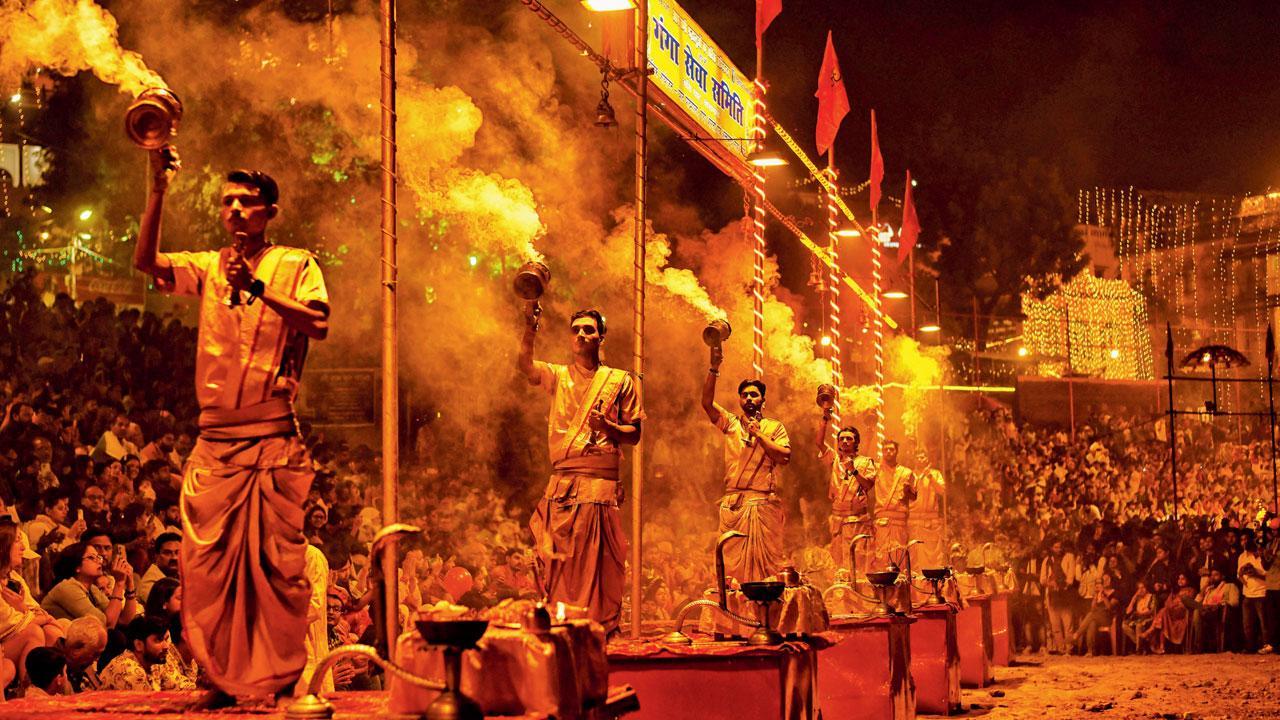
“We have to celebrate his life, not mourn it,” I insisted, when it was decided that we would go to Benaras to immerse his ashes in the Ganga. “We’ll make it a weekend trip,” I told my wife and brother-in-law, who is a scholar in the Brahmanical practices of Hinduism. On the flight, I asked him why the city had three names. “Varanasi is derived from the amalgamation of names of a tributary of the Ganga called Varuna, and the Assi Ghat,” he told me. “And why Kashi?” I prodded. “In the Mahabharata, the city is referred to as Kashi, from the Sanskrit root verb kaś, to shine. It was then renamed Benaras by Akbar, the ‘City of Light’.” I made sure my basics were covered. “This place has several thousand temples,” I was told, “and to some, it represents the entire universe.”
Read Next Story
Trending Stories
Latest Photos
Latest Videos
Latest Web Stories
ADVERTISEMENT
Mid-Day Fast
ADVERTISEMENT

ADVERTISEMENT