






The Monk and the Gun
Updated On: 01 October, 2023 07:28 AM IST | Mumbai | Meenakshi Shedde
The Kingdom of Bhutan changed dramatically in 2006, when the monarchy gave way to democracy, internet, television and more

Listen to this article :
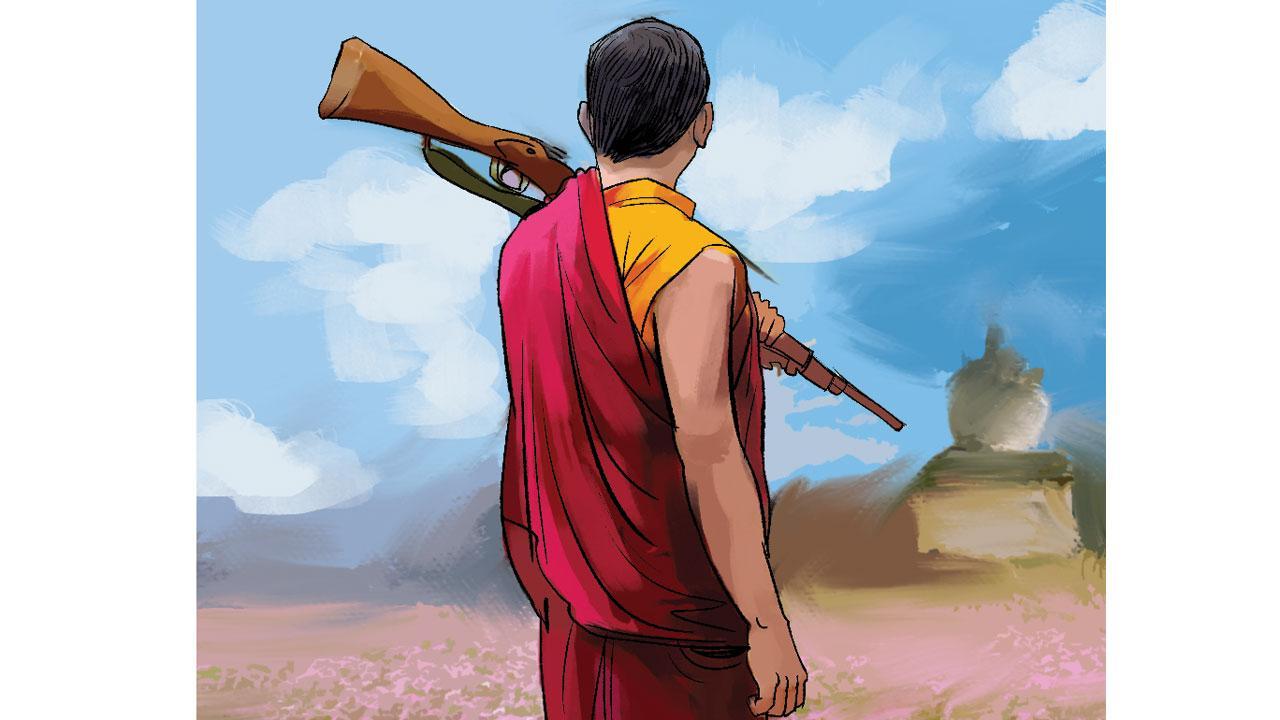
Illustration/Uday Mohite
 One of the most delicious googlies in South Asian cinema today is Pawo Choyning Dorji’s The Monk and the Gun. For tiny Bhutan, which has a modest economy and challenging film industry/infrastructure, to produce a film that has been selected at the Toronto, Telluride and Busan International Film Festivals, is definitely punching above its weight. What’s more, the film has also been tipped by the renowned Anne Thompson, Editor at Large, Indiewire, as among the frontrunners in the Oscar 2024 race for Best International Feature Film. It is a Bhutan/ France/USA/Taiwan co-production. Bhutan already selected the film as its Oscar entry. What’s more, Dorji’s debut feature Lunana: A Yak in the Classroom from Bhutan earned an Oscar nomination for Best International Feature Film in 2022—alongside Ryusuke Hamaguchi’s Drive My Car and others—whereas no Indian fiction film earned an Oscar nomination in that prestigious category last year.
The Kingdom of Bhutan changed dramatically in 2006, when the monarchy gave way to democracy, internet, television and more. The King abdicated in order to gift democracy to the people on a platter—but most of them don’t want it; they are happy with the king. As the government teaches rural people how to exercise their new democratic rights through a mock-election, a monk searches for a gun to make things right again: the climax explains why, through a simple moral tale that expands the idea of democracy to a much larger philosophical idea, that also reflects on the place of violence and non-violence in our lives.
Read Next Story
Trending Stories
Latest Photos
Latest Videos
Latest Web Stories
ADVERTISEMENT
Mid-Day Fast
ADVERTISEMENT

ADVERTISEMENT