






The forest and the field
Updated On: 19 November, 2023 08:13 AM IST | Mumbai | Devdutt Pattanaik
It simply turns back to look at the man who has now moved out of the forest, and created culture, a space where tigers are not welcome.

Listen to this article :
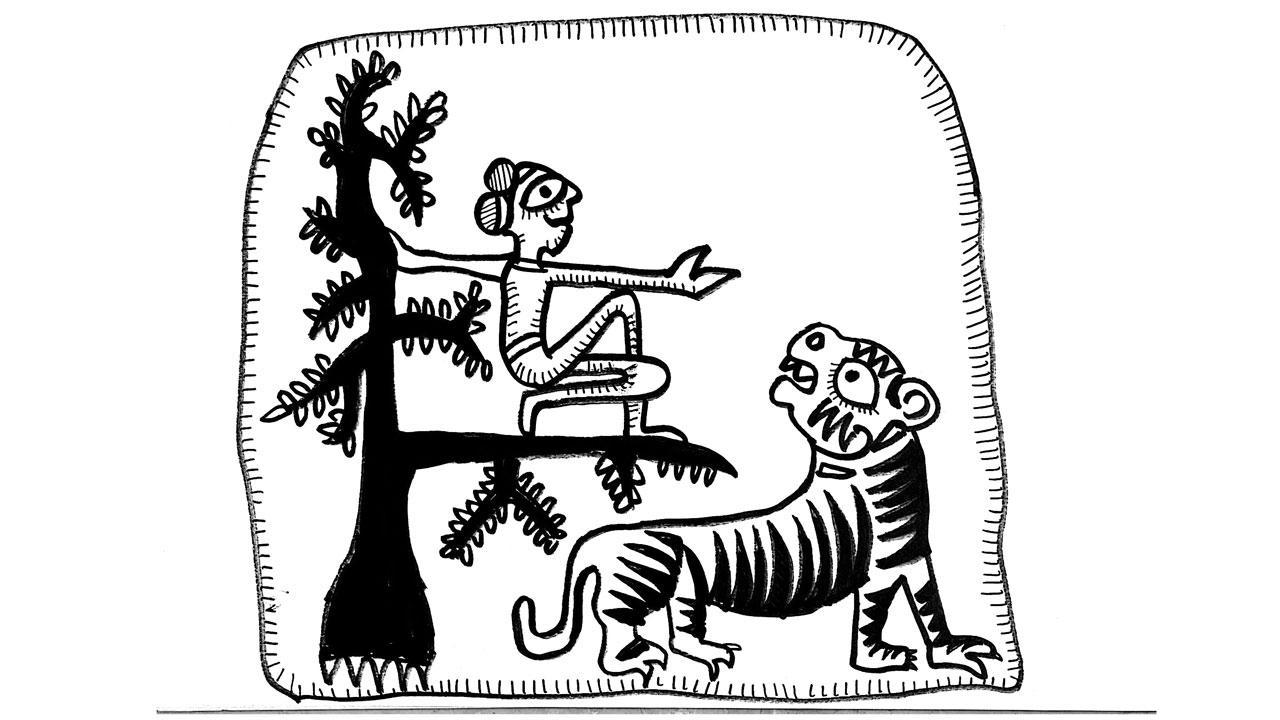
Illustration/Devdutt Pattanaik
 Increasingly, we find laws that protect forests being cut down, giving way for industries. This brings tribal communities into conflict with the state. The state declares tribal communities that oppose them as Naxalites, or even foreigners who need to be driven out. This is done using the force and might of the state. This tension between the forest, which is wild, uncultivated, inhabited by tribes aligned to the natural rhythms, and the field which is domesticated earth controlled by the state is an ancient one.
The earliest reference to this tension is a 4,000-year-old seal found in Harappan civilisation where we find a man seated atop a tree looking down at a tiger. The tiger is not hostile or in attack or defence mode. It simply turns back to look at the man who has now moved out of the forest, and created culture, a space where tigers are not welcome.
Read Next Story
Trending Stories
Latest Photos
Latest Videos
Latest Web Stories
ADVERTISEMENT
Mid-Day Fast
ADVERTISEMENT

ADVERTISEMENT