






The arrival of Southern women
Updated On: 01 September, 2024 08:15 AM IST | Mumbai | Devdutt Pattanaik
Here, women are ever-present, as wives and queens and heroines.

Listen to this article :
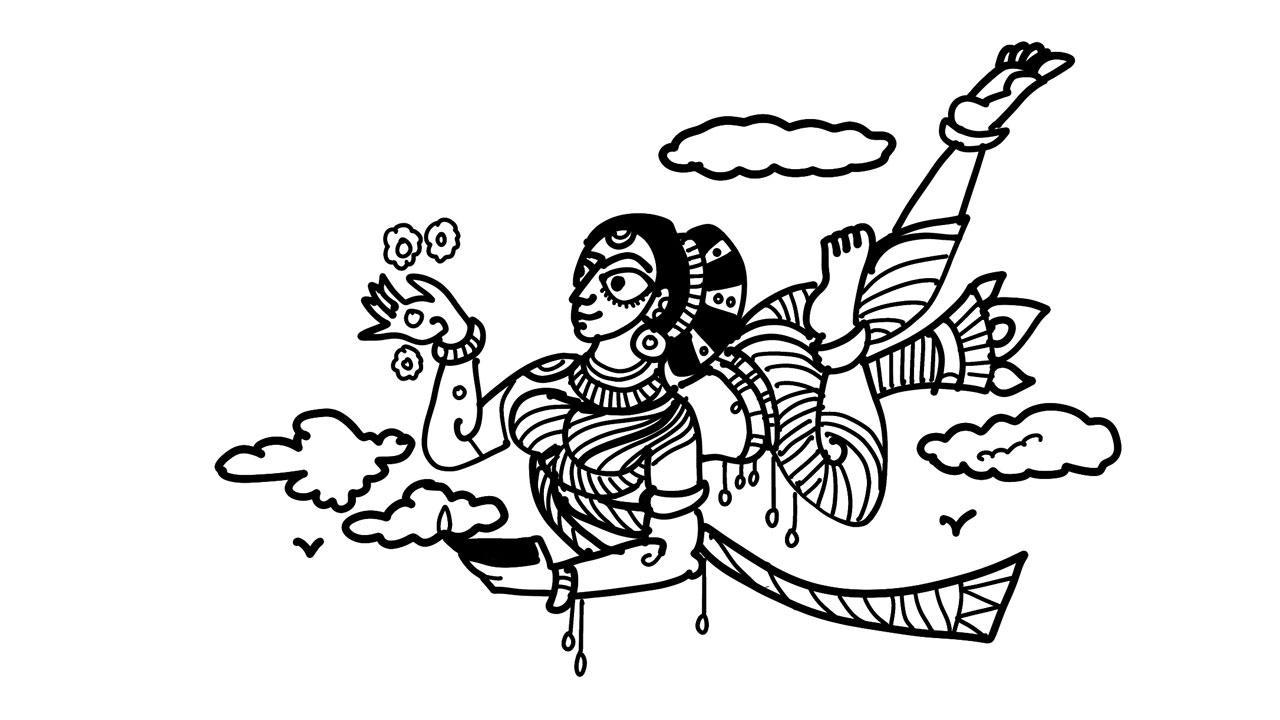
Illustration/Devdutt Pattanaik
 In the 19th Century, UV Swaminatha Iyer found palm leaf manuscripts of poetry in Chennai written in very old Tamil. He discovered what we call today “Sangam Literature”, the oldest Tamil poetry between 300 BCE and 300 CE, the same period where the Mahabharata, Ramayana, and the Dharmashastras were compiled in North India. Here, women are ever-present, as wives and queens and heroines.
By contrast, the Vedas (1000 BC), the Brahmanas (800 BC), and the Upanishads (600 BC), women are conspicuous by absence. There might be Ushas, the goddess of dawn, but out of 1,028 hymns, only 40 are dedicated to her. Aditi, mother of gods, is in the background. The Durga in Durga Suktam is not about Durga as much as it is about power, and is closely linked to Agni. The Shri Suktam is not about Lakshmi; it is about prosperity. These hymns are far more conceptual. The goddess form came much later. Their association as wives of gods even later.
Read Next Story
Trending Stories
Latest Photos
Latest Videos
Latest Web Stories
ADVERTISEMENT
Mid-Day Fast
ADVERTISEMENT

ADVERTISEMENT