






Sorrow’s shadow on Ram Temple gaiety
Updated On: 08 January, 2024 01:14 AM IST | Mumbai | Ajaz Ashraf
Amid celebrations of a grave injustice, many will be reminded of nights spent in terror and haunted by the knowledge that Ayodhya won’t be the last instance of righting the imagined wrongs of history

Listen to this article :
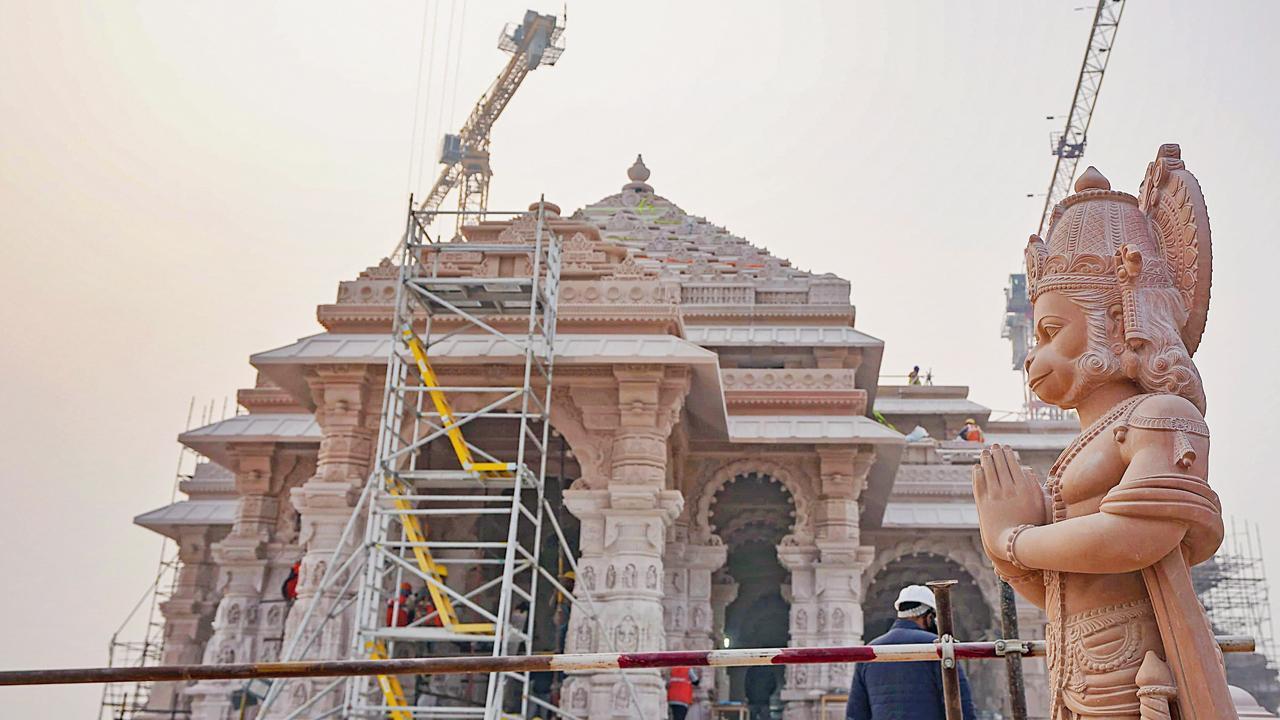
The Ram Temple in Ayodhya, Uttar Pradesh, ahead of its consecration. Pic/PTI
 Late philosopher Ramchandra Gandhi, after the Babri Masjid was demolished on December 6, 1992, struggled to articulate the sorrow and significance of the cataclysmic event in Ayodhya. He was immersed in thought on the sun-drenched lawns of Delhi’s India International Centre (ICC), even as I waited to take notes on his perception of whether the demolition reflected a fundamental change in the Indian psyche.
The philosopher intoned: it was believed Hindus never kill a saint, but they assassinated Mahatma Gandhi; it was believed Hindus never destroy a place of worship, but they have now demolished the Babri Masjid. He became distraught as laughter erupted at a lunch party 200-300 feet away. He said, “Can they be so indifferent to the tragedy that has befallen the nation?”
Read Next Story
Trending Stories
Latest Photos
Latest Videos
Latest Web Stories
ADVERTISEMENT
Mid-Day Fast
ADVERTISEMENT

ADVERTISEMENT