






Retroflex sounds of Indian women
Updated On: 12 May, 2024 06:57 AM IST | Mumbai | Devdutt Pattanaik
Their legacy is the retroflex sounds () that is part of the Indian language. The immigrant men came much later.

Listen to this article :
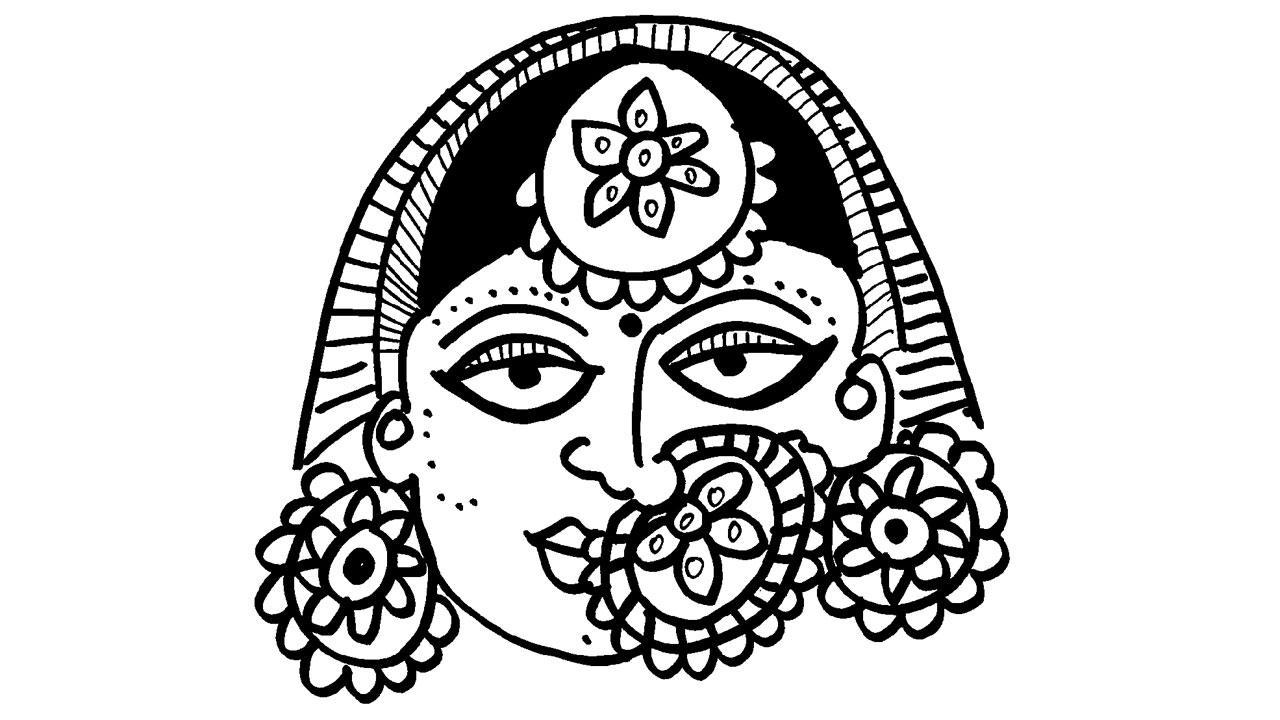
Illustration/Devdutt Pattanaik
 Manusmriti, dated to 300 AD, refers to eight ways in which a bride has to be secured. The forms not recommended are those where a father’s control is missing. This involves involve buying a wife (like an asura), abducting a wife (like a rakshasa), using rape (like piscacha), and even using love (like a gandharva). The forms recommended are those where the father is involved, offering the daughter to worthy grooms either one who serves (like a deva), who is educated (like a rishi), who is creative (like brahma) or impressive (like prajapati). Women seem to have little say in these matters. The swayam-vara ceremony seems to be a distant memory in both Mahabharata and Ramayana (composed roughly 2,000 years ago). Fidelity is a great concern.
This may have something to do with the fact that the genetic and cultural practices of India reveal periodic immigrations by men (indicated by different types of Y chromosome in the subcontinent) who marry local women (indicated by the same mRNA or mitochondrial chromosome across). The women came to India as part of the Out of Africa migration about 50,000 years old. Their legacy is the retroflex sounds () that is part of the Indian language. The immigrant men came much later.
Read Next Story
Trending Stories
Latest Photos
Latest Videos
Latest Web Stories
ADVERTISEMENT
Mid-Day Fast
ADVERTISEMENT

ADVERTISEMENT