






Of inhumanity and maternal grief
Updated On: 27 October, 2023 08:15 AM IST | Mumbai | Rosalyn D`mello
The brutality witnessed with the horrific escalation of violence in Gaza and global surge in anti-semitic and Islamophobic incidents defy comprehension. I fear for our collective salvation

Listen to this article :
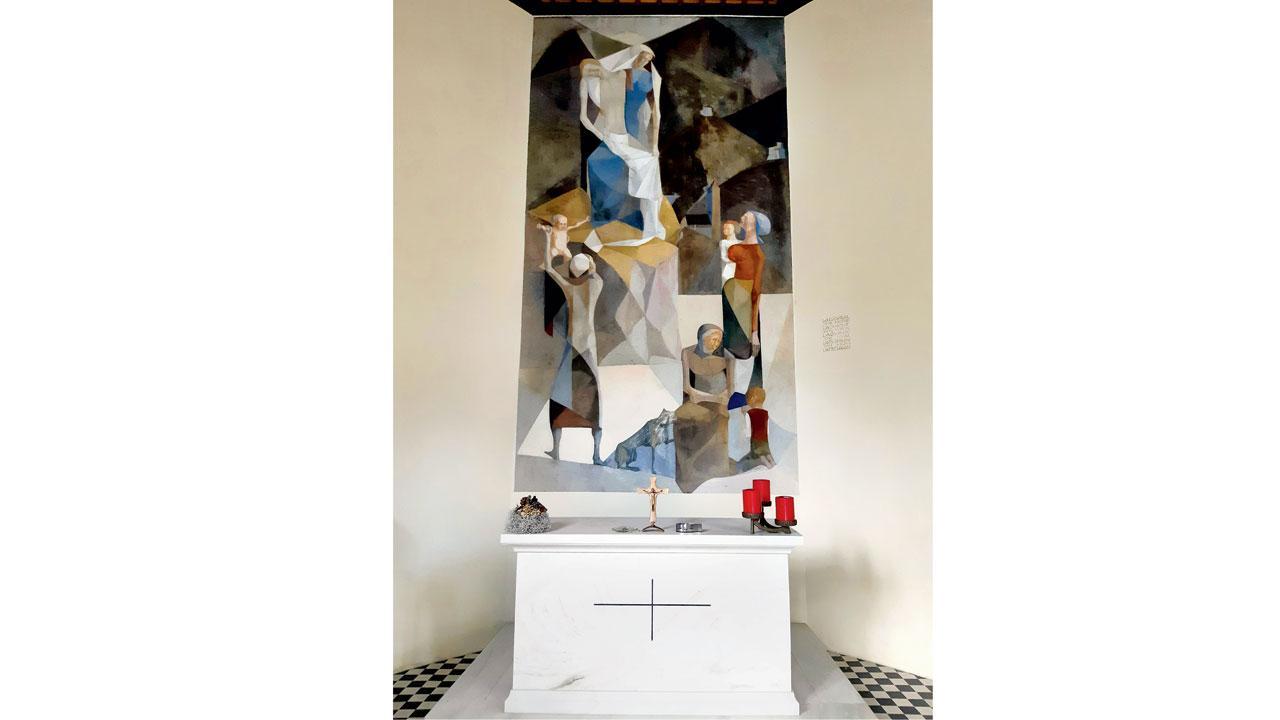
The Karl Plattner fresco in a chapel in Naturns, South Tyrol. Pic/Rosalyn D’Mello
 I once visited a Romanesque church in the Vinschgau—a valley known for its apples, strawberries and marvellous mountains in South Tyrol. In the near vicinity, there was a chapel within a cemetery with a fresco by Karl Plattner, a well-known painter from the region in honour of ‘the fallen’—those who died in the Wars. Living in this border region between Italy and Austria, one comes across this term a lot in the form of memorials for those who fought on the ‘wrong side’ of both wars. It is interesting to see how these deaths are eulogised. In Tramin, the town in which we live, there’s a dramatic statue of a soldier dying in the arms of another soldier. It communicates a certain pathos while also inherently underlining the latent heroism of the act of dying in defence of the idea of country. As we approached the chapel with Plattner’s fresco, we found a caption that talked about the scandal it created when it was unveiled, because it didn’t evoke the pathos people were expecting. Instead of serving to validate the sacrifice that was made, it underscores the senselessness of it. Upon finally confronting the work, I could see why it threw people off. It refuses to centre masculine valour and fixates on the grief of those who didn’t go to war, those who survived because they stayed home, those who were now either spouseless or fatherless—women and children. The fresco eschews masculine energy in lieu of domestic, maternal grief.
The top-most dyad depicts the pieta—Mary, the mother, holding the body of her crucified child. On either side of the fresco, there are mother-child dyads. One mother holds her child in the air, the other draws their child close to the body. The lowermost dyad is another mother or a grandmother talking to a child, next to her is a dog. Back then I had felt ambiguous about the size of one of the mother’s breasts, but now I feel sure it had something to do with signifying the fact that she was possibly breastfeeding. The fresco has the Cubist elements Plattner’s work is famous for, and the pastel swathes of colour I’d seen in other works. It’s a sublime work because it doesn’t ‘perform’. It doesn’t preach. It doesn’t over-explain. Christ’s body is the only male body. It represents, perhaps, how men were the victims of the war, how male bodies under patriarchy are forced to go to battle, leaving behind their loved ones. It’s also a reminder of how the social fabric changed in this region after these wars. How so many women became widows, how so many girls remained unmarried because of the sudden absence of men.
Read Next Story
Trending Stories
Latest Photos
Latest Videos
Latest Web Stories
ADVERTISEMENT
Mid-Day Fast
ADVERTISEMENT

ADVERTISEMENT