






No regrets about my child-free years
Updated On: 10 November, 2023 07:19 AM IST | Mumbai | Rosalyn D`mello
I had a moment of solitude in Ljubljana where I felt grateful to myself for having lived with abandon and audacity. Now, I have no second thoughts about foraying through these years of co-dependency

Listen to this article :
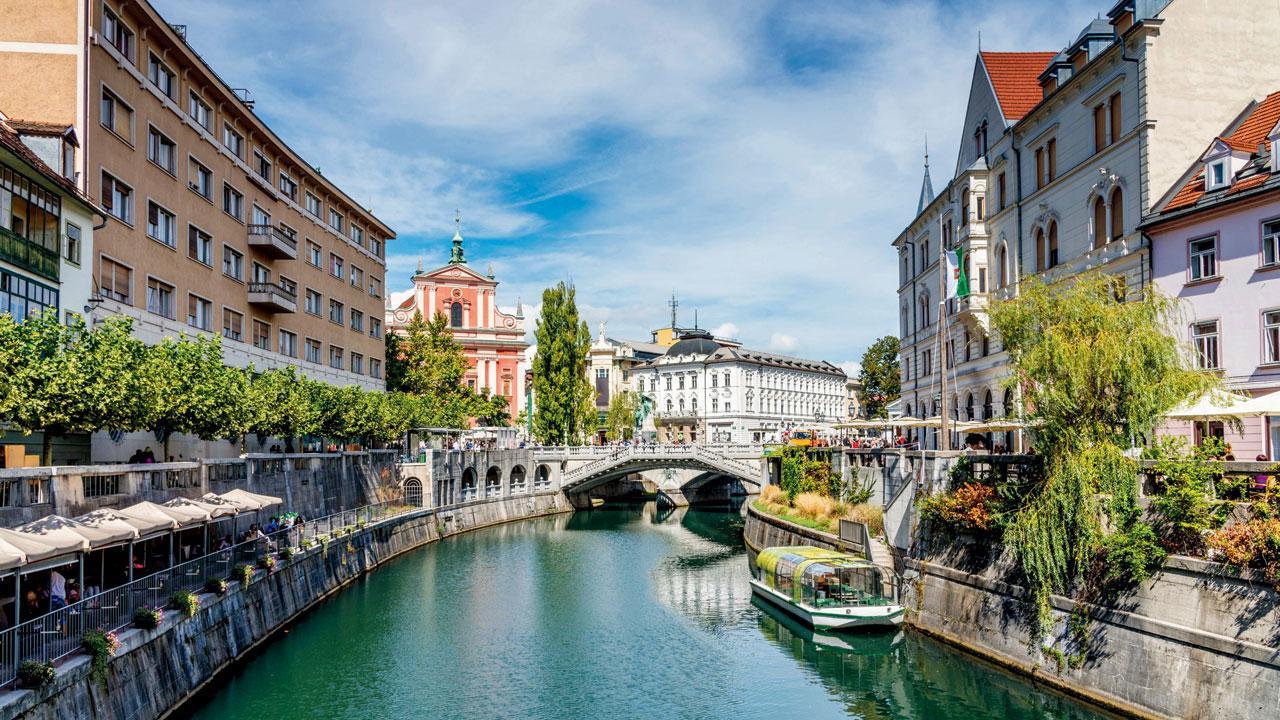
The famous triple bridge on the river Ljubljanica at Ljubljana in Slovenia. Representation pic
 I’m writing this dispatch from my hotel room in Ljubljana, the capital of Slovenia (keep the ‘j’ silent to pronounce it right). Despite its proximity to Italy, or perhaps on account of it, the easiest way to get in is by road. This was our longest road trip, totalling about five hours with two brief breaks for sandwiches and coffee. We were feeling quite chuffed with ourselves after arriving, given how cooperative our toddler was. We planned our journey to accommodate his 1.5-2-hour nap that would offer us quiet time. We mainly vibed to Punjabi beats. I had been looking forward to this trip ever since I was invited some eight months ago by Suzana Milevska, a curator who was my peer at the Künstlerhaus Büchsenhausen fellowship in Innsbruck. She had been researching the ethics and aesthetics of apology. She was curating an exhibition in the Slovenian capital and was co-organising a parallel one-day seminar at which she hoped I would speak. I eagerly said yes. My partner was able to take time off too, which afforded us a total of three nights.
I spent most of Wednesday nursing an anxious bubbling in the pit of my belly. It began when I arrived at the seminar and felt so astonished at the quality of the discourse and the clarity of all the speakers’ stand in relation to the ongoing genocide in Palestine. The purpose of the gathering felt urgent… to understand the relevance of notions of apology, conciliation, and what it may mean to make amends, and to study examples of how this had unfolded in various parts of the world. Though I had to miss the second session because I wanted to see the exhibition which was a ten-minute cab ride away from the old town, I felt quite humbled by the earnestness of each of the presentations which examined a wide range of subjects, from Slovenian history to examples of memorials in former Yugoslavia, manifestations of settler colonialism and its violent and oppressive structural systems to the idea of ‘apologisability’. I’m usually the killjoy feminist at seminars in Europe. I’m the one raising my hand pointing out instances of omission and western exceptionalism or even orientalist biases. For the first time in a very long time, I felt content to participate solely by listening, because I was learning so much from each interrogator and respondent. I felt a sense of awe at the breadth of individual scholarship and the interdisciplinary, intersectional nature of the discourse.
Read Next Story
Trending Stories
Latest Photos
Latest Videos
Latest Web Stories
ADVERTISEMENT
Mid-Day Fast
ADVERTISEMENT

ADVERTISEMENT