






No leather in temples, but silk?
Updated On: 26 May, 2024 06:55 AM IST | Mumbai | Devdutt Pattanaik
It is a common feature that we see with male monks, especially when confronted with confident women.

Listen to this article :
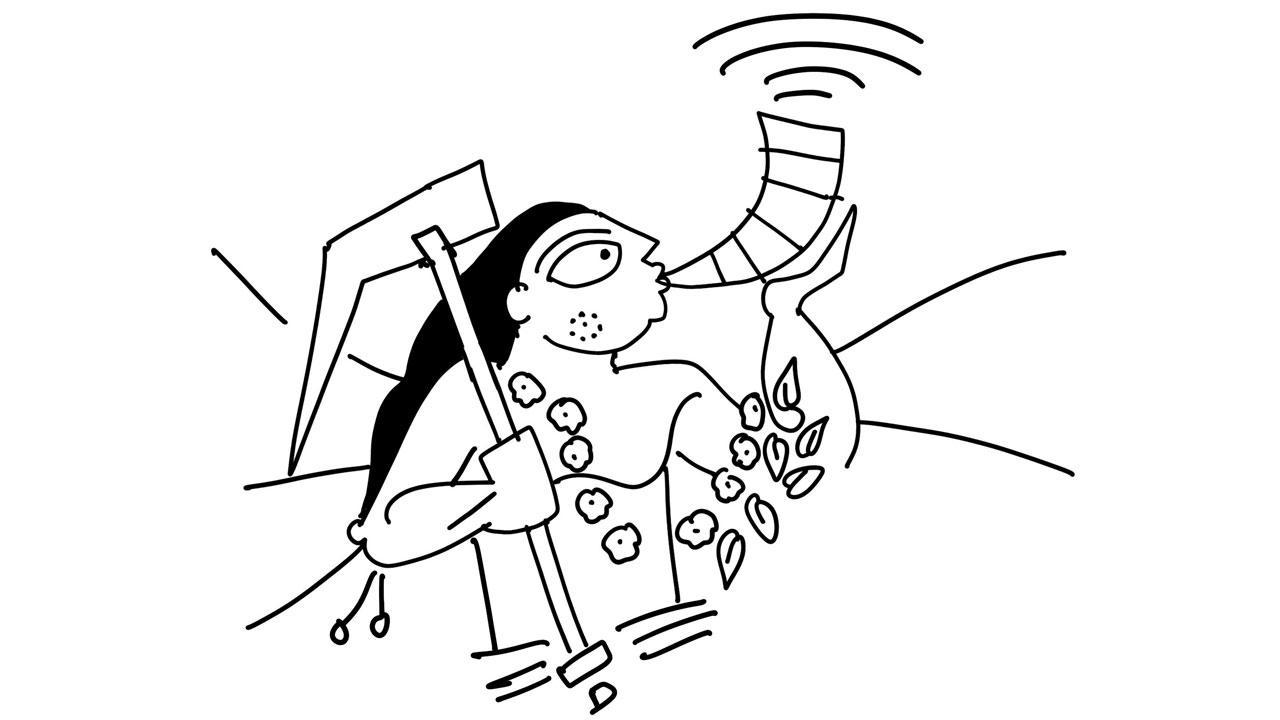
Illustration/Devdutt Pattanaik
 Recently, at a temple, a monk wearing ochre-saffron, to advertise his ‘celibacy’, yelled at a girl for wearing a leather belt and entering the temple. Somehow, he had given himself the authority of purity. It struck me how this arrogant gatekeeper of culture, rather than appreciating the girl’s devotion, was busy drawing attention to himself, and spoiling the entire mood in the temple. Why was he observing and policing women’s clothing? It is a common feature that we see with male monks, especially when confronted with confident women.
I did not have the heart to tell this priest monk that traditionally in Hindu temples, monks lived in establishments outside the temple. They were not allowed to take part in fertility rituals, which were only performed by Brahmins, who were married and had children. Someone who entered the sannyasi stage, while respected, was not allowed to perform rituals. But these ideas have changed since the 19th century, when Hindu elite saw the power of Christian Jesuit missionaries and created a Hindu monastic ‘missions’ on similar lines, controlling schools, hospitals and temples.
Read Next Story
Trending Stories
Latest Photos
Latest Videos
Latest Web Stories
ADVERTISEMENT
Mid-Day Fast
ADVERTISEMENT

ADVERTISEMENT