






Loss and recovery of the Vedas
Updated On: 28 April, 2024 04:40 AM IST | Mumbai | Devdutt Pattanaik
We can speculate that the horse-headed Vishnu is the original Arya while the hose-headed demon is the later horse-riding Greeks, Scythians, and Parthians who favoured Buddhism and Jainism.

Listen to this article :
Illustration/Devdutt Pattanaik
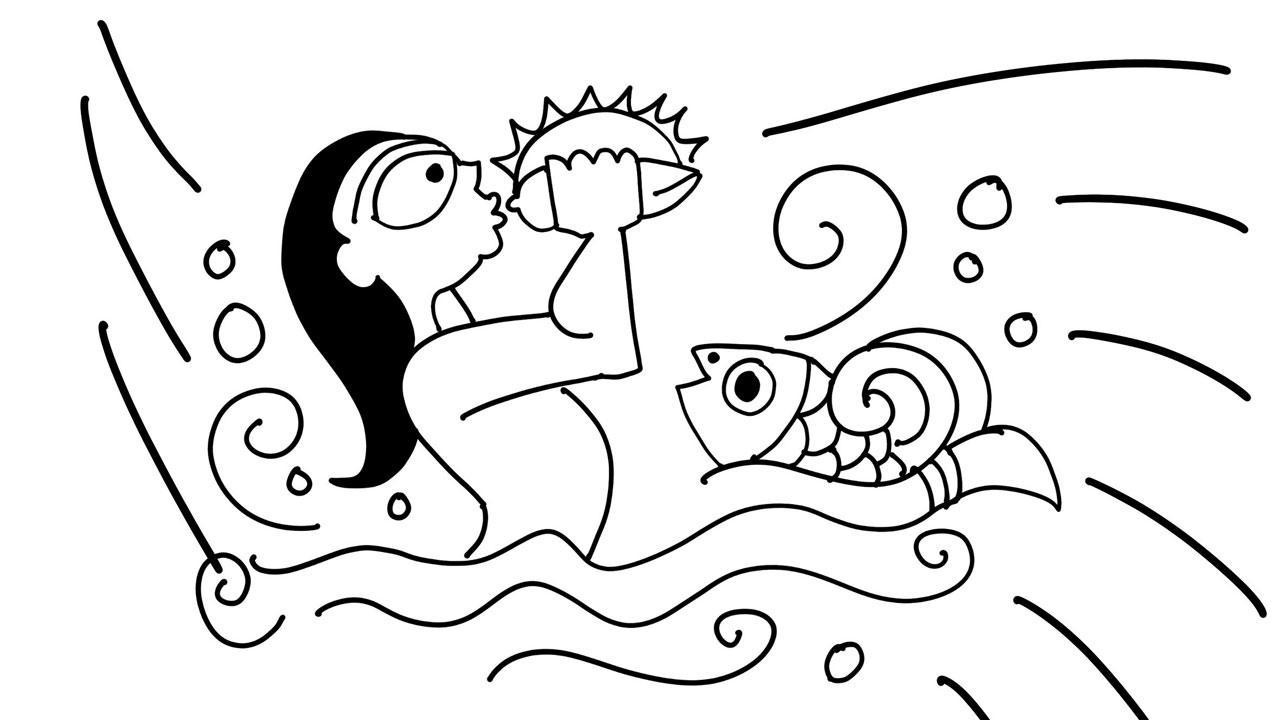
 Conch-shells are conspicuous by their absence in the Veda. They are not found in the Ramayana either. But they appear in Mahabharata, used by Krishna and the Pandava brothers, in battle. The conch-shell trumpet heralds the shift of time: a great battle that witnesses the end of Dwapara Yuga and the start of Kali yuga. This conch-shell of Krishna is called Panchajanya. Later, the conch-shell is linked to Vishnu, who sits in Vaikuntha, and descends on earth taking various forms, one of which is Krishna.
The story goes that when Brahma was sleeping, the Veda slipped out of his mouth and was stolen by a demon. Vishnu appeared either as a fish or a horse-headed being, Hayagriva, overpowered the demon and rescued the Veda. The demon had hidden in a conch-shell, under the sea. Vishnu turned that conch-shell into his trumpet and announced the recovery of the Veda, and the dawn of a new age. Thus, the conch-shell marks the triumph of Vishnu and his recovery of the Vedas. We can speculate that the horse-headed Vishnu is the original Arya while the hose-headed demon is the later horse-riding Greeks, Scythians, and Parthians who favoured Buddhism and Jainism.
Read Next Story
Trending Stories
Latest Photos
Latest Videos
Latest Web Stories
ADVERTISEMENT
Mid-Day Fast
ADVERTISEMENT

ADVERTISEMENT