






Let’s go fifty-fifty
Updated On: 26 May, 2024 07:14 AM IST | Mumbai | Shweta Shiware
Three designers from different backgrounds discuss the enduring appeal of Indo-Western attire, revealing how the women who wear it are the true architects of its influence

Listen to this article :
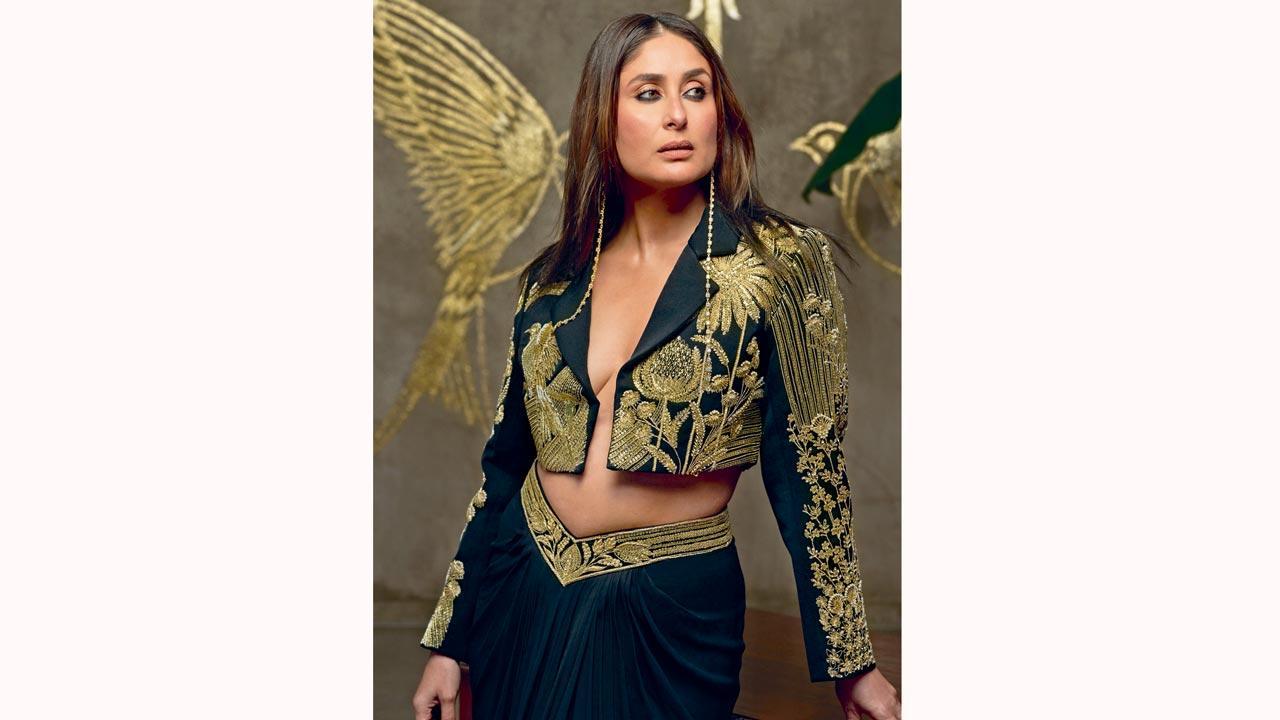
Kareena Kapoor Khan wears Masaba Gupta’s gold foil print jacket with a saree-drape skirt
 The other day, designer Narendra Kumar (Nari for friends) ran into Anita Dongre at the airport. They go way back to the mid-1990s when they collaborated on the launch of AND, a Western wear line introducing pantsuits, skirt-suits and shirts, coinciding with the growing trend of women in the workforce. “Anita’s vision was clear—to create garments that resonated with this societal shift and evolving professional landscape,” Nari recalls. “I helped shape the campaign, branding, and brand name.”
Nearly three decades later, Nari notices a surge in the number of women adeptly balancing career and family routine, drawn to a fusion style blending South Asian and Western influences. Co-ord sets and dresses with playful hemlines guide their preferences. Or, they may fancy a tunic featuring cuff details like tie-ups, paired with slim-cut trousers. “My 90-year-old mother, who typically wears the salwar-kameez, recently showed interest in wearing a co-ord set!” he chuckles. “This reflects a quiet but clear shift in attitude. Women, regardless of location, are becoming more educated and well-travelled. The rising influence of modern secular women from tier-2 and 3 cities highlights a global perspective, amplified by social media’s homogenising on fashion.”
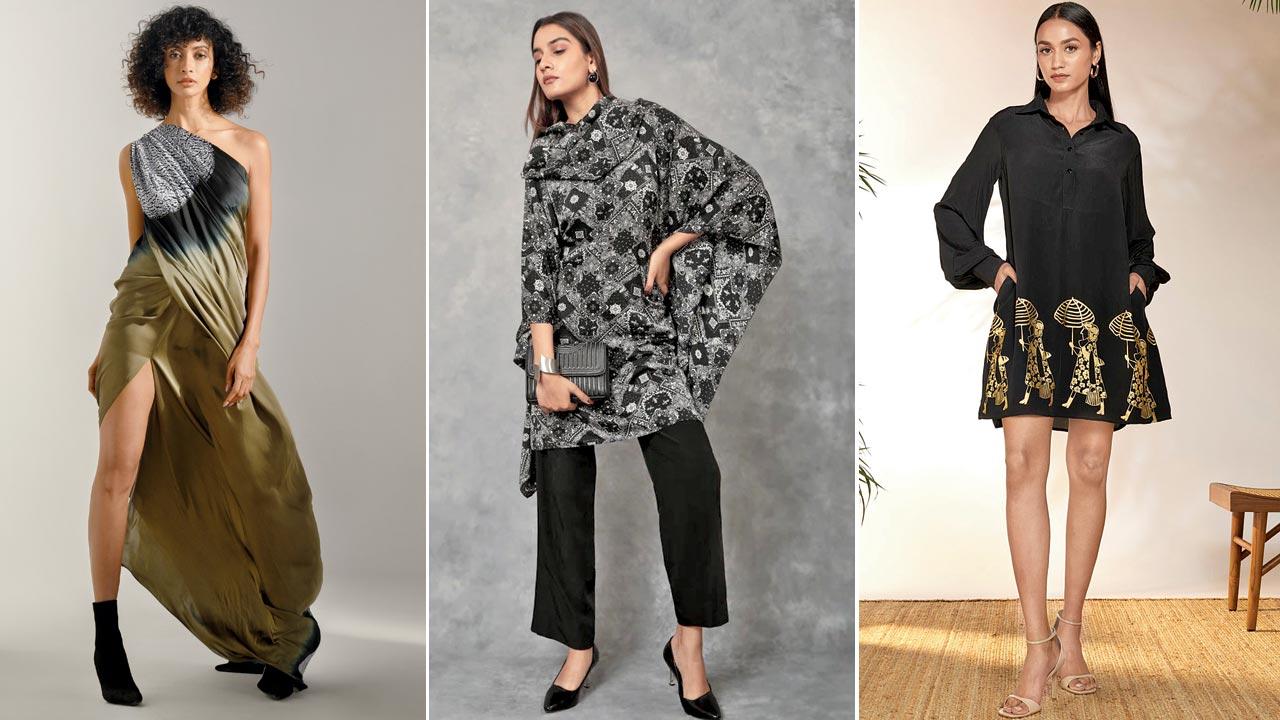 Lakshmi Rana models Inca’s tie-dye saree-gown; Tamiska’s Black & White Story line features a cowl neck kaftan with a tie-up detail at the waist; Masaba Gupta’s gold foil print, introduced in 2015, remains a perennial bestseller
Read Next Story
Trending Stories
Latest Photos
Latest Videos
Latest Web Stories
ADVERTISEMENT
Mid-Day Fast
ADVERTISEMENT

ADVERTISEMENT