






Gandhi, Gora and God
Updated On: 01 October, 2023 12:00 PM IST | Mumbai | Sumedha Raikar Mhatre
A new Marathi translation looks back at the amicable dialogue between the Mahatma and his atheist disciple Goparaju Ramachandra Rao in Sevagram, offering lessons for an increasingly intolerant society

Listen to this article :
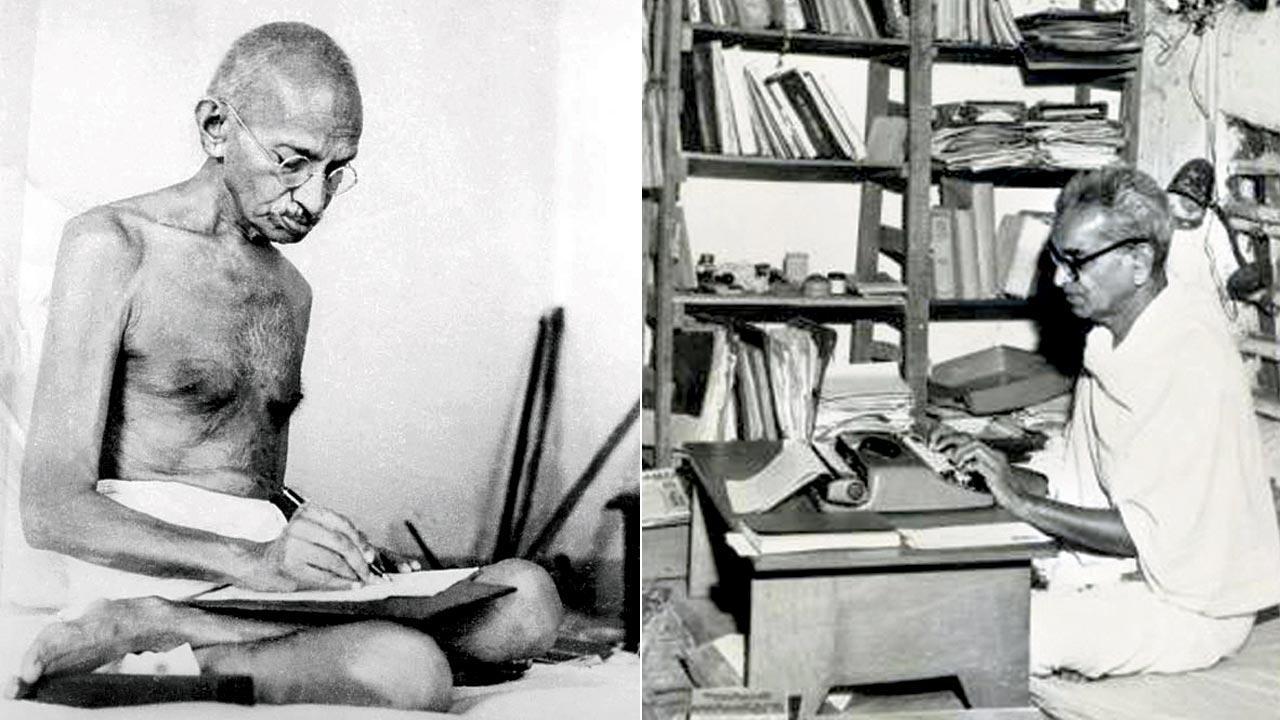
Mahatma Gandhi and Goparaju Ramachandra Rao met at the Sevagram ashram in Wardha in 1944, where they had a free-flowing and respectful conversation about atheism
 God is beyond human comprehension.” This was the short, rather cryptic reply given by Mahatma Gandhi in 1930 to Goparaju Ramachandra Rao (Gora), an anti-untouchability, anti-caste reformist who was active during the Quit India Movement. Gora, a declared atheist, was not satisfied with the reply. He wanted the Mahatma to elaborate on the meaning of God and how far is it “consistent with the practice of life”. But there was no time for further correspondence, as he himself got busy with the Salt Satyagraha, and was teaching botany for a living.
In September 1941, Gora again wrote to Gandhiji seeking an appointment for a discussion on the effectiveness of eradicating caste in an atheist setting. Gandhiji wrote back saying, “atheism is a denial of self”, but said he had “no time to spare for talks”. The dogged Gora’s wait for Gandhiji’s audience ended in November 1944 when he was called at Wardha’s Sevagram ashram for a chat. The conversations—free-flowing, candid, respectful, undocumented and unintended for publicity—formed the core of the slim celebrated book, An Atheist with Gandhi.
Read Next Story
Trending Stories
Latest Photos
Latest Videos
Latest Web Stories
ADVERTISEMENT
Mid-Day Fast
ADVERTISEMENT

ADVERTISEMENT