






Diwali for Ram, Krishna, Lakshmi, Yama, Asuras and ancestors
Updated On: 12 November, 2023 07:56 AM IST | Mumbai | Devdutt Pattanaik
Thus, we find the north and south traditions are very different, one favouring Ram, the other favouring Krishna.

Listen to this article :
Illustration/Devdutt Pattanaik
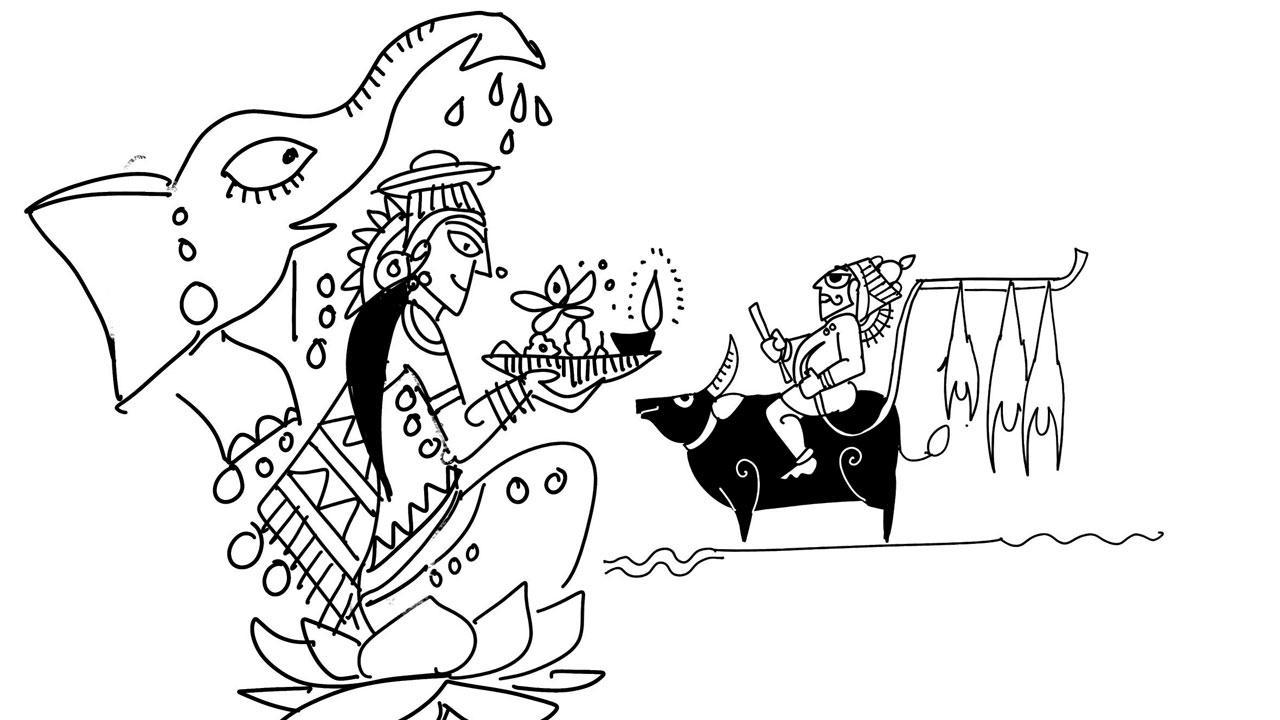
 Diwali in north India celebrates the return of Ram from Ayodhya. Diwali, or rather Deepavali, in south India celebrates the defeat of Narakasura by Krishna. In South Indian traditions, Diwali celebrations take place on the 14th day, that is, on the eve of the new moon day. It involves wives bathing husbands with oil and unguents, early in the morning, mimicking Satyabhama and Krishna. Then, there is the crushing of a cucumber-like fruit (karit) to represent the destruction of Narakasura. In Goa, effigies of Narakasura are burnt, and crackers at dawn. Thus, we find the north and south traditions are very different, one favouring Ram, the other favouring Krishna.
In the western part of India, amongst traders, the Diwali celebrations happen on the new moon day. They involve the opening of a new balance sheet: the day after Diwali is when Govardhan Puja is done and 56 types of food are offered to Krishna. Two days later, Yama is visited by his sister Yami, or Yamuna. Yamuna, the river, like all rivers, is linked to Lakshmi. Yama, god of death, trapped in the world of the dead, is linked via Chitragupta, to karmic accounting. Thus, the sister, who embodies wealth, seeks welfare of her brother who ensures humanity (her husband) treats her with respect, responsibility
and accountability.
Trending Stories
Latest Photos
Latest Videos
Latest Web Stories
ADVERTISEMENT
Mid-Day Fast
ADVERTISEMENT

ADVERTISEMENT