






Dialling Ambedkar on voting day
Updated On: 12 May, 2024 08:09 AM IST | Mumbai | Sumedha Raikar Mhatre
Recalling the words of the Father of the Constitution makes most sense on the day when citizens exercise their most potent political right

Listen to this article :
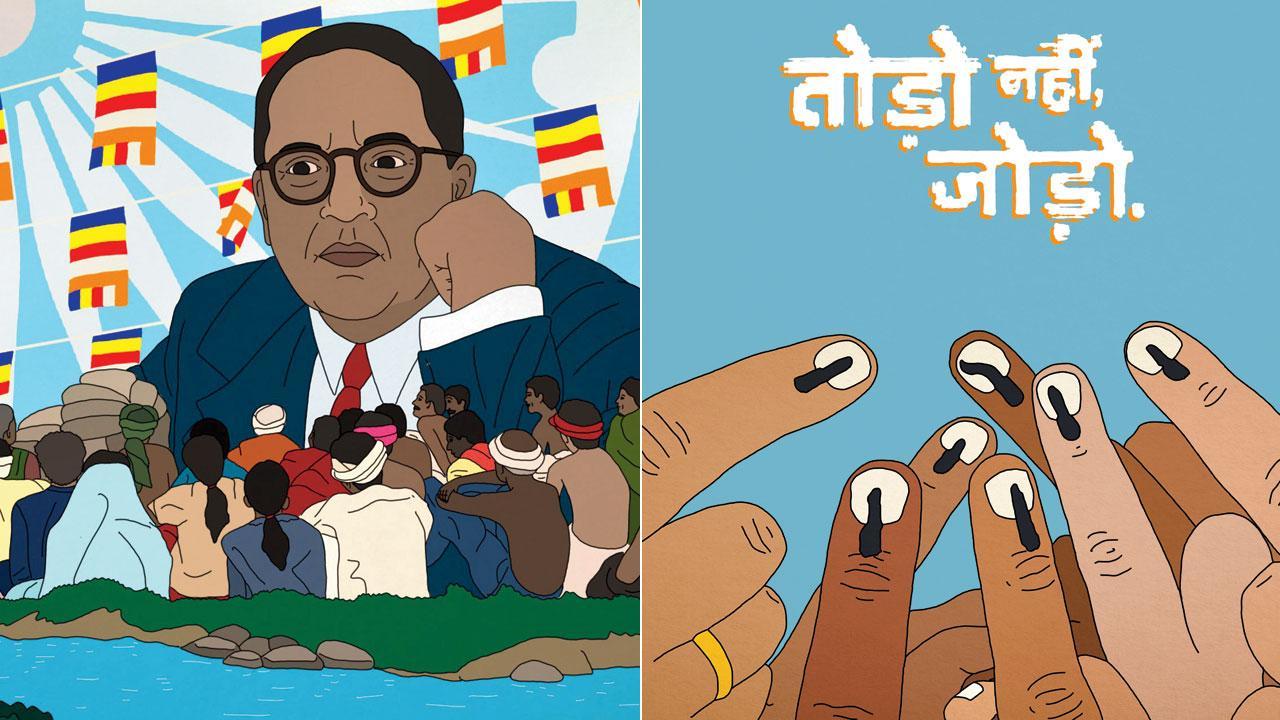
On Instagram, Noida-based multidisciplinary artist and proud Ambedkarite Siddesh Gautam’s illustrations reflect Dalit pride in blue. His handle @bakeryprasad has a deep-in-thought Dr Babasaheb Ambedkar in all avatars. His surreal and satirical work demands a caste-free world order. Illustrations/Siddhesh Gautam
 Democracy, in this country, is like a summer sapling whose roots cannot be strengthened without social unity; if social unity is not achieved, the sapling will be rooted out with a gust of summer wind, said the Father of the Indian Constitution.” The quote, one of the most excerpted, is part of 17 volumes of Dr Babasaheb Ambedkar: Writings and Speeches made freely available online by the government of Maharashtra.
On a scorching Monday in India’s hottest month when Mumbaikars brave above 39 degree celcius to exercise their suffrage and participate in the “festival of democracy”, Babasaheb’s “summer sapling” analogy sounds more relatable than ever. Mumbai will go to polls in the last leg of the six-week long seven-phased Lok Sabha elections. Since the day follows a weekend, the Election Commission and the state government are trying their best to tell people to treat the day with seriousness. Private as well as government firms are giving two-hour breaks for fulfillment of democratic duty. The My First Vote campaign prods the youth to vote, which is crucial in the second-most populous state, home to 90.03 million voters. More than ever before, Babasaheb’s definition of democracy and his idea of India becomes quotable.
His words radiated with hope as he saw his idea of an egalitarian democracy gaining mass. In an April 14, 1929 speech, he had said:
Read Next Story
Trending Stories
Latest Photos
Latest Videos
Latest Web Stories
ADVERTISEMENT
Mid-Day Fast
ADVERTISEMENT

ADVERTISEMENT