






Are you worthy of being a resident?
Updated On: 31 August, 2024 06:54 AM IST | Mumbai | Lindsay Pereira
How one lives in Bombay these days is increasingly being defined by the kind of salary one takes home

Listen to this article :
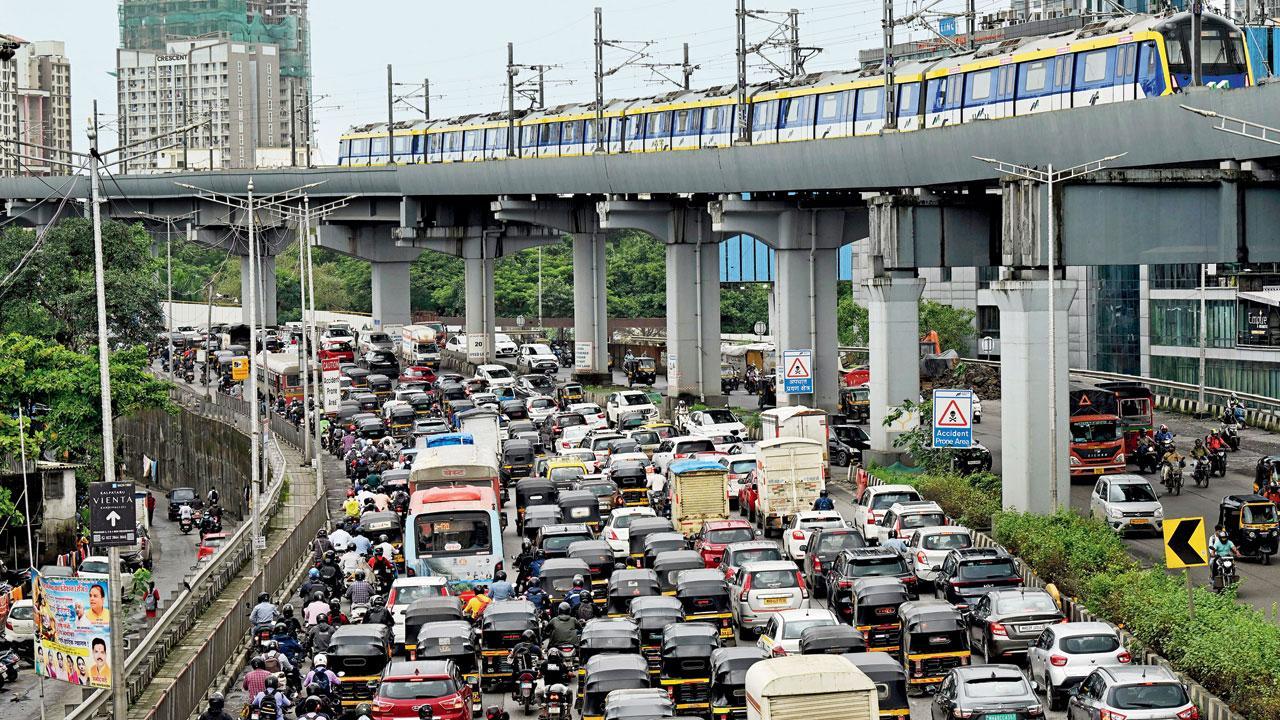
The numerous infrastructure works going on simultaneously means hours spent in traffic jams across the city. Pic/Satej Shinde
 I visited a friend at Madh Island a little over two weeks ago. It was a place I hadn’t been to in decades, so I was surprised to find a township with full occupancy where only the odd bungalow once peeked through the mangroves. Getting to his apartment involved taking an Uber from another friend’s home in Goregaon and cost me around R600 because it wasn’t rush hour. By the time my visit ended a few hours later, I was in no mood to risk getting back via Link Road, where time routinely stands still after 5 pm. I didn’t dare check what would be thrown up by ‘surge pricing’.
My only other option was the ferry to Versova. The standard rate for a rickshaw to the ferry was Rs 50, while a ticket for the ferry was Rs 10. When I got to the other side, I was given the choice of sharing a rickshaw to the Versova Metro station for Rs 25 or having a rickshaw to myself for R80. The road to the Metro station felt like it belonged to a time before mass rapid transit had been invented, as the rickshaw squeezed itself through narrow lanes with inches to spare. I was amazed, as I often am, at how no one was injured even as I watched children and senior citizens walk past, unknowingly holding their lives in their hands.
Read Next Story
Trending Stories
Latest Photos
Latest Videos
Latest Web Stories
ADVERTISEMENT
Mid-Day Fast
ADVERTISEMENT

ADVERTISEMENT