






Home / Mumbai / Mumbai News / Article /
Why the world is worried about BF.7 variant of Covid-19
Updated On: 24 December, 2022 07:21 AM IST | Mumbai | Vinod Kumar Menon
Intense cold weather and vulnerability of elderly with comorbidities and declining immunities is providing an environment for Omicron sub-variants to keep mutating, eventually bypass vaccine immunity

Listen to this article :
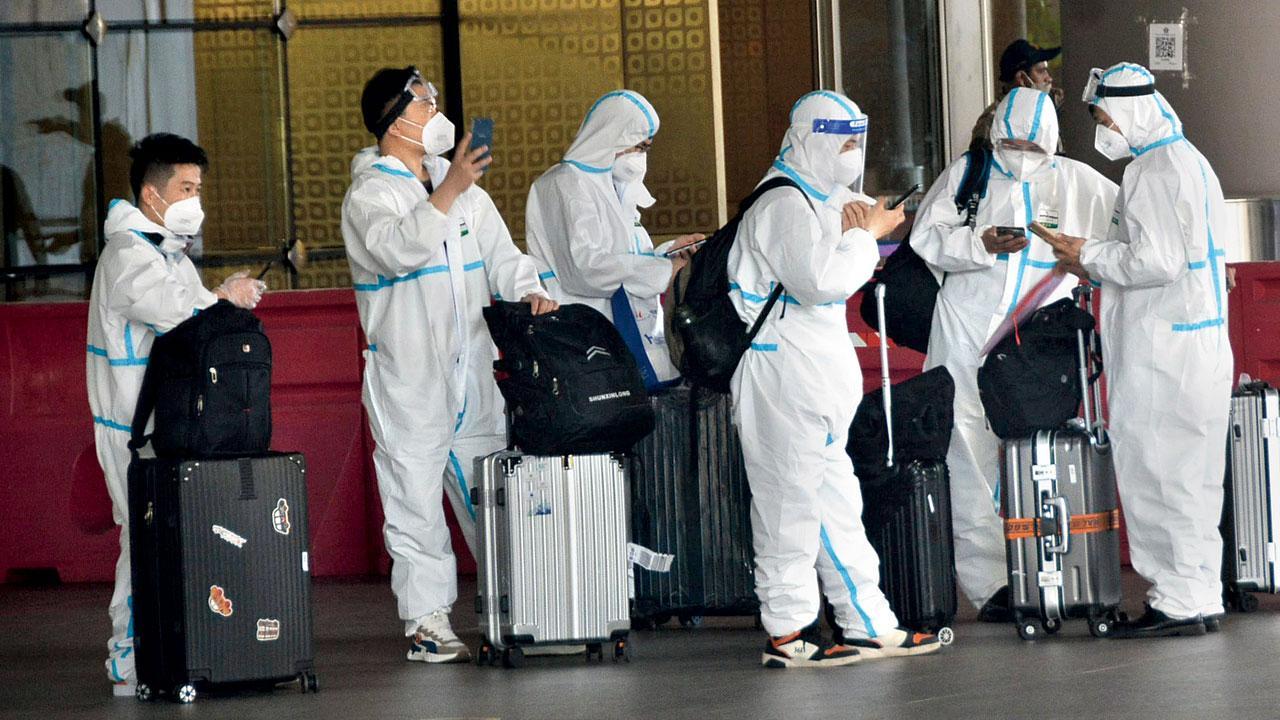
Passengers being tested for Covid symptoms on their arrival at the international airport in February this year. File pic
The Covid-19 outbreak in China has caused the world to go into panic mode again, exactly three years after the first episode of SARS-CoV-2 was reported in December 2019. In the absence of clear reporting from China, the highly infectious and transmissible Omicron sub-variant BF.7 has left health experts and scientists across the world concerned because new sub-variants are not easily affected by the monoclonal antibodies of those who recovered from Covid-19 and even those who got vaccinated and took their booster. Other variants have been discovered by Columbia University, New York, and the findings were published in the international journal Cell, on December 13, 2022.
‘We had warned you first’
mid-day in its August 18, 2022 article ‘Stay careful and alert for rebound Covid’ and subsequent piece ‘Experts fear complicated Covid cases in winter’, dated October 8, had highlighted how new Omicron sub-variants were causing hospitalisations in European nations and the US, and that India could see similar situation once the winter sets in.
Read Next Story
Trending Stories
Latest Photos
Latest Videos
Latest Web Stories
ADVERTISEMENT
Mid-Day Fast
ADVERTISEMENT

ADVERTISEMENT