






Home / Mumbai / Mumbai News / Article /
Study highlights struggles of Adivasis
Updated On: 17 October, 2023 06:10 AM IST | Mumbai | Prasun Choudhari
Findings of two-year comprehensive survey underscores urgent need for govt intervention to improve conditions, end rights violations

Listen to this article :
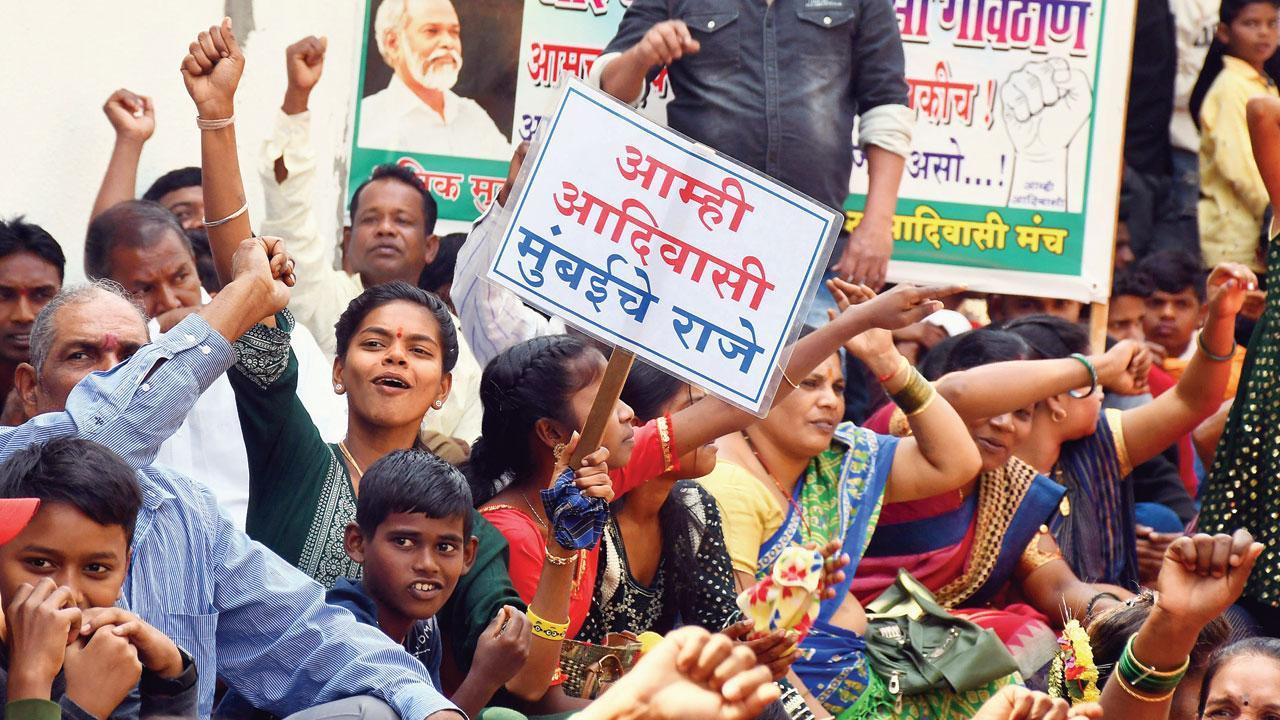
Adivasis from the city and adjoining areas protest against plans to displace them at the district collector’s office in Bandra on February 6. Pic/Ashish Raje
A comprehensive two-year study by the Kamla Raheja Vidyanidhi Institute of Architecture and Environment, in collaboration with Kali Billi Production and Pani Hakka Samiti, has shed light on the dire living conditions endured by Adivasi padas and non-Adivasi settlements within the expansive bounds of Sanjay Gandhi National Park (SGNP) and Aarey forest. This in-depth study has brought to light a multitude of pressing issues that these communities face, underscoring the immediate need for intervention. These challenges are not merely inconveniences but blatant violations of their basic rights.
Water woes
The most pressing issue identified in the research is the severe shortage of clean water. Residents are compelled to rely on natural streams, bore wells, hand pumps and wells for their water needs. These sources, being contaminated or overused, often pose health risks. The erratic and insufficient supply of water, coupled with the fact that some areas have no access to daily water supply, compounds the difficulties. Even more alarming, drinking water sources are often located at significant distances from the padas and settlements, exacerbating the struggle for access to clean water.
Read Next Story
Trending Stories
Latest Photos
Latest Videos
Latest Web Stories
ADVERTISEMENT
Mid-Day Fast
ADVERTISEMENT

ADVERTISEMENT