






Home / Mumbai / Mumbai News / Article /
Mumbai says prayer for change
Updated On: 04 December, 2022 08:13 AM IST | Mumbai | Yusra Husain
Even as Delhi’s Jama Masjid announced and later retracted the decision restricting the entry of women unaccompanied by men, Mumbai’s Juma Masjid and Bombay Trust is making women’s entry possible with structural interventions

Listen to this article :
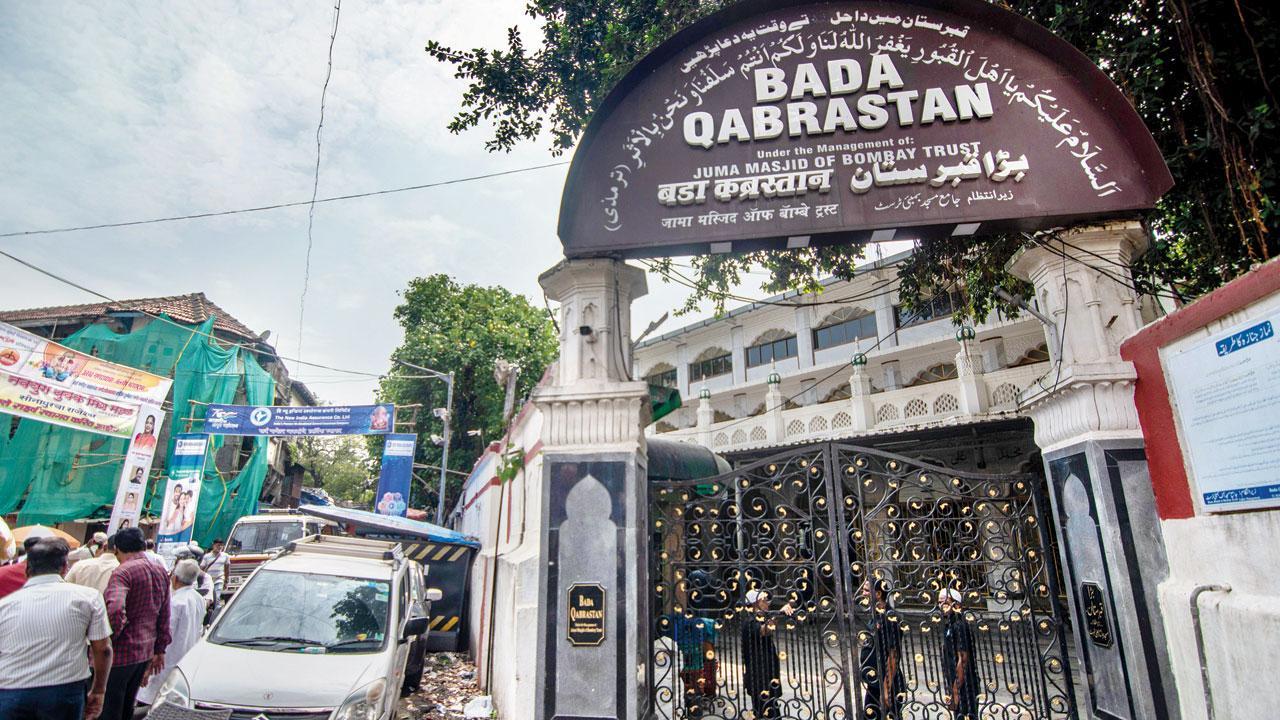
Bada Qabrastan at Marine Lines now has a new ghusl khana or washroom specifically for women, built at the entrance, making it convenient for them to use. Pic/Getty Images
Rukhsana Syed Akhtar has been bathing the dead for the last 11 years. She is what the community calls a ghassal. The Nagpada resident is a familiar face at the 193-year-old Bada Qabrastan in Marine Lines as the only woman to perform the religious obligation for deceased Muslim women—bathing their lifeless bodies before shrouding them and performing the last rites when they are lowered into the grave. When COVID-19 struck and the Muslim cemetery was struggling under the load of countless bodies, Akhtar remembers standing in between the dead, calling out their names, as if they were patients waiting outside a doctor’s office.
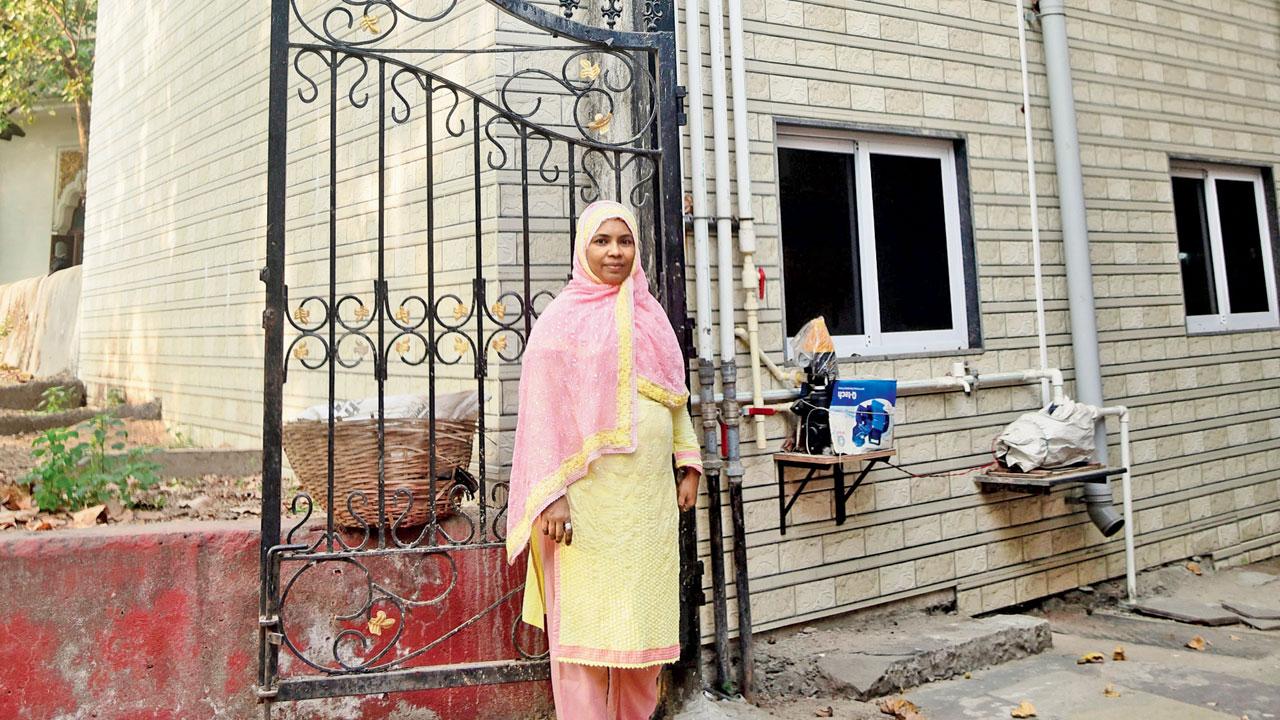
Rukhsana Syed Akhtar outside the ghusl khana and mosque for women that has come up at Bada Qabrastan, Marine Lines. The dedicated structure allows women the right to pray, grieve and bid goodbye to the deceased in privacy. Pics/Shadab Khan
Read Next Story
Trending Stories
Latest Photos
Latest Videos
Latest Web Stories
ADVERTISEMENT
Mid-Day Fast
ADVERTISEMENT

ADVERTISEMENT