






Home / Mumbai / Mumbai News / Article /
Mumbai: For Shiv Sena shakhas, Thackeray is still boss
Updated On: 02 October, 2022 09:32 AM IST | Mumbai | Prajakta Kasale
Even as the Maharashtra cabinet saw an exchange of power with Eknath Shinde replacing Uddhav Thackeray as the CM, nothing changes for shakhas in the city, considered the backbone of the party

Listen to this article :
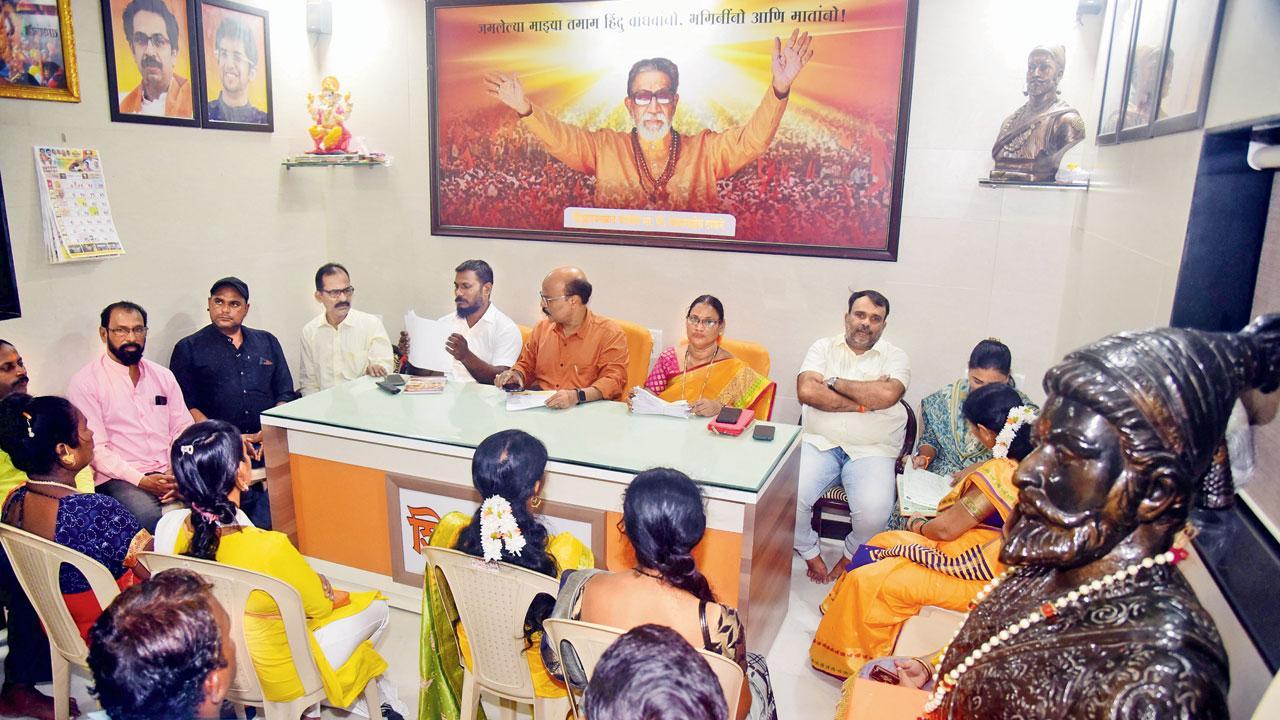
Office bearers, along with workers, at shakha number 3, Ketaki Pada, near Dahisar check naka. The idea behind having a shakha was to reach the common public, especially the native Marathi manoos. The shakha pramukh is the power centre of the locality. Pics/Shadab Khan
A lot has happened in the last 100 days in the Shiv Sena party. Most party leaders from neighbouring Thane and Navi Mumbai shifted their loyalty from Thackeray to the Shinde faction. In Mumbai, there are at least five out of 14 MLAs and one MP who stand beside Shinde. Not only that, after announcing that they are the real Shiv Sena, the Shinde faction even claimed the party symbol—while the Supreme Court has dismissed the issue, the final call over who’d get to keep the symbol will be made by the Election Commission. Despite the turmoil, not a single shakha—the backbone of Shiv Sena—is being claimed by the Shinde faction. All its MPs, MLAs and even a former corporator are working from their own public relations office called Jan Sampark Karyalaya.
The shakhas form the bridge between the party and public. There are 227 shakas, the same as the number of municipal election wards. “It is said that the concept of shakha was established by Datta Pradhan, one of the senior members, around the time of the formation of the party in 1966,” said Prakash Akolkar, political journalist and author of a book on the history of Shiv Sena, titled Jai Maharashtra.
Trending Stories
Latest Photos
Latest Videos
Latest Web Stories
ADVERTISEMENT
Mid-Day Fast
ADVERTISEMENT

ADVERTISEMENT