






Home / Mumbai / Mumbai News / Article /
Mumbai: BMC has detailed guidelines for footpath railings, but only on paper
Updated On: 17 January, 2023 06:02 AM IST | Mumbai | Prajakta Kasale
In the second of our three-part series, mid-day looks at BMC guidelines on installing barricades for footpaths and where implementation has gone wrong

Listen to this article :
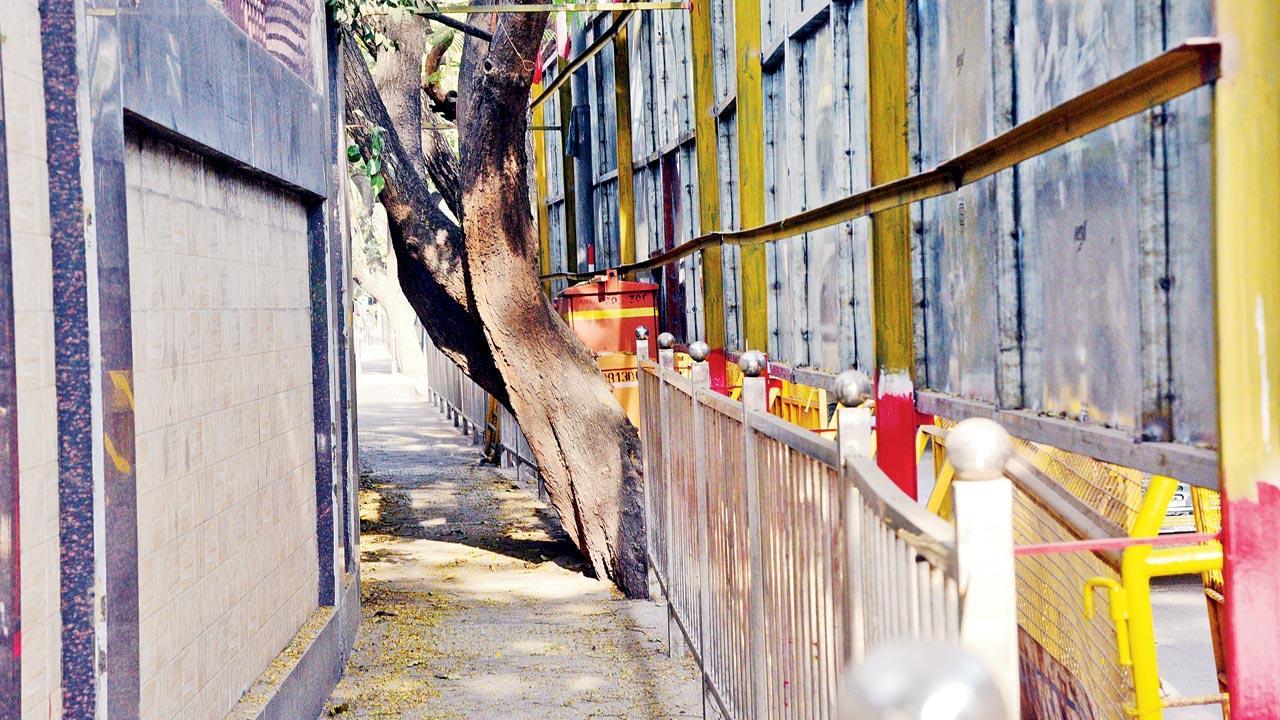
A narrow footpath near MHADA office at Kalanagar, Bandra. The BMC has set guidelines for the width of the footpath while installing railings, but it is not adhered to. Pic/Pradeep Dhivar
Footpath railings and guardrails are meant to make the pavement accessible to pedestrians, but the situation on the ground was very different, as mid-day reported in the first part of the series on footpath railings on January 16. After assessing the situation, mid-day finds out what rules are in place regarding installation of guardrails and bollards and if they are followed. While the BMC has two sets of guidelines regarding this, corporators said the problem was the lack of practical planning while installing the railings and the subsequent hawker menace that keeps pedestrians away from footpaths.
The Brihanmumbai Municipal Corporation first published a manual for ‘the planning and design guidelines for street furniture for Mumbai and its suburbs’ in 2001. The manual has detailed descriptions about installation of street furniture, which includes barriers such as guardrails, railings and bollards among other things. Citing that footpath barriers are meant to ensure pedestrian safety from vehicular movement on the road, the manual stated that these should be installed at places with heavy traffic or risk, such as junctions, bends, brows of hills.
Read Next Story
Trending Stories
Latest Photos
Latest Videos
Latest Web Stories
ADVERTISEMENT
Mid-Day Fast
ADVERTISEMENT

ADVERTISEMENT