






Home / Mumbai / Mumbai News / Article /
Just 150 bonded labourers rescued since 2019; yet to be rehabilitated
Updated On: 12 December, 2023 07:15 AM IST | Mumbai | Diwakar Sharma
And these enslaved tribals have been rescued by social activists not officials; they have also not yet been rehabilitated, as government machinery claims it is not capable of reaching remote areas

Listen to this article :
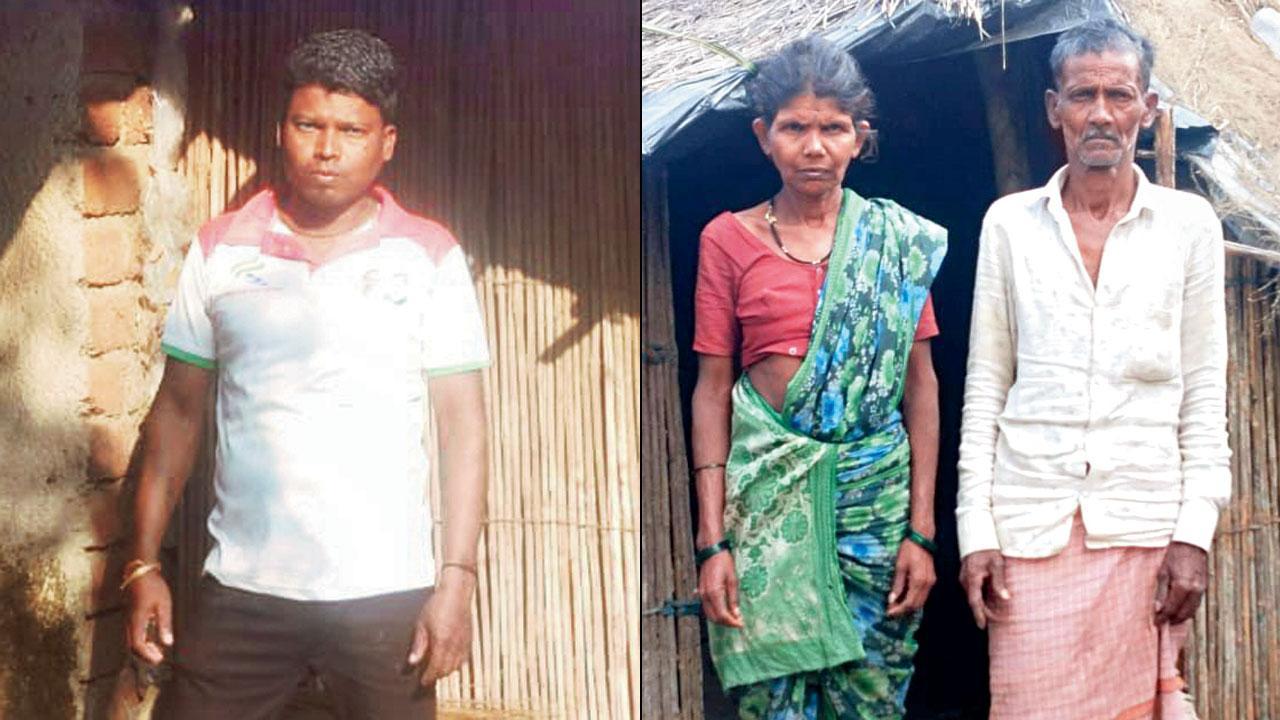
Freed bonded labourer Ravi Gavit and his parents at Pilanje Budruk Chinchpada village
 In Maharashtra, social activists have freed nearly 150 bonded labourers since 2019, but they remain unrehabilitated. The activists believe that surprise checks by government bodies at work sites, like brick kilns, farms, charcoal units, and construction areas, could reveal a much higher number of bonded labourers in the state.
Tribal communities, mostly live in forested hilltops, are vulnerable to exploitation by brick kiln owners, farmers, and landlords. Despite this, government officials are reluctant to visit these remote areas and witness the harsh conditions these captors subject them to, often coercing them into slavery. The census of 2011 recorded only around there were only 10,510 tribals found in six divisions in Maharashtra. However, their population has multiplied over the past decade, and the prevalence of bonded labourers, spanning generations, challenges existing laws against forced labour.

Trending Stories
Latest Photos
Latest Videos
Latest Web Stories
ADVERTISEMENT
Mid-Day Fast
ADVERTISEMENT

ADVERTISEMENT