






Home / Mumbai / Mumbai News / Article /
Bipolar disorder advocates demand action for improved mental health care
Updated On: 01 April, 2024 07:20 AM IST | Mumbai | Eshan Kalyanikar
Patients share their experiences with bipolar disorder, highlighting the need for early diagnosis and improved support systems

Listen to this article :
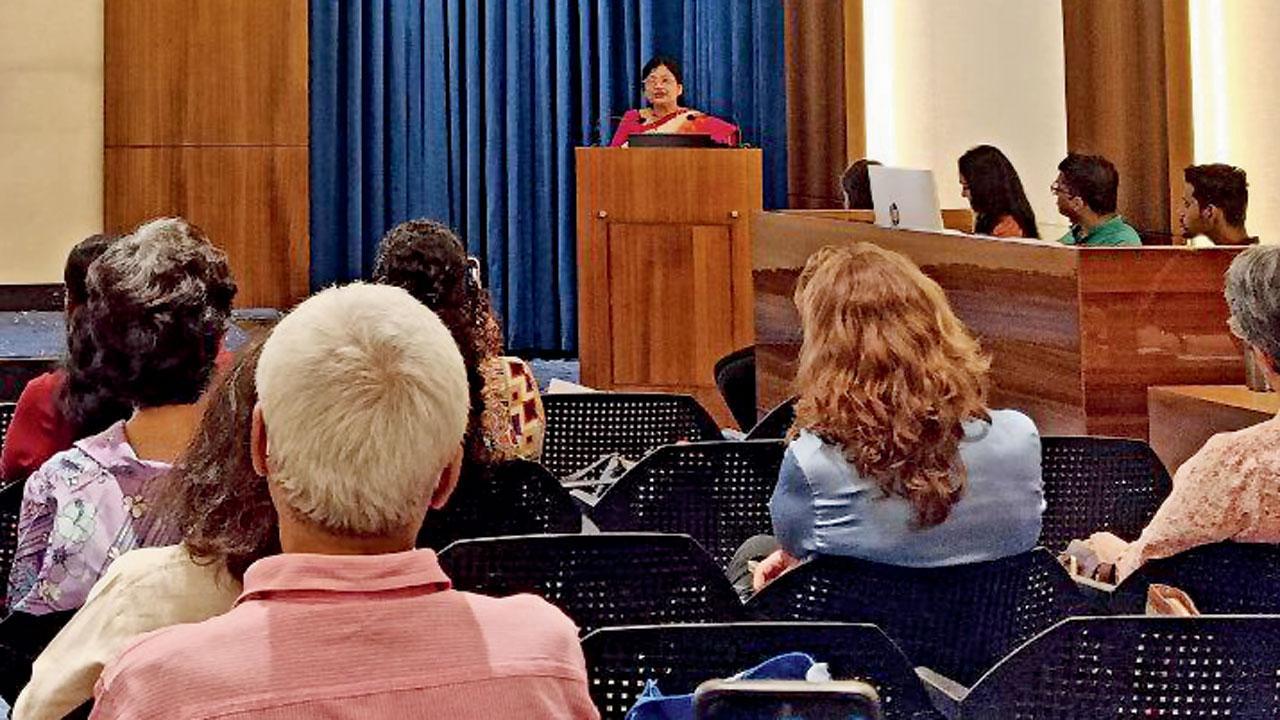
Dr Anjali Gokarn at the conference
In his 40s, Arun Singh, now 66, received a bipolar disorder diagnosis after initially being misdiagnosed with depression. Six months ago, Arun was disowned and abandoned by his family. Throughout his life, Arun grappled with maintaining relationships. He worked as an HR professional until recent years, often experiencing lengthy periods of unemployment. “People with bipolar disorder can lead balanced lives, both professionally and personally, if diagnosed early and provided with appropriate treatment,” he said.
“Patients with any mental illness need assistance in different aspects—including their work, living, social, and learning environments. One treatment approach that can help these individuals manage their symptoms and better function is psychosocial rehabilitation,” Arun adds. However, early diagnosis remains a challenge. Vijay Nallawala, 62, also received a bipolar disorder diagnosis in his 40s. “A national mental health survey conducted by the health ministry in 2016 revealed that out of every 1,000 individuals, approximately 850 do not seek treatment,” he notes.
Trending Stories
Latest Photos
Latest Videos
Latest Web Stories
ADVERTISEMENT
Mid-Day Fast
ADVERTISEMENT

ADVERTISEMENT