






Home / Mumbai-guide / Things To Do / Article /
World Sleep Day: Experts on fitness trackers monitoring our sleep patterns
Updated On: 19 March, 2021 11:22 AM IST | Mumbai | Sukanya Datta
Fitness trackers of all kinds are flooding the market, claiming to our slumber patterns. On World Sleep Day, here’s a look at how they work and what health experts make of them

Listen to this article :
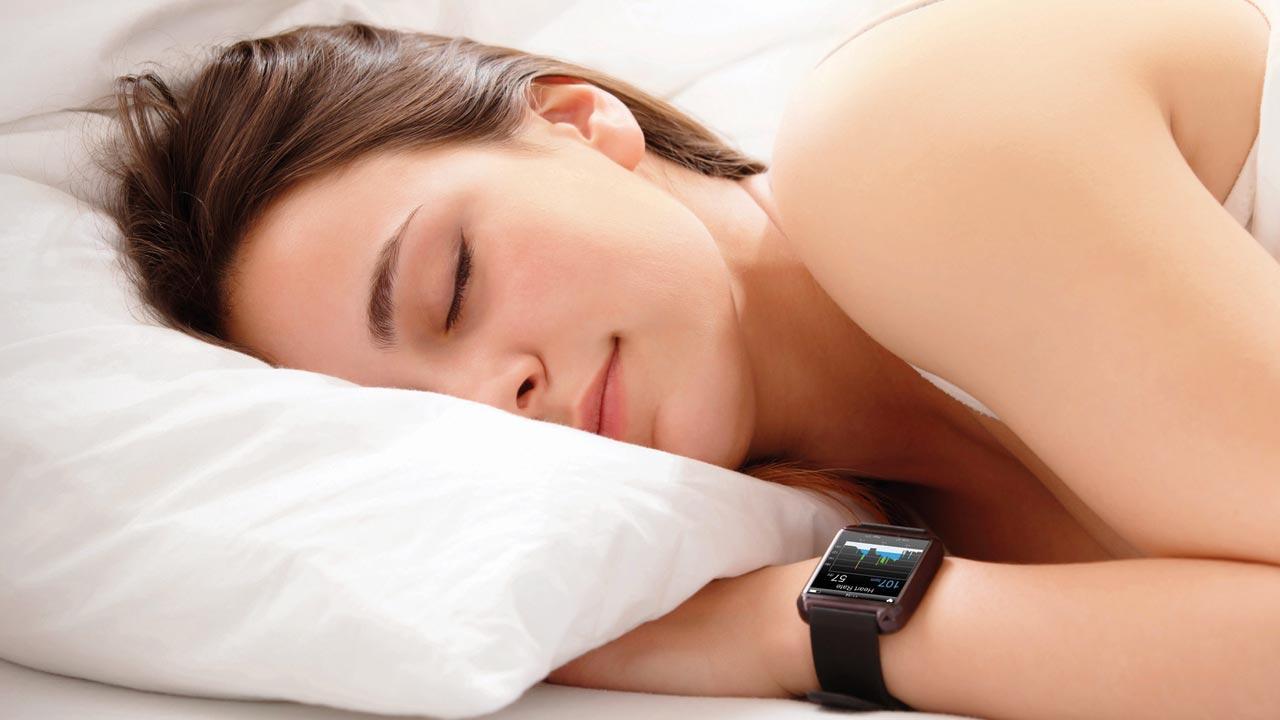
Representation pic
Survey Report, released by Royal Philips ahead of World Sleep Day, since the start of the pandemic, Indian adults experienced new sleep challenges such as difficulty in falling asleep (37 per cent), difficulty in staying asleep (27 per cent ), and waking up during the night (39 per cent). As we continue to grapple with changing slumber patterns, the fitness trackers’ industry has been growing, with more and more wrists, fingers and homes sporting bands, rings and wireless devices that track parameters ranging from steps to sleep.
Tracking the market
Unlike a sleep study in a hospital, which can consume considerable time and money, these devices are accessible, and considered fashionable. But what data do they offer? Ali Rizvi, director, Garmin India that manufactures wearable trackers, shares that they help to identify a sleeping pattern. “They provide an in-depth analysis of how one is sleeping, the duration, quality, and a breakdown of their light, deep and REM [Rapid Eye Movement; a sleep stage] stages,” he claims, adding that these trackers help to manage one’s sleep according to their lifestyle. Gaurav Parchani, co-founder and CTO, Dozee, which produces thin sensor sheets that can be placed below mattresses, says as the product doesn’t require participation post installation, it’s handy for senior citizens. “Apart from monitoring heart and respiratory rates at night, we also document heart rate variability — an important parameter of your autonomic nervous system,” he says.
Read Next Story
Trending Stories
Latest Photos
Latest Videos
Latest Web Stories
ADVERTISEMENT
Mid-Day Fast
ADVERTISEMENT

ADVERTISEMENT