






Home / Mumbai-guide / Things To Do / Article /
Experts decode how leaders can pave the way for successors
Updated On: 13 May, 2024 09:22 AM IST | Mumbai | Anindita Paul
Identifying a worthy successor is crucial for an outgoing leader’s legacy. With speculation rife about who will succeed Apple CEO Tim Cook, and Mayawati dropping her nephew as her successor, experts decode the criticality of the decision-making process

Listen to this article :
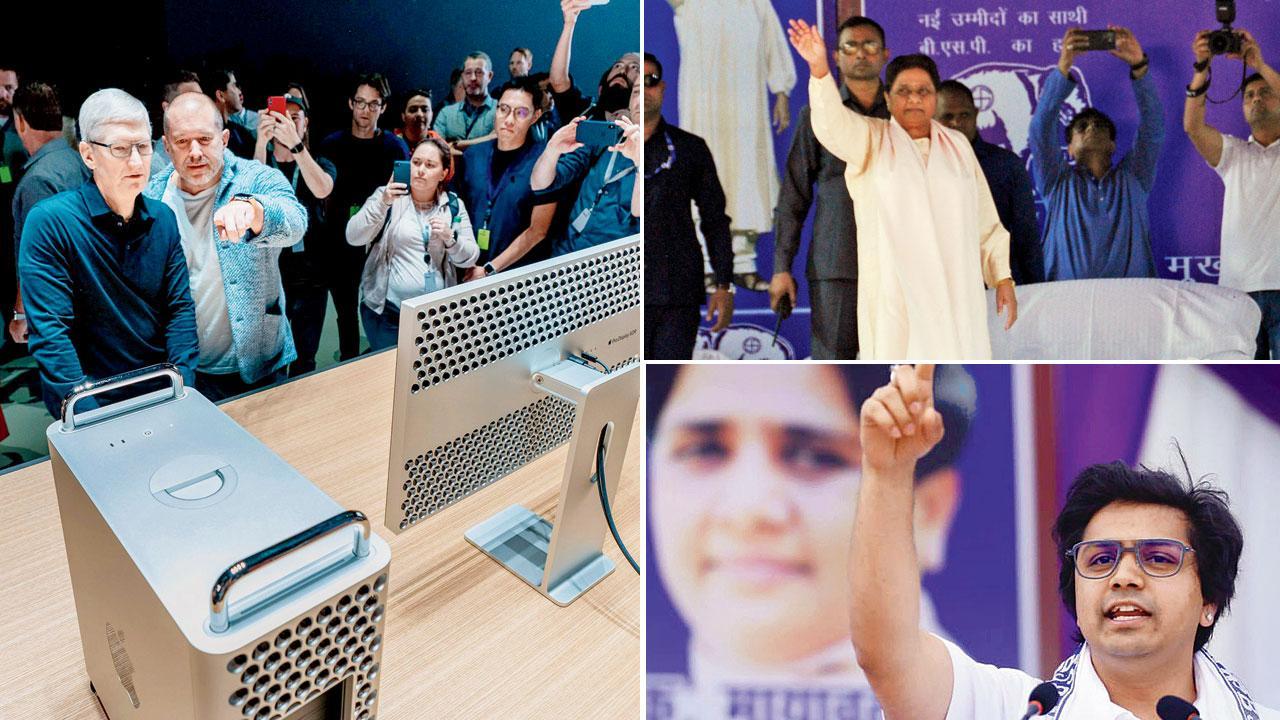
Tim Cook joins his colleagues at the World-Wide Developers Conference in San Jose, 2019. Pics Courtesy/Time_Cook on X; Bahujan Samaj Party national president Mayawati waves to crowds at a rally in Ghaziabad. Pic Courtesy/Getty Images; BSP leader Akash Anand addresses a rally in Uttar Pradesh. Pic Courtesy/Anandakash_BSP on X
Tim Cook, who took over the reins of Apple from Steve Jobs in 2011, will turn 64 this year. And while the venerated CEO has indicated that he does not intend to retire in the near future, speculations are rife about who will take over his coveted mantle when the time comes. Business pundits across the world are taking a closer, harder look at Cook’s core team, considering that Cook himself was the COO under Jobs before he was moved up the leadership hierarchy. But what key considerations does an outgoing leader make when selecting a worthy successor? More significantly, why is this decision one of the most crucial ones that Cook can make in his already illustrious career?
Although the idea of succession is not often discussed in leadership discourse, it is an important component of a successful leader’s legacy, experts say. “Succession planning is a key leadership requirement at all leadership levels.
Read Next Story
Trending Stories
Latest Photos
Latest Videos
Latest Web Stories
ADVERTISEMENT
Mid-Day Fast
ADVERTISEMENT

ADVERTISEMENT