






Home / Mumbai-guide / Things To Do / Article /
The AI Takeover: Publishers share insights on artificial intelligence in writing
Updated On: 26 July, 2024 11:20 AM IST | Mumbai | Fiona Fernandez
The emergence of Artificial Intelligence has meant that the custodians of the written word – India’s publishing industry – have to ace the balancing act between availing of its benefits and ensuring that human input and originality remain at the heart of its operations

Listen to this article :
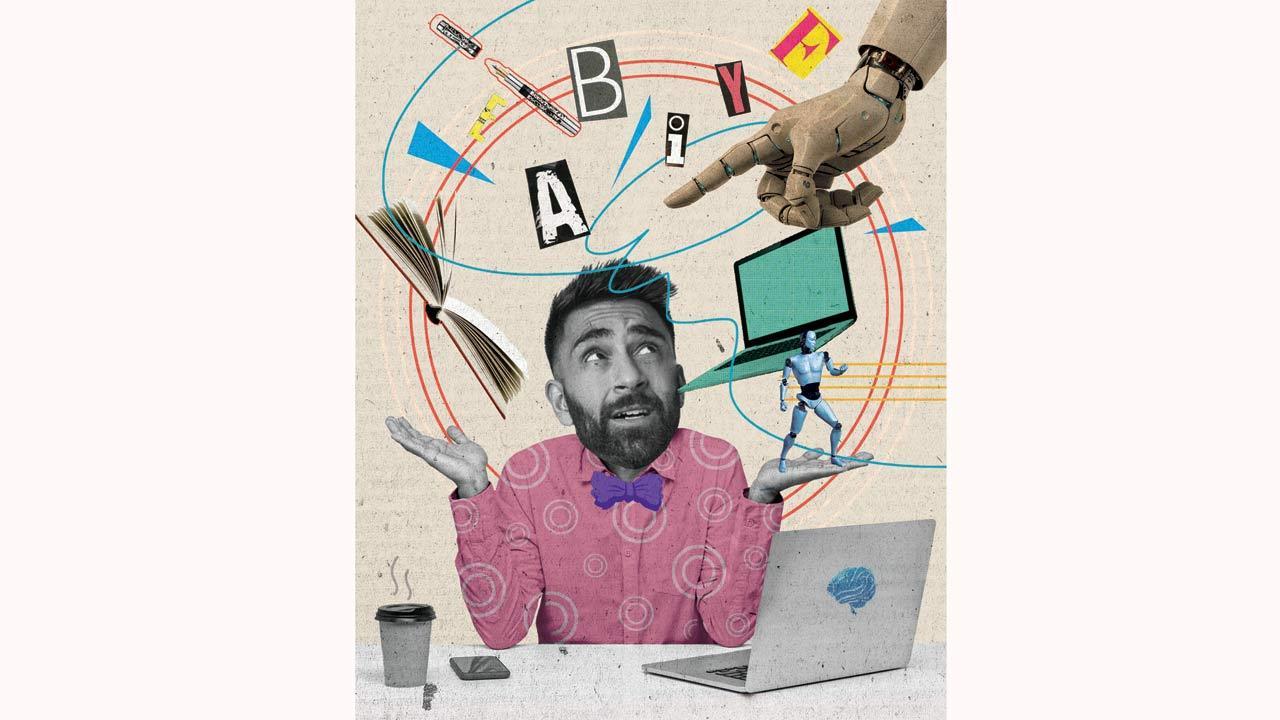
Illustration/Uday Mohite
For Meru Gokhale, founder of Editrix.ai, an Artificial Intelligence-enabled editing platform, the idea to launch a game-changing tool in India’s vibrant publishing landscape, emerged from a glaring human resource shortfall that she had encountered in the publishing industry. A senior editor who has worked in some of India’s leading publishing houses, she found it increasingly difficult to find and retain experienced, qualified editors. “Traditional apprenticeship models for training new editors were faltering, especially with the rise of remote work, making it crucial to find more structured and accessible alternatives.” The idea was to streamline the editing process while also offering accessible training opportunities, and contributing to a more inclusive publishing landscape.
Editing made easier
Naturally, AI’s growing presence is a hotly discussed topic in the cabins and cubicles of grammar Nazis across some of India’s largest publishing houses. Gaurav Shrinagesh, CEO-India, SEA&MENA, Penguin Random House, believes the possibilities are immense, “AI has the potential to revolutionise the way we create, distribute, and consume content. We are actively exploring how it can enhance our operations, support our authors, empower our teams, and improve the reader experience, all the while protecting the intellectual property of our creative contributors.”
Read Next Story
Trending Stories
Latest Photos
Latest Videos
Latest Web Stories
ADVERTISEMENT
Mid-Day Fast
ADVERTISEMENT

ADVERTISEMENT