






Home / Lifestyle / Health & Fitness / Article /
Unmasking inequality: Women at higher risk from air pollution
Updated On: 17 March, 2024 01:05 PM IST | Mumbai | mid-day online correspondent
Women and children bear a disproportionate burden of household air pollution, facing increased risks from accidents related to cooking and lighting with open fires

Listen to this article :
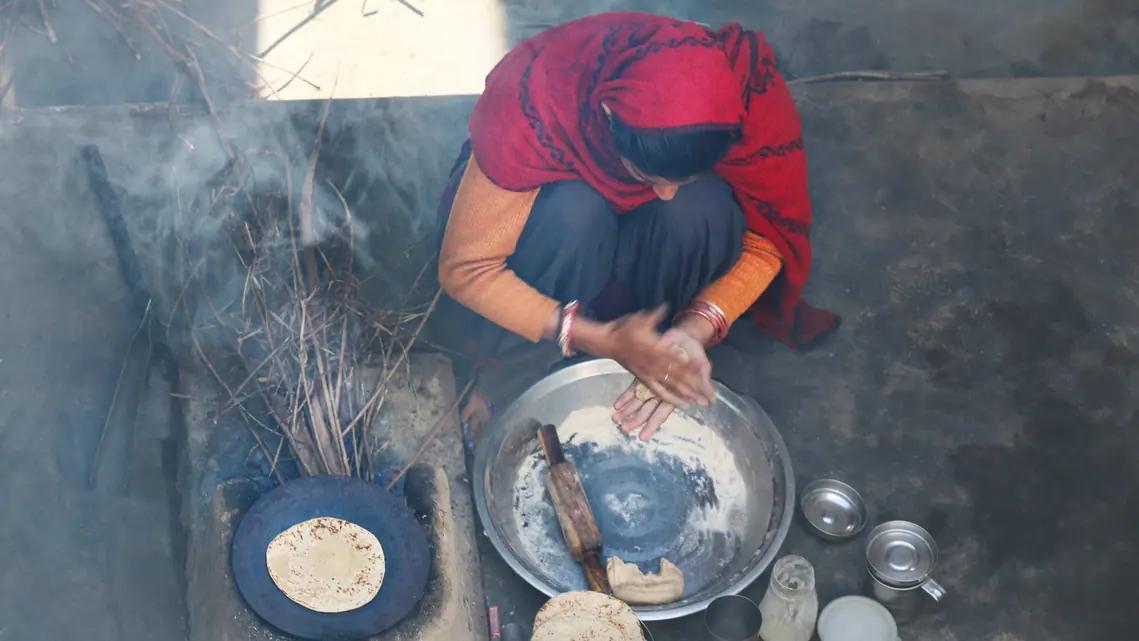
Image for representational purpose only. Image courtesy: iStock
Today, India’s entire 1.3 billion population lives in areas where the annual average particulate pollution level exceeds the WHO air quality guidelines. About 63 percent of the population live in areas that exceed India’s own national air quality standard of 40 µg/m3, informs Akanksha Rai, the program manager of environmental health at Vital Strategies.
It is also a major health concern in both urban and rural parts of India and kills more than 16 lakh people every year. Household air pollution alone causes at least 20-50 percent of ambient PM2.5 in India. The prevalent use of biomass for cooking and heating significantly contributes to household air pollution. This pollution poses significant health risks, including chronic obstructive pulmonary disease (COPD), respiratory infections, heightened rates of preterm births, heart attacks, strokes and various other health issues across all age groups. A 2020 study by the WHO’s International Agency for Research on Cancer, IARC, concluded that, “there is strong evidence that household burning of biomass and kerosene fuels, especially using stoves without a chimney, increases the risk of developing several cancers of the digestive tract.”
Trending Stories
Latest Photos
Latest Videos
Latest Web Stories
ADVERTISEMENT
Mid-Day Fast
ADVERTISEMENT

ADVERTISEMENT