






‘Farsan Mumbai mai sabka humsafar hai’
Updated On: 12 March, 2024 05:05 PM IST | Mumbai | Aakanksha Ahire
Mumbai is home to a large number of farsan shops making farsan an intrinsic part of the city’s food culture. Mumbaikars are known to start and end their day eating farsan items. We spoke to some of the city’s iconic farsan shops to explore Mumbaikars love for this Indian cuisine

Listen to this article :
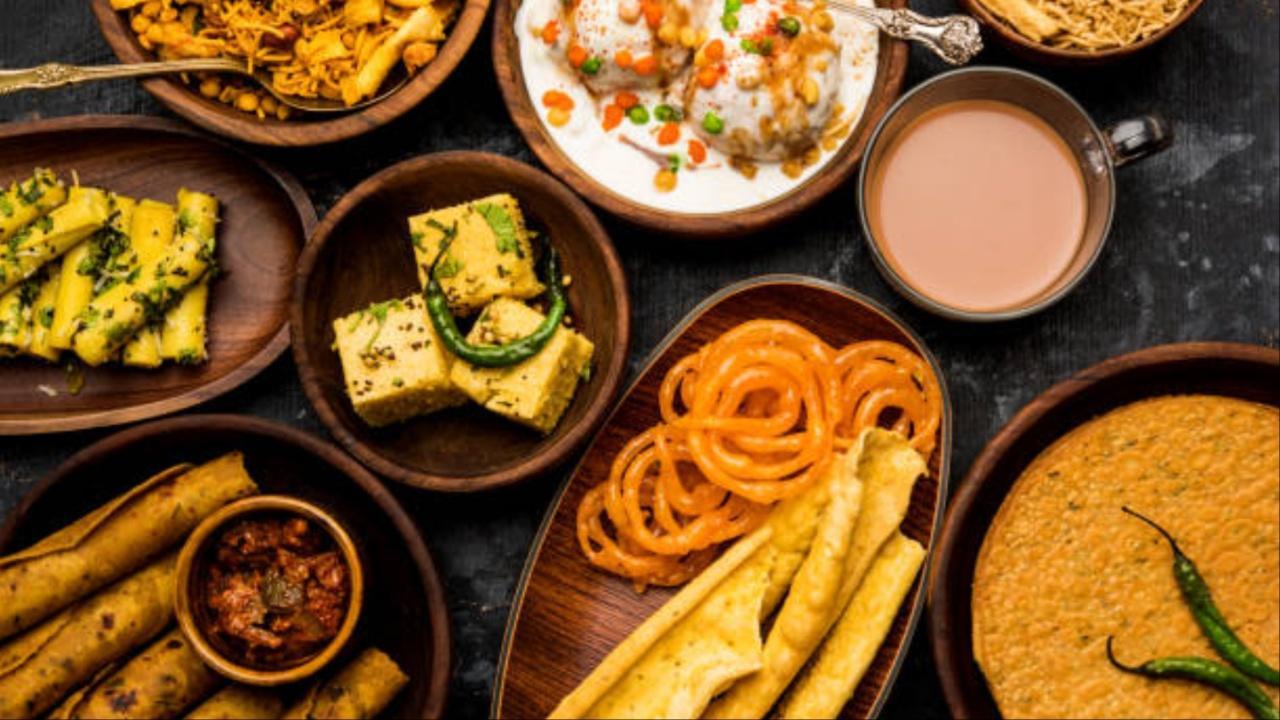
Farsan is a staple for Mumbaikars. Photo Courtesy: iStock
Farsan is a popular type of Indian cuisine that refers to any kind of savoury snack from sev gathiya to khamani, dhokla and khandvi. Tracing its origin in the state of Gujarat, this food culture made its way into the heart of Mumbaikars. Today, for many, especially office-going Mumbaikars, farsan has also become their daily breakfast.
What makes it a favourite munching snack is its versatility as it ensures it caters to every pallet. To explore Mumbai’s love towards this Gujarati cuisine, we spoke to the owners of some of the city’s iconic farsan shops and Mumbaikars who dive deep into their common love for this food.
Farsan is a staple for Mumbaikars
Ramesh Chedda (63), owner of Yours Truly CHEDDA, an 80-year-old farsan and sweets shop says, “Any farsan item made from besan is my absolute favourite, be it sev, fafda, gathiya or khaman. I can eat farsan every day.”
Yours Truly CHEDDA was established by Ramesh Chedda’s grandfather who shifted to Mumbai from Gujarat for a living. Earlier in the business of food grains, he chose to set up a farsan shop recognising people’s love for snack items. Today, the store takes pride in selling uncountable types of snack items, chocolates and sweets.
Also Read: Prakash cha sabudana vada to Gomantak chi fish thali: Iconic eateries in Dadar serving authentic Maharashtrian cuisine
When asked why farsan is loved by all, Chedda says, “Our sales of savoury items have increased in the last few years. Earlier, many people used to live in joint families. Women in joint families used to make special snacks for the entire family. Now, with people choosing to be in nuclear families, people hardly cook breakfast or even snack items. They prefer buying snacks directly from stores like ours.” He adds, “People today are busy too. Getting snacks in a shop that is tasty and filling is a blessing.”
Traditional farsan food over Western snacks
“If you ask me to eat burgers and pizza every day, I will not, but I can eat farsan every single day,” says Chedda. According to him, the young generation enjoys eating more Western snacks like fries, pizzas and pasta. There are only a few, he says, who enjoy eating farsan items. “This is not to say that the younger generation doesn’t eat farsan at all, but not as much as their parents and grandparents.”
Nirav Harishchandra Soneji (45), owner of Gokuldas Gathiawala says, “It largely depends on parents and what they provide their children from time to time. Besides, those rooted in culture will always opt for traditional Indian snacks.”
Gokuldas Gathiawala was established in 1924 by Soneji’s grandfather. Originally from Bhavnagar, Gujarat, Soneji’s grandfather too shifted to Mumbai in search of a living. He started with selling ‘chana chor garam’ carrying the strapped basket across his chest and later went on to set up a farsan store of his own.
Sharing his personal experience Soneji says, “Although I enjoy eating farsan, my son is a pizza lover. His peer group influences his food choices. However, the population who opts for Western food is different. Their education and exposure to various cultures influence their food choice. I believe that a majority of the Indian population still enjoys traditional meals.”
Buy now to read the full story.
For any queries please contact us: E-mail: support@mid-day.com
Trending Stories
Latest Photos
Latest Videos
Latest Web Stories
ADVERTISEMENT
Mid-Day Fast
ADVERTISEMENT

ADVERTISEMENT