






Home / Entertainment / Hollywood News / Article /
The Black Phone Review: Eerie, suggestive, highly effective horror thriller
Updated On: 24 June, 2022 04:49 PM IST | Mumbai | Johnson Thomas
Helmer Derrickson and cinematographer C. Robert .Cargill create a multi-layered narrative crafted with attention to detail and psychological implications that just can’t be ignored

Listen to this article :
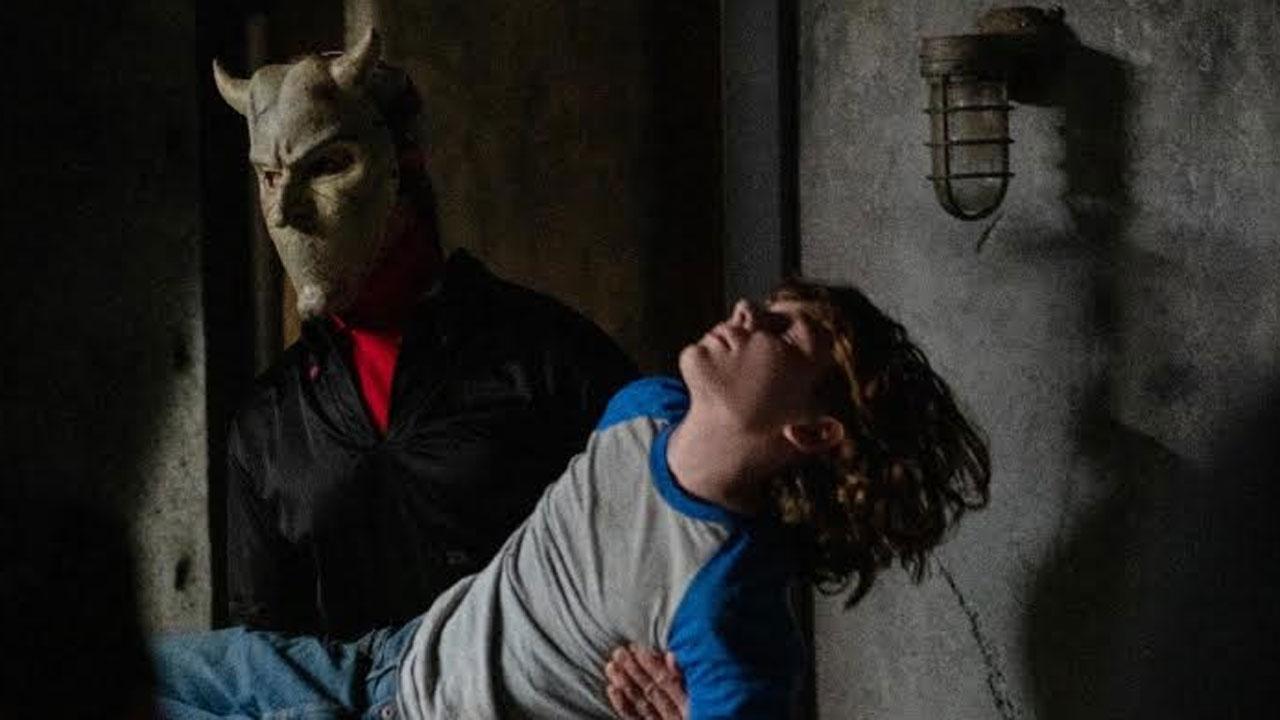
A still from the film
The Black Phone
Cast: Ethan Hawke, Mason Thames, Madeleine McGraw
Director: Scott Derrickson
Rating: 3/5
This film is based on the short story of the same name, written by Joe Hill, the son of Stephen King. The film chronicles a rather horrific, suspenseful tale of The Grabber, a child killer who snatches teen boys in broad daylight and the community around and the cops are clueless as to the abductor-murderer. It’s a conceptual horror-thriller that uses imagination, psycho-suggestion and visual entreaties to convince us of its efficacy as scary movie that increases its dread level as the story chugs along.
It’s 1978, we are introduced to Finney (Mason Thames), a pitcher whose prowess on the diamond doesn’t prevent him from being bullied between classes. He is a self-effacing, lonesome pre-teen who has a kid sister Gwen (Madeleine McGraw) and an angry, alcoholic father (Jeremy Davies) who finds it difficult to cope with two kids and doesn’t hesitate to take his frustrations out on them. Gwen has clairvoyant abilities which her father would rather keep secret. Finney is the next abductee on The Grabber’s list. (We get to know of the other victims through posters stuck o community walls). Trapped in a soundproof basement where screaming is of little use, he has nowhere to go. Soon he starts getting calls from a disconnected phone on the wall. Finney, who knows of the other boys who have been abducted by the remorseless killer, discovers that he can hear the voices of the previous victims through the phone... And they are encouraging Finney to make his grand escape from certain death.
Trending Stories
Latest Photos
Latest Videos
Latest Web Stories
ADVERTISEMENT
Mid-Day Fast
ADVERTISEMENT

ADVERTISEMENT