






Home / Entertainment / Bollywood News / Article /
Ali Abbas Zafar: Would’ve stopped film if Diljit hadn’t done the role
Updated On: 19 September, 2022 07:13 AM IST | Mumbai | Uma Ramasubramanian
From Dosanjh being the only choice for Jogi, to spreading the message of unity, director Zafar discusses revisiting the 1984 anti-Sikh riots on screen

Listen to this article :
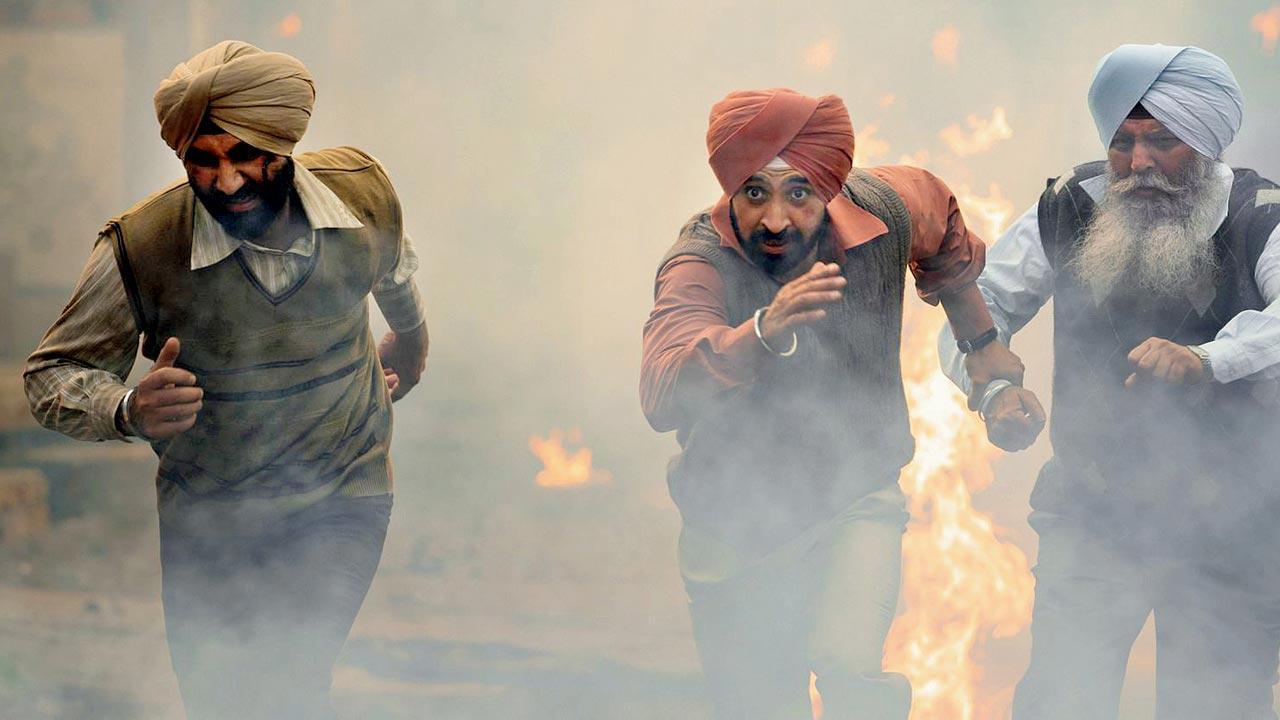
A still from the film
Fortunately, the Tandav (2021) controversy hasn’t deterred filmmaker Ali Abbas Zafar from venturing into the territory of political dramas again. This time around, with Jogi, he examines the 1984 anti-Sikh riots that erupted in the wake of the assassination of former Prime Minister Indira Gandhi, leaving deep scars on the community. Though the film has received a mixed response, Diljit Dosanjh shines bright as the titular character who tries to save his family and neighbours amid the riots in Delhi.
For the director, Dosanjh was the only choice to bring the story alive. “We were clear we needed to tell the story with a superstar who comes from that community, and is loved by them. When I shared the story with Diljit, he loved the plot. I would have stopped the film if Diljit hadn’t done it. He is so subtle; only his eyes speak in the film. That’s what I wanted in the character — someone understated who rises to the occasion. No one could have done it, apart from Diljit,” recounts Zafar.
Read Next Story
Trending Stories
Latest Photos
Latest Videos
Latest Web Stories
ADVERTISEMENT
Mid-Day Fast
ADVERTISEMENT

ADVERTISEMENT